What Is a Backorder? Definition, Causes & Seller Tips [2026] 2026
What is a backorder vs out-of-stock vs pre-order? Get the definition, common causes, and practical tips to manage backorders on Shopee, Lazada & Amazon.
What is a backorder vs out-of-stock vs pre-order? Get the definition, common causes, and practical tips to manage backorders on Shopee, Lazada & Amazon.
A backorder is an order placed for a product that is temporarily out of stock but has confirmed incoming supply. In other words, you are selling an item you don’t physically have in your warehouse yet, with the promise to ship it the moment your next shipment arrives. Understanding what a backorder is — and how it differs from being out-of-stock or a pre-order — is essential for any ecommerce seller who wants to keep revenue flowing without frustrating customers.
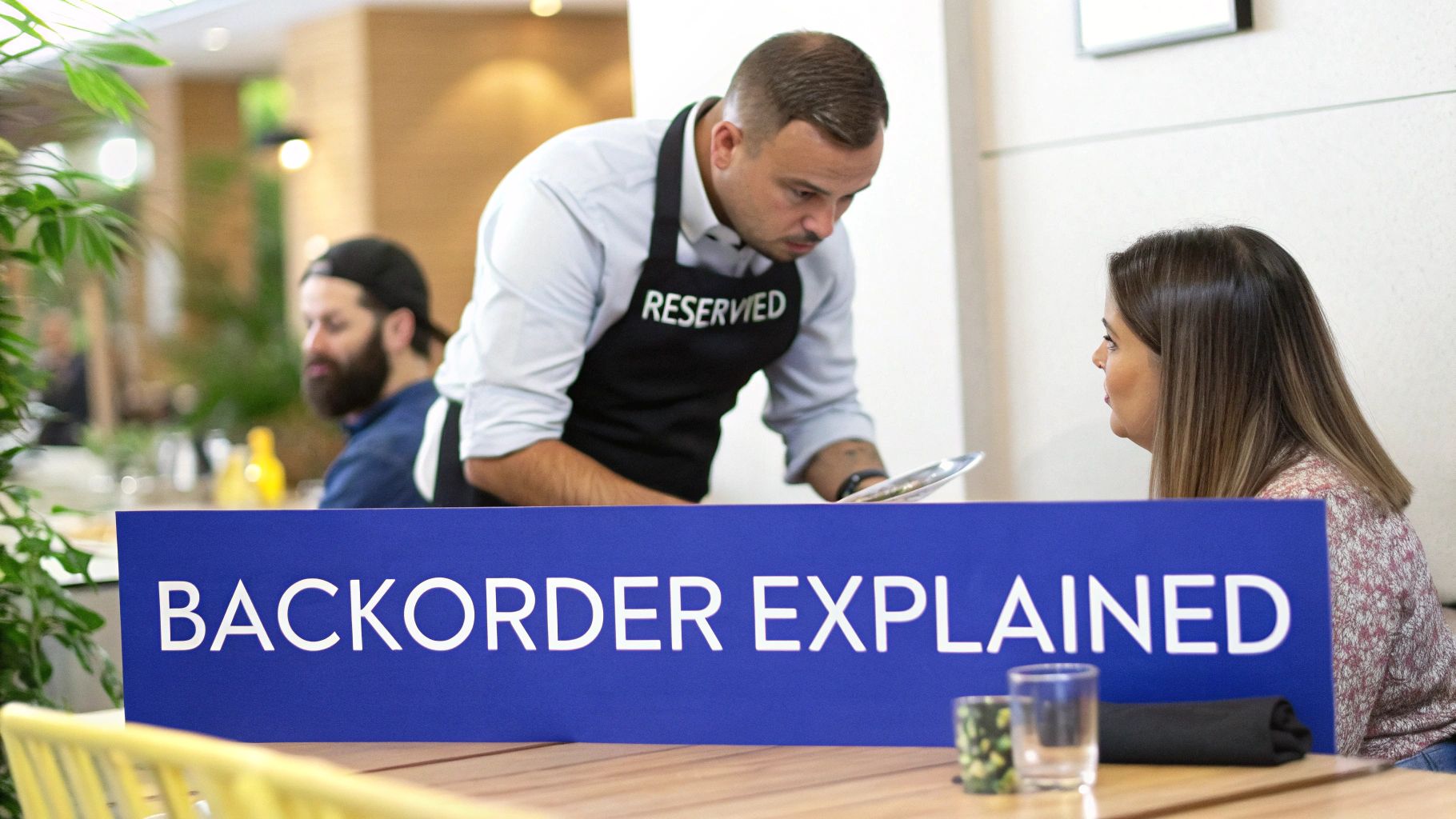
Think of it like booking a table at a popular new restaurant. You arrive to find the place is full, but the host tells you a spot will free up in 30 minutes. By putting your name down, you’ve secured your place in the queue and are happy to wait because you know dinner is coming.
A backorder works the same way. It confirms a customer’s purchase for a product that will be available again very soon. This is a common situation in e-commerce, especially for in-demand items that sell out faster than you can restock them. For example, if a limited-edition sneaker sells out but you have another shipment confirmed to arrive next week, you can accept backorders to meet the high demand.
Using the right terminology is crucial. These three terms—backorder, out-of-stock, and pre-order—mean very different things to a customer and require different approaches from you. Mixing them up can create confusion and unhappy shoppers.
Here’s a simple breakdown:
Getting this distinction clear is the foundation of managing your customers’ expectations. Someone might be fine waiting a week for a backordered favourite, but they’ll be rightfully annoyed if an “out-of-stock” item never materializes.
Actionable Insight: When you manage it well, a backorder system can be a sign of high demand, keeping revenue flowing even when your shelves are temporarily empty. But if you handle the communication poorly, you risk damaging customer trust. Always provide a clear, realistic delivery estimate on the product page.
To make it even clearer, let’s put these side-by-side.
This table breaks down the crucial differences between each inventory status, showing how they affect everything from stock availability to when you take payment.
| Attribute | Backorder | Out-of-Stock | Pre-Order |
|---|---|---|---|
| Stock Status | Temporarily unavailable; new stock is on the way. | Currently unavailable; restock date is uncertain or not planned. | Not yet released; product is in production or development. |
| Customer Action | Can purchase now for future delivery. | Cannot purchase; may sign up for a notification. | Can purchase now for delivery on a future launch date. |
| Payment Timing | Typically collected at the time of purchase. | No payment is collected. | Collected at purchase, sometimes as a partial deposit. |
| Fulfilment | Fulfilled as soon as the replenishment stock arrives. | No fulfilment guarantee. | Fulfilled on or after the official product release date. |
As you can see, each status sets a very different promise with your customer. Understanding these nuances is the first step toward building a solid inventory management and communication strategy.
Knowing what a backorder is helps, but understanding why they happen is how you solve the problem. Backorders are rarely a one-off issue; they usually result from a mix of pressures from both inside and outside your business.
Picture your supply chain as a line of dominoes. A small disruption at the start can ripple through the entire chain, leaving you with an empty shelf and a waiting customer. These disruptions fall into two main categories: internal causes you can control, and external forces you must adapt to.
Internal issues often start within your own operations. The good news is that these are the problems you have the most power to fix.
Here are the most common internal causes:
These triggers highlight the need for solid internal processes. Improve your forecasting, use real-time inventory data, and you can prevent many backorders before they start.
While you can improve your own operations, some backorder causes come from the outside world. These external pressures are harder to predict and require a flexible response.
Actionable Insight: A backorder is a signal. It tells you there’s a disconnect somewhere between what your customers want and what your supply chain can deliver. Pinpointing that disconnect is the first step to solving it.
Sometimes, things just happen. A product might go viral on TikTok overnight, creating a massive, unpredictable spike in demand that no forecast could have caught.
Global logistics can also cause major disruptions. In Singapore, for example, major port congestion has been causing huge backlogs. The average wait time for vessels at the Port of Singapore has increased to 4 to 6 days, and the container yards are at 85% capacity. This creates a bottleneck that can hold up your shipments for weeks, directly leading to backorders while you wait for stock to arrive. You can find more details about these worldwide port delays on Tradlinx.
A backorder might seem like a minor inventory issue, but its real impact goes far beyond a single delayed shipment. The effects ripple through your customer relationships, operational efficiency, and your bottom line. When backorders are not handled well, they quietly drain resources and damage your brand’s reputation.
On the customer side, the first casualty is trust. A customer who was excited to get their item in three days, only to be told it will now be three weeks, feels let down. That frustration often appears on social media or in a negative online review, where one bad experience can warn off countless potential buyers. The most direct financial hit is when they cancel the order and buy from a competitor instead.
“When shoppers land on a sold-out page, most leave immediately. Around 60-70% bounce to find the same product elsewhere, and nearly half may never return, even after restocking.”
Losing that trust and those sales is just one part of the problem. Internally, backorders create an administrative storm that many businesses fail to anticipate.
Angry customers are the most visible problem, but backorders also create a surprising amount of chaos and hidden costs behind the scenes. Your team’s valuable time and your business’s money get tied up in cleaning up a mess that better inventory management could have prevented.
Here is where the operational costs really start to add up:
While a backorder can signal high demand, relying on it as a strategy is risky. The potential for lost sales, a tarnished brand, and rising operational costs almost always outweighs the benefit of securing a sale you cannot immediately fulfil. The smarter move is to manage your inventory well enough to avoid these high costs.
The best way to handle a backorder is to prevent it from happening. Shifting from a reactive to a proactive mindset allows you to get ahead of potential stockouts, keeping your customers happy and your operations running smoothly. This comes down to smarter planning and building resilience into your supply chain.
At its core, preventing backorders is about getting better at predicting what your customers will buy and when. This is the most powerful action you can take. Analyze your historical sales data, identify seasonal trends, and monitor marketing campaigns that might cause a sudden rush of orders. For anyone selling across multiple channels, learning effective inventory forecasting provides a great playbook for preventing stockouts.
Safety stock is the extra inventory you keep on hand to handle surprises, like an unexpected sales spike or a supplier delay. It is your insurance policy against a stockout. Figuring out a basic safety stock level is straightforward.
A simple formula to start with is (or skip the maths and use our lead time calculator to get your reorder point instantly):
(Maximum Daily Sales x Maximum Lead Time) – (Average Daily Sales x Average Lead Time)
Here is a practical example. Imagine you sell a popular type of coffee bean:
Plugging those numbers into the formula: (50 x 10) – (20 x 6) = 500 – 120 = 380 bags. This means you should aim to keep 380 extra bags in your warehouse as a buffer. For a more automated way to calculate this, you can use tools like our free safety stock calculator.
The flowchart below shows the chain reaction that starts when inventory runs dry, which highlights why these proactive steps are so critical.
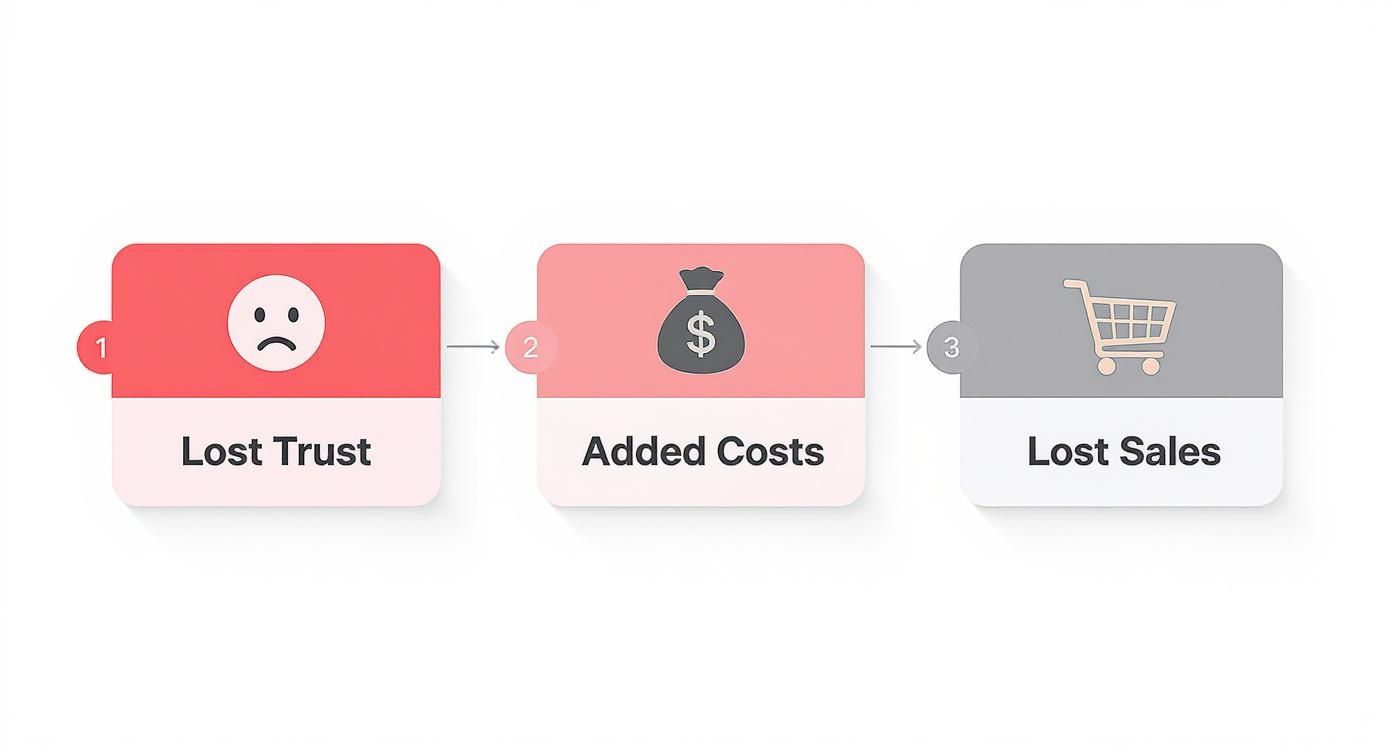
As you can see, poor inventory management first erodes customer trust. That then leads to extra operational costs and, ultimately, lost sales.
Relying on a single supplier is a significant risk. If they face production issues, shipping delays, or quality control problems, your entire business can be affected. It is much smarter to build relationships with at least two or three different suppliers for your key products. This creates a vital safety net.
This approach gives you several key advantages:
By combining solid forecasting, calculated safety stock, and a diversified supplier base, you build an operation that can handle disruptions and reduce the need for backorders, protecting both your revenue and your reputation.
A backorder does not have to be a negative experience. If you handle it correctly, it can be an opportunity. With transparent and proactive communication, you can turn a potentially frustrating situation into a chance to show your customers you care, strengthening their long-term loyalty. The key is to shift from damage control to relationship building.
The moment you confirm an item is on backorder, your first job is to inform the customer. Do not wait. A prompt, honest email is essential. Apologize for the delay, explain the situation simply, and—most importantly—provide a realistic new delivery estimate. This first message sets the tone for the entire experience.
Keeping your customers in the dark is the fastest way to get a cancelled order. Silence creates frustration. Actionable Insight: Set up an automated email to send weekly updates, even if the only news is that their order is still on track for its new estimated arrival. This small touch shows you haven’t forgotten about them.
If another delay occurs, be upfront about it immediately. Honesty builds more trust than a missed deadline. Explain what happened without making excuses and provide a revised timeline. This transparency can be the difference between a patient customer and a negative one-star review. For more on this, check out our guide on how to get good reviews for your online store.
Never make your customer feel trapped. Empower them by giving them choices. Every communication should include clear instructions on how they can cancel their order for a full, no-questions-asked refund if they prefer not to wait.
You should also consider offering a small gesture of goodwill to thank them for their patience. It shows you value their business and respect their time.
For more detailed help on crafting messages that keep customers happy during delays, it’s worth exploring best practices for customer service management.
Sometimes, factors beyond your control can extend backorder timelines, making transparency even more critical. For instance, recent labour shortages in Singapore have hit supply chains hard. With a high labour shortage rate of around 79%, many companies are facing unexpected operational delays. When these things happen, explaining the situation honestly helps manage expectations and turns a potential negative into a moment of trust.
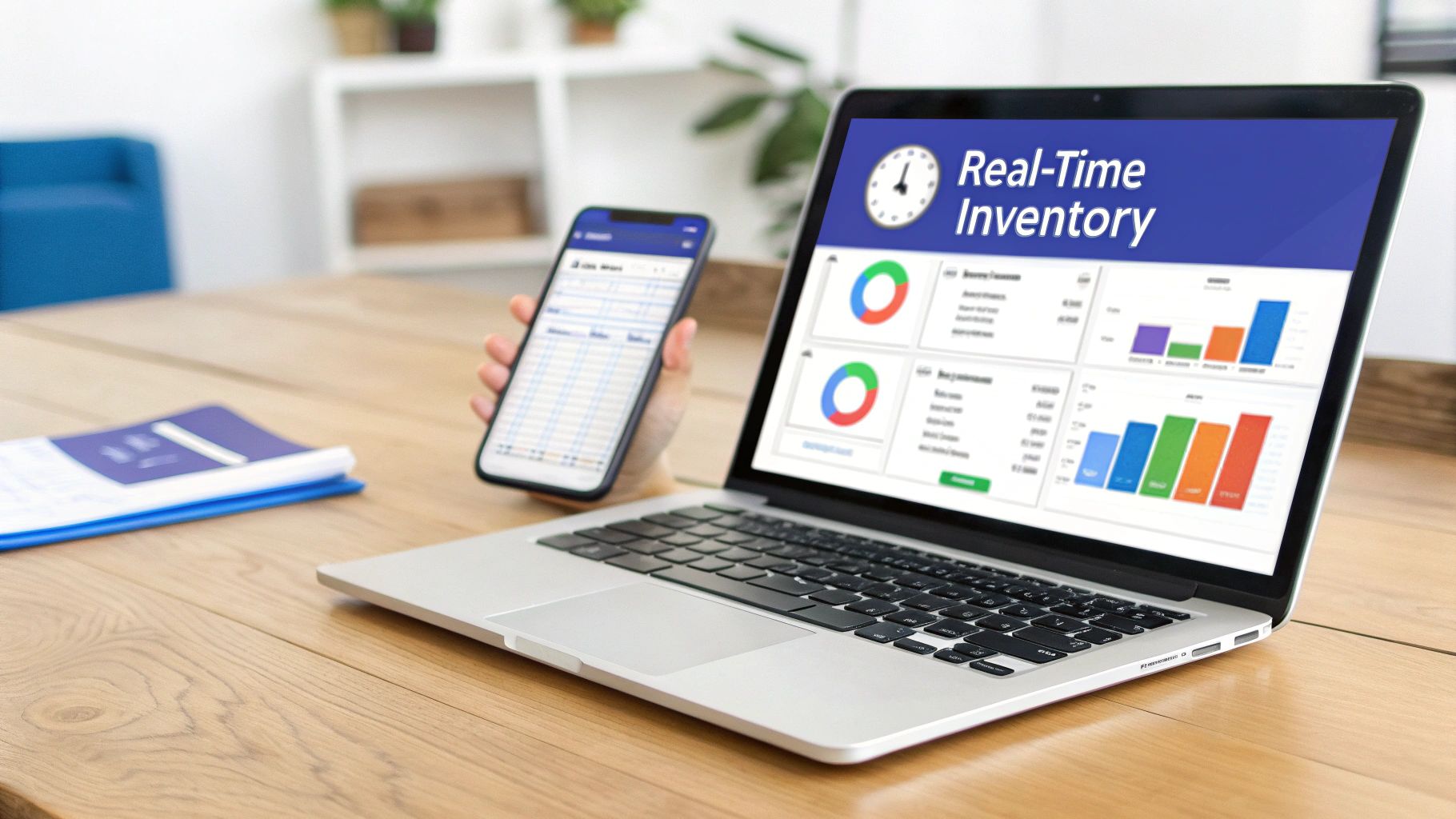
If you are still using spreadsheets to track your inventory, you are inviting backorders to happen. Manual tracking is prone to error. The best defense against stockouts and overselling is modern inventory management technology, which replaces guesswork with automation and accuracy.
A centralized platform gives you a complete view of your stock across every sales channel. This unified view prevents the classic e-commerce mistake: selling an item on your website that sold out on a marketplace just moments before.
For example, imagine you have five units left of a popular handbag. A customer buys all five on Lazada. A smart, integrated system like OneCart would instantly update your stock levels to zero across Shopee, TikTok Shop, and your Shopify store. This makes it impossible for another customer to order an item you no longer have.
The best platforms do more than just sync numbers. They come with tools designed to automate the processes that, when done manually, lead to stock shortages and unhappy customers.
Think of these features as a powerful safety net for your business:
Actionable Insight: Investing in the right technology directly addresses the data gaps and delays that cause expensive backorders. It shifts your entire operation from reactive fire-fighting to proactive, strategic inventory control.
This push for better automation does present a challenge. While Singapore is a leader in AI talent compensation, a local shortage of AI specialists can slow the development of next-generation supply chain tools. This scarcity affects everyone, limiting the availability of new AI-powered solutions for forecasting and logistics that are key to eliminating backorders. You can find more insights on the global AI talent shortage on SecondTalent.com.
Even with the best plan, you will encounter specific questions about handling backorders. Here’s a quick rundown of common dilemmas business owners face, with straightforward advice to help you decide what’s right for your store.
This is a significant decision. Allowing backorders can be a great way to capture sales you would otherwise lose when an item goes out of stock. A customer wants your product now, and letting them place a backorder keeps that sale locked in. It works well if you have reliable suppliers and a clear understanding of when you will be restocked.
However, if your supply chain is unpredictable, it can quickly lead to customer frustration and cancelled orders. Actionable Insight: Start by enabling backorders only for your best-selling products—the ones with a consistent restocking timeline. Test the process with these items before implementing it across your entire catalog.
There is no single answer, but a wait of one to four weeks is generally acceptable for most consumer goods. If you are selling high-value, specialty, or custom-made items, customers are often willing to wait much longer.
The most critical factor is not the wait time itself, but transparency. Be completely honest about the estimated delivery date on the product page. If that timeline changes, inform your customers immediately. Honesty builds trust, while silence creates frustration.
You need to be careful to keep your finances in order. When a customer pays for a backordered item, you have collected their money, but you have not technically earned it yet because the product has not shipped.
Here is the correct way to record it: initially, log the payment as a liability on your balance sheet. Most business owners use an account called ‘Customer Deposits’ or ‘Unearned Revenue’. Once the item is shipped to the customer, you can then move that amount from the liability account to ‘Sales Revenue’. This simple practice ensures your financial reports are accurate and aligns with standard accounting principles.
Stop losing sales to stockouts. With OneCart, you get real-time, synchronised inventory across all your sales channels like Shopee, Lazada, and Shopify, preventing overselling before it happens. See how you can automate your operations at https://www.getonecart.com.
Automate & Scale Your Online Business with OneCart
Start a Free TrialUsed by hundreds of merchants in Singapore & Southeast Asia