Pre-Order Guide: How It Works on Shopee, Lazada & Shopify 2026
A pre-order lets customers buy before stock arrives. How they work, pre-order vs backorder, and step-by-step setup on Shopee, Lazada & Shopify.
A pre-order lets customers buy before stock arrives. How they work, pre-order vs backorder, and step-by-step setup on Shopee, Lazada & Shopify.
A pre-order is a purchase made before a product is available to ship. For ecommerce sellers on Shopee, Lazada, Shopify, and TikTok Shop, pre-orders are one of the most powerful ways to validate demand, secure revenue upfront, and avoid dead stock. Instead of guessing how much inventory to order, you let real customer purchases guide your buying decisions. In 2026, pre-orders are especially important for multichannel sellers — where overselling a pre-order item on one marketplace while stock is allocated elsewhere can damage seller ratings and trigger penalties.
Below, we cover exactly how pre-orders work, the difference between pre-orders and backorders, how to set them up across major platforms, and the mistakes that trip up most sellers.
A pre-order item is a product customers can purchase before it becomes available for immediate delivery. Pre-orders allow businesses to sell items that are still in production, awaiting shipment from suppliers, or part of an exclusive product launch. For customers, it’s a chance to secure a product early — often with perks like early-bird pricing or priority shipping.
For example, a Shopee seller launching a new skincare line can list products as pre-order 2-3 weeks before supplier delivery, collecting orders and using the revenue to cover the purchase cost. This is particularly common in Southeast Asia where sellers source from China and need 14-21 day lead times for production and shipping.
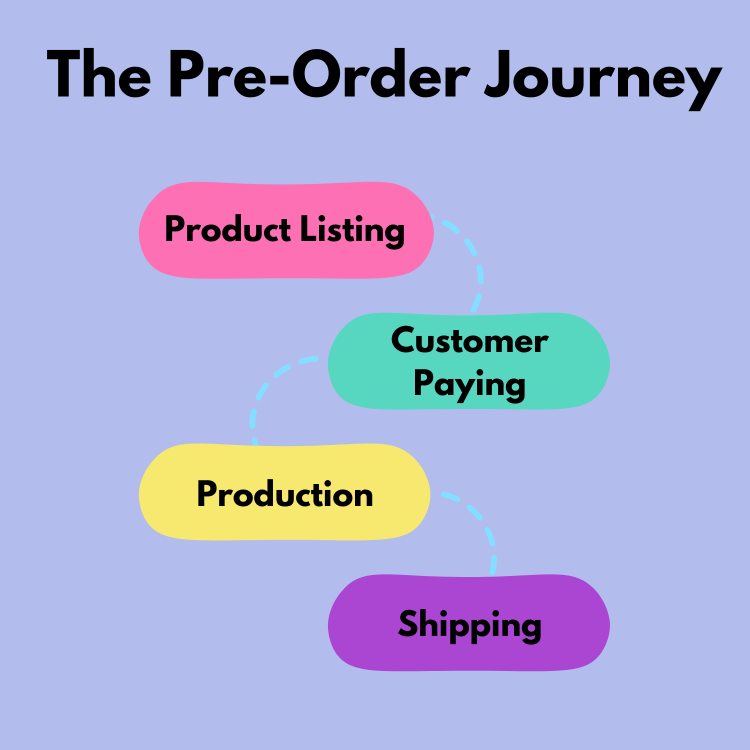
The process for pre-orders is straightforward:
Example: A multichannel seller on Shopee and Lazada launches a pre-order for a trending phone case design. They collect 200 orders across both platforms over 5 days, then place a single bulk order with their Guangzhou supplier — paying less per unit than if they’d ordered speculatively. The lead time from order to delivery is 10 days.
Many sellers confuse pre-orders with backorders, but they serve different purposes:
| Pre-Order | Backorder | |
|---|---|---|
| Timing | Before product exists or is in stock | After product sells out |
| Customer expectation | Knows they’re buying something upcoming | May not realise item is out of stock |
| Seller control | Planned — you choose to offer it | Reactive — happens when you run out |
| Risk level | Lower (you control the timeline) | Higher (customers already expect delivery) |
| Best for | New product launches, seasonal items, limited editions | Unexpected demand spikes, supply chain delays |
Actionable Insight: If you frequently deal with backorders, it’s a sign your demand forecasting or safety stock levels need adjustment. Pre-orders are the proactive alternative.
Pre-orders are more than a marketing tactic — they’re a core inventory strategy for modern ecommerce sellers. Here’s why:
Pre-orders let you collect revenue before you pay your supplier — a massive advantage for sellers sourcing from China or other overseas manufacturers. Instead of tying up $5,000-$10,000 in speculative inventory, you use pre-order revenue to fund the purchase order.
Example: A Lazada seller pre-orders a new wireless earbuds model for 2 weeks before supplier delivery. They collect 150 orders at $29 each ($4,350), which covers the bulk purchase cost of $3,200. The remaining $1,150 is profit locked in before the product even ships.
Pre-orders are the most accurate form of demand validation — real customers putting real money down. By tracking pre-order volumes, you can adjust purchase quantities to match actual demand rather than guessing.
Example: A multichannel seller lists a new phone case design on both Shopee and their Shopify store. After 5 days, Shopee has 180 pre-orders and Shopify has 40. They order 250 units (with 10% buffer for returns and future orders) instead of the 500 they would have ordered blindly.
Pre-orders build anticipation and create a sense of exclusivity. On platforms like TikTok Shop, sellers combine pre-orders with live selling to drive urgency — showcasing samples during a livestream and taking pre-orders in real-time.
Example: A beauty seller on TikTok Shop Live demonstrates a new serum, offers a 15% early-bird pre-order discount, and collects 300 orders in a single 2-hour session.
Holding too much inventory ties up capital and increases storage costs, while too little risks stockouts and missed sales. Pre-orders eliminate guesswork by aligning inventory with actual demand. For products with steady demand outside of pre-order windows, an EOQ calculator can help you find the order quantity that minimises total holding and ordering costs.
Example: A seasonal seller uses pre-orders for Chinese New Year gift sets. They sell exactly 500 sets via pre-order across Shopee, Lazada, and their own site — avoiding the 200+ unsold units they had the previous year when they ordered based on estimates.
Being first to market with trending products gives you a ranking advantage on marketplaces. A pre-order listing that collects early orders and reviews will outrank competitors who wait until stock arrives to list.
Example: A seller spots a trending product at the Canton Fair and immediately lists it for pre-order on Shopee with a 3-week delivery window. By the time competitors have stock, they already have 50+ orders and reviews, securing a higher search position.
Each marketplace handles pre-orders differently. Here’s how to set them up on the platforms most commonly used by multichannel sellers in 2026.
Shopee has a built-in pre-order feature. When creating or editing a listing:
Key limitations: Shopee caps pre-order processing at 7-15 days (varies by market). If your lead time is longer, you’ll need to manage customer expectations via listing descriptions. Shopee pre-order items also rank lower in default search results compared to ready-stock items.
Lazada’s pre-order setup is similar:
Key consideration: Lazada has strict shipping SLAs. If you exceed the promised delivery window, you’ll face penalties and potential order cancellations. Always add 2-3 days buffer to your estimates.
TikTok Shop supports pre-orders with extended dispatch timelines:
Unique advantage: TikTok’s algorithm rewards engagement. A live selling session that generates lots of comments and shares will boost your pre-order listing’s visibility.
Shopify doesn’t have native pre-order support, but several apps make it easy:
Tip: When selling pre-orders across both Shopify and marketplace channels, use OneCart to sync pre-order quantities across all platforms and prevent overselling.
The biggest risk with pre-orders is overselling — taking more orders across all your channels than your supplier can deliver. This is especially dangerous for multichannel sellers.
Example: You list a product for pre-order on Shopee, Lazada, and your Shopify store with a limit of 500 units. Shopee sells 300, Lazada sells 150, and Shopify sells 100 — that’s 550 orders against 500 units. Now you have 50 unhappy customers and potential marketplace penalties.
The solution: Use a centralised inventory management tool like OneCart that syncs stock counts across all platforms in real-time. When a pre-order comes in on Shopee, available quantities decrease on Lazada and Shopify automatically.
Transparency is critical. Set clear policies and display them prominently:
Actionable Insight: Add your pre-order policy as a pinned comment on your marketplace listing. This reduces customer enquiries by 30-40% and shows Google/marketplace algorithms that your listing has active engagement.
Marketplace customers have high expectations. Shopee buyers expect delivery within the pre-order window — miss it, and you’ll face cancellation requests, bad reviews, and penalty points.
Rules of thumb for setting pre-order windows:
| Sourcing Method | Suggested Pre-Order Window | Buffer |
|---|---|---|
| Local supplier (same country) | 3-5 working days | +2 days |
| Cross-border (China → SEA) | 10-15 working days | +3-5 days |
| Custom/manufactured goods | 20-30 working days | +5-7 days |
Always factor in your lead time — total time from placing the order with your supplier to having stock ready to ship.
Incentivise early purchases with tiered or time-limited pricing:
Example: A seller launches a new travel organiser at $15.90 pre-order price (regular $21.90) for the first week on Shopee. They collect 280 orders at the lower price, lock in a bulk rate with their supplier, and still make $4.50 profit per unit — with zero risk of dead stock.
Managing pre-orders manually across multiple platforms is a recipe for overselling and missed shipments.
Track pre-order metrics to improve future campaigns:
Use sales reports to track pre-order performance alongside regular inventory sales.
The most common and most damaging mistake. You accept 500 pre-orders across 3 platforms but your supplier can only deliver 400 units.
Why it happens: Selling on multiple platforms without centralised inventory tracking. Each platform shows separate stock counts that aren’t connected.
How to avoid it:
Sellers often promise delivery based on best-case supplier timelines, then face delays from customs, quality issues, or holidays (Chinese New Year, Golden Week, etc.).
How to avoid it:
Customers who pre-order expect more communication than regular buyers. Radio silence between purchase and delivery creates anxiety, support tickets, and cancellation requests.
How to avoid it:
Each platform has different rules for pre-orders. Shopee limits processing time to 7-15 days. Lazada has strict shipping SLAs with financial penalties. TikTok Shop flags listings with high cancellation rates.
How to avoid it:
If customers get no benefit from pre-ordering (waiting weeks for the same price), they’ll simply wait for ready stock. You’ve added risk with no reward.
How to avoid it:
A pre-order is when a customer purchases a product before it’s available for immediate delivery. The seller collects payment (or a deposit), then ships the item once stock arrives — typically within 7-30 days depending on the platform and sourcing method. Pre-orders let sellers validate demand and fund inventory purchases with upfront revenue.
On Shopee, you enable pre-orders in the product listing settings by toggling the Pre-Order option and setting a processing time (up to 7-15 working days depending on your market). Shopee displays a “Pre-Order” badge on your listing. Customers pay at checkout, and you ship within the processing window. Exceeding it triggers penalties.
A pre-order is planned — you deliberately list a product before stock arrives to gauge demand. A backorder is reactive — a product sells out unexpectedly and you take orders for the next restock. Pre-orders give you control over timing and expectations; backorders often frustrate customers who expected immediate delivery.
Yes, but you need centralised inventory management to avoid overselling. When you accept a pre-order on Shopee, the available quantity must decrease on Lazada, TikTok Shop, and Shopify simultaneously. Tools like OneCart handle this automatically by syncing stock counts across all connected platforms.
Start with your supplier’s minimum order quantity (MOQ) — learn more in our MOQ guide. Set your pre-order cap at 90% of your confirmed supplier allocation. If pre-orders exceed that cap, either negotiate a larger order with your supplier or close the pre-order campaign. Use a reorder point calculator to determine when to transition from pre-order to regular inventory replenishment.
Communicate immediately with your customers. Send an update explaining the delay, provide a revised delivery date, and offer a goodwill gesture (small discount, free shipping on next order). On marketplaces, contact seller support to request a delivery window extension before the deadline passes. Transparency prevents cancellations — most customers will wait if they know what’s happening.
Pre-orders can be more profitable for small sellers than for large ones. You avoid tying up capital in unsold inventory, you can negotiate better bulk rates by knowing exact quantities, and you eliminate the risk of dead stock. The key is managing customer expectations and delivery timelines carefully.
Ready to manage pre-orders across all your sales channels? OneCart syncs inventory, orders, and fulfillment across Shopee, Lazada, TikTok Shop, Shopify, and more — so you can take pre-orders confidently without the risk of overselling. Platforms supported include Amazon, eBay, WooCommerce, Qoo10, and 50+ others. Start your free trial today.
Automate & Scale Your Online Business with OneCart
Start a Free TrialUsed by hundreds of merchants in Singapore & Southeast Asia