D2C vs B2C: What Is Direct-to-Consumer & How to Build a D2C Brand [2026]
D2C vs B2C in 2026: build a direct-to-consumer brand across Shopify, marketplaces and TikTok Shop, with CAC/CLV benchmarks and SEA case studies.
D2C vs B2C in 2026: build a direct-to-consumer brand across Shopify, marketplaces and TikTok Shop, with CAC/CLV benchmarks and SEA case studies.
Direct-to-Consumer (D2C) is no longer just a Western trend — it is the dominant growth model for ecommerce brands worldwide. In 2026, the global D2C ecommerce market is valued at over $240 billion, driven by brands that sell directly through their own websites, social media shops, and increasingly through marketplaces like Shopee, Lazada, and TikTok Shop. AI-led shopping agents, social-first product launches, and the maturing creator economy have all pushed D2C beyond a single-channel website model — the brands winning today operate everywhere their customers are.
The reality in 2026 is that most successful D2C brands no longer operate a single channel. They combine their own Shopify or WooCommerce store with marketplace listings, social commerce, and even live selling — creating a hybrid D2C + marketplace model that maximises reach while retaining brand control.
This guide covers everything you need to know about D2C: what it is, how it differs from B2C, the advantages and challenges, and a practical step-by-step framework for building a D2C brand in 2026 — whether you are selling in Singapore, Southeast Asia, or globally.
Direct-to-Consumer (D2C) is a business model where brands sell their products directly to customers without relying on third-party retailers, wholesalers, or intermediaries. By bypassing traditional distribution channels, D2C brands maintain full control over branding, marketing, pricing, and fulfilment.
In practice, D2C in 2026 means selling through:
Actionable Insight: The most successful D2C brands in Southeast Asia use a multichannel approach — selling on their own store AND marketplaces. This hybrid model captures both brand-loyal and discovery-driven buyers.
Direct Customer Interaction:
Brand Control:
Use of Owned Channels:
Data-Driven Decisions:
D2C reflects a fundamental shift in consumer behaviour. Buyers increasingly value personalised experiences, ethical production, and brand transparency — all of which are easier to deliver when businesses interact directly with their audience.
Several factors are accelerating D2C growth in 2026:
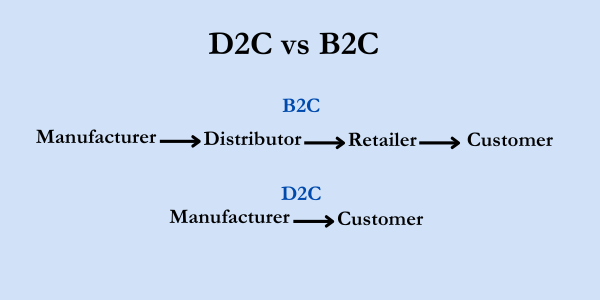
Although both D2C and B2C focus on selling to end-users, their operational structures differ significantly. Understanding these differences is crucial for deciding which model — or combination — fits your business.
D2C: Brands oversee every step from manufacturing to delivery, controlling product quality and reducing costs.
B2C: Involves intermediaries such as wholesalers, distributors, and retailers — reducing logistical responsibility but also limiting control over pricing and customer experience.
D2C: Enables direct interaction with customers, fostering stronger relationships and tailored experiences through first-party data.
B2C: Relies on retailers to manage customer interactions, often resulting in diluted brand identity.
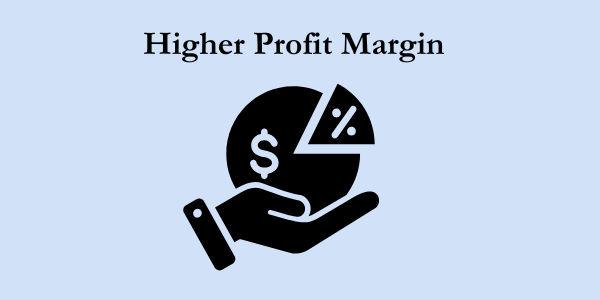
D2C: Eliminating intermediaries allows brands to set competitive prices while maintaining healthy profit margins. They can experiment with subscription services, bundles, or segmented pricing.
B2C: Pricing is influenced by retailer markups, often making products 20-40% more expensive for end consumers.
D2C: Brands own the customer data collected through direct interactions, providing invaluable insights for demand planning and forecasting.
B2C: Data resides with the retailer or marketplace (e.g., Shopee or Lazada control buyer data), limiting the brand’s ability to make data-driven decisions.
D2C: Full control over branding means businesses can craft a unique, consistent message across all touchpoints. Social media, influencer partnerships, and content marketing drive direct engagement.
B2C: Branding efforts are shared with or overshadowed by retailers and marketplace algorithms.
D2C: Brands handle logistics and customer service directly, building trust through superior service. Using tools like OneCart helps manage inventory synchronisation across channels while maintaining the D2C experience.
B2C: Customer service is managed by retailers, leaving brands out of the loop on complaints and returns.
D2C: A direct line to customers enables brands to test, iterate, and launch products quickly. Many D2C brands use pre-orders to validate demand before committing to production.
B2C: Third-party involvement often delays launches and responses to market changes.
| Aspect | D2C | B2C | Hybrid (D2C + Marketplace) |
|---|---|---|---|
| Supply Chain | Direct control, end-to-end | Relies on intermediaries | Brand-controlled with marketplace fulfilment options |
| Customer Data | Fully owned | Controlled by retailers | Partial — own store data + limited marketplace data |
| Pricing | Higher margins, full control | Middlemen add markups | Mix of direct pricing + marketplace fees |
| Customer Support | Direct, personalised | Handled by retailers | Direct for own store, marketplace-managed for listings |
| Branding | Fully controlled | Shared or diluted | Strong on own store, limited on marketplace |
| Reach | Limited to own traffic | Wide via retail networks | Best of both — brand traffic + marketplace discovery |
The D2C model empowers brands with unique advantages that drive profitability, agility, and customer loyalty. Here are the key benefits — with practical ecommerce context for 2026.
| Channel | Typical Seller Fees | Brand Control |
|---|---|---|
| Own Shopify store | 2-3% (payment processing only) | Full |
| Shopee | 6-12% commission + fees | Limited |
| Lazada | 3-7% commission | Limited |
| Traditional retail | 40-60% wholesale margin | Minimal |

The biggest shift in D2C over the past two years is the recognition that pure D2C is limiting. Brands that only sell through their own website miss out on the massive discovery traffic that marketplaces provide.
In 2026, the dominant model is hybrid D2C — where brands maintain their own Shopify or WooCommerce store (for brand control and higher margins) while also listing on marketplaces (for reach and discovery).
Actionable Insight: The question is no longer “D2C or marketplace?” — it is “how do I maintain a D2C brand experience across ALL my sales channels?”
The D2C playbook in 2026 looks different from what worked in 2022. Rising paid-acquisition costs, AI-led search, and a generation that buys from creators rather than brand websites have reshaped which tactics actually scale. Six trends are defining the next wave.
Shopping agents — embedded in ChatGPT, Perplexity, Google Gemini, and standalone apps like Operator — now place orders on behalf of customers. They read product feeds, compare specs, apply coupons, and check out without ever rendering your homepage. For D2C brands this means the product feed is becoming as important as the storefront. Make sure your Shopify, marketplace, and social-shop catalogs all expose clean structured data (price, availability, variants, shipping ETA) — agents will skip listings with broken or stale feeds.
The cheapest channel for a new D2C brand in 2026 is no longer Meta, it is creator partnerships and short-form video on TikTok Shop and Instagram Reels. Brands launching today routinely seed 30–80 nano-creators (1k–50k followers) with product before opening an ad account, then use the highest-performing organic videos as paid creative. Acquisition costs on this path land 40–60% below Meta CPM, and the same content powers the brand’s marketplace storefronts.
Generative tools (FLUX, Midjourney, Sora, plus marketplace-native tools like Shopee’s AI listing assistant) cut product photography cost by 70–90% for catalog and lifestyle imagery. Most D2C brands now use AI for first drafts of product titles, descriptions, alt text, and FAQ content, with humans editing for accuracy. The gating factor is no longer cost — it is the volume of SKUs and SKU variants you can produce, which favours brands with strong inventory management workflows.
Pure transactional D2C is being replaced by recurring revenue mechanics: subscribe-and-save (Pet Lovers Centre, Naked Lab), membership tiers (Castlery, Love, Bonito), and limited drops (POMELO Now, Aimer Beauty). These mechanics push average order value (AOV) up, lower payback periods, and give brands the predictability investors look for at Series A and beyond. Use pre-orders to test demand for a drop before manufacturing.
What started as scheduled streams on Shopee Live and TikTok Live in 2022–2023 has shifted to always-on showrooming — brands run 8–14 hours of live coverage per day across multiple SKUs and hosts. Average GMV per live hour for a top-100 SEA D2C brand sits at US$300–800 in 2026. See our live selling guide for the operating model.
Temu consignment, Amazon Global Selling, TikTok Shop’s cross-border programmes, and SEA-wide platforms like Lazada now let SEA brands sell into the US, EU, and Latin America without owning a warehouse abroad. This collapses the launch cost of a global D2C brand from US$50k–200k (legal entity, 3PL, freight, agency) to under US$5k in platform fees and content. We unpack the operating model in our cross-border ecommerce guide.
If you only track revenue, you will miss the unit-economics drift that bankrupts most D2C brands by year three. The four numbers below are the operating dashboard every D2C founder should know — broken down by category and channel.
| Channel | Median CAC (2026) | Notes |
|---|---|---|
| Marketplace listing (Shopee, Lazada, TikTok Shop) | US$3–8 | Embedded in marketplace fees and ads — no separate CAC line |
| Organic social (TikTok, IG Reels) | US$5–15 | Driven by content velocity, not budget |
| Paid social (Meta, TikTok Ads) | US$25–60 | Apparel/beauty toward upper end |
| Google Search (brand + non-brand) | US$15–40 | Strong for high-intent commercial queries |
| Influencer / affiliate | US$10–35 | Highly variable; nano-creators outperform macro |
| Email and SMS (retention) | US$0.50–3 | Lowest cost, but only if list >5k |
| Category | Median CLV (2026) | Repurchase Window |
|---|---|---|
| Beauty and personal care | US$120–280 | 60–90 days |
| Apparel and fashion | US$90–220 | 90–180 days |
| Food and beverage | US$180–420 | 30–60 days |
| Home and lifestyle | US$150–350 | 180–365 days |
| Electronics accessories | US$60–140 | 365+ days |
| Pet care | US$240–520 | 30–45 days |
| Channel | Median Conversion Rate (2026) |
|---|---|
| Own Shopify store (cold traffic) | 1.0–2.5% |
| Own Shopify store (returning) | 8–14% |
| Marketplace listing (Shopee) | 2.0–4.5% |
| Marketplace listing (Lazada) | 1.5–3.5% |
| TikTok Shop (in-feed) | 0.8–2.2% |
| Live selling session | 6–18% |
Actionable Insight: Aim for a CAC payback period under 6 months and a CLV-to-CAC ratio of 3:1 or better. If your numbers fall short, the fix is rarely “more ads” — it is improving retention (email flows, subscribe-and-save), cutting marketplace channels with low margin, or raising AOV with bundles and segmented pricing.
Generic D2C advice is everywhere. What is harder to find is what actually works at scale in Southeast Asia — where buying behaviour, payment methods, and platform dominance differ market by market. Below are six SEA-rooted D2C brands that have hit meaningful scale with hybrid models.
| Brand | Origin | Hero Channels | Approximate Scale (2026) | What They Did Right |
|---|---|---|---|---|
| Love, Bonito | Singapore | Own site + retail + Shopee + Lazada | US$120M+ ARR | Built a brand-first wardrobe for Asian fits, then layered marketplaces for discovery while keeping retail as the trust engine |
| Pomelo Fashion | Thailand | Own site + Lazada + LINE Shopping | US$60–80M GMV | “Tap. Try. Buy.” pickup model lets customers reserve at retail, removing the D2C returns friction |
| Oxwhite | Malaysia | Own site + TikTok Shop + Shopee | US$25–40M ARR | Pre-order-only model and direct customer conversations on social keep working capital lean |
| Naked Lab | Singapore | Own site + Shopee + Lazada | US$15–25M ARR | Subscribe-and-save bedding economics with 60–90 day repurchase via accessories drops |
| Charles & Keith | Singapore | Own site + retail + Tmall + Lazada | US$650M+ retail + ecom | Proof that D2C brands can build a global retail moat instead of being marketplace-only |
| Mamaearth | India (regional SEA) | Own site + Amazon + Flipkart + Nykaa | US$240M+ ARR | Used Amazon for discovery, then built CRM funnels back to own site for subscription beauty boxes |
Actionable Insight: The thread linking these brands is channel-level discipline — they know which channel acquires (marketplace), which retains (own store + email), and which scales internationally (cross-border + retail). Without a centralised inventory and order system, the operational drag of running this many channels eats every margin gain. Brands hitting US$10M+ ARR uniformly run their multichannel ops on a dedicated platform rather than spreadsheets.
D2C offers clear advantages, but brands must navigate real challenges. Here are the most common — with practical solutions for 2026.
D2C brands shoulder the full cost of acquiring customers through online marketing, social media ads, and influencer collaborations. In 2026, Meta and Google ad costs continue rising — making organic channels and marketplace discovery increasingly important.
Solutions: Invest in SEO and content marketing to reduce paid ad dependence. Use marketplace listings as a low-cost discovery channel. Build customer loyalty programmes to improve retention.
D2C brands manage inventory, shipping, and returns end-to-end — which becomes overwhelming as order volumes grow across multiple channels. In Southeast Asia, last-mile delivery costs and logistics partners vary significantly by country.
Solutions: Use OneCart to automate inventory synchronisation across channels. Partner with 3PLs for warehousing and shipping. Leverage marketplace fulfilment services (Shopee Xpress, Lazada logistics) for marketplace orders.
The low barriers to entry that make D2C attractive also mean intense competition. Thousands of new D2C brands launch every month across SEA.
Solutions: Focus on a strong unique value proposition. Invest in brand storytelling. Differentiate through customer experience, not just product features.

Without physical stores, D2C brands must build credibility entirely online — especially challenging in markets where cash-on-delivery and scepticism about unfamiliar online shops remain common.
Solutions: Highlight customer testimonials and user-generated content. Offer generous return policies. Use live selling to demonstrate products in real-time and build trust through face-to-face interaction.
Managing stock levels across your own store, Shopee, Lazada, TikTok Shop, and Amazon is the operational challenge that kills most scaling D2C brands. Without synchronisation, you risk stockouts on one channel while sitting on excess stock on another.
Solutions: Use a multichannel inventory management tool to synchronise stock across all channels in real-time. Calculate safety stock properly to buffer against demand variability. Monitor inventory turnover by channel.
| Challenge | Solution |
|---|---|
| High CAC | Organic SEO, marketplace discovery, retention programmes |
| Logistics complexity | OneCart + 3PL partners + marketplace fulfilment |
| Competition | Strong UVP, storytelling, customer experience focus |
| Building trust | Reviews, UGC, live selling, generous return policies |
| Multichannel inventory | Real-time sync with OneCart, safety stock buffers |
Here is a practical, step-by-step framework for launching a D2C brand — whether you are starting from scratch or transitioning from pure marketplace selling.
Research your target market to find gaps or underserved segments. Use marketplace data (Shopee trending searches, Amazon Best Sellers) to validate demand before investing in inventory. Many successful D2C brands start by selling on marketplaces first, then launch their own store once they have validated product-market fit.
Set up a Shopify or WooCommerce store as your brand’s home base. This is where you control the experience, collect customer data, and earn the highest margins. Key elements:
Expand to marketplaces where your target buyers already shop. In Southeast Asia, this typically means Shopee, Lazada, and TikTok Shop. For global reach, consider Temu and Amazon.
Actionable Insight: Use a multichannel listing tool to push product listings to all platforms simultaneously, ensuring consistent titles, descriptions, and pricing.
As you add channels, centralise inventory and order management to prevent operational chaos. A tool like OneCart synchronises stock across your own store and every marketplace in real-time — so a sale on Shopee instantly updates your Shopify and Lazada stock levels.
Build your brand through content marketing, social media, and live selling. In 2026, content-to-commerce funnels — where a TikTok video leads directly to a TikTok Shop purchase — are the fastest-growing D2C acquisition channel in SEA.
Use first-party data from your own store plus marketplace analytics to personalise marketing. Implement email flows, retargeting ads, and WhatsApp campaigns to convert marketplace buyers into direct customers over time.
Partner with reliable 3PL providers or use marketplace fulfilment services. Calculate safety stock buffers and monitor reorder points to prevent stockouts during peak periods like 11.11 and 12.12 sales.
Track key ecommerce metrics by channel: customer acquisition cost (CAC), customer lifetime value (CLV), inventory turnover, and profit margins. Double down on what works, cut what does not.
Most “D2C is the future” content papers over the cases where D2C does not work. Going D2C — especially pure D2C without marketplace listings — is a poor fit when any of the following are true.
Actionable Insight: Treat D2C and marketplace selling as complementary stages, not competing strategies. Most successful SEA brands launch on marketplaces to validate demand and generate cash, then layer on D2C once they have a retention engine that justifies the higher CAC.
D2C (Direct-to-Consumer) is a business model where brands sell products directly to customers without relying on third-party retailers, wholesalers, or intermediaries. In 2026, most D2C brands use a hybrid approach — selling through their own website AND marketplaces.
D2C means the brand controls the entire customer relationship — from marketing to sales to fulfilment. B2C (Business-to-Consumer) typically involves intermediaries like retailers or distributors. The key difference is control: D2C brands own the data, set the prices, and manage the brand experience directly.
Yes — this is the dominant model in 2026. Most successful D2C brands maintain their own Shopify or WooCommerce store (for higher margins and brand control) while also selling on marketplaces like Shopee, Lazada, and TikTok Shop for discovery and reach. The key is using a tool like OneCart to synchronise inventory across all channels.
At minimum, you need:
Starting a D2C brand online can cost as little as $50-100/month (Shopify plan + domain). The biggest variable costs are inventory and marketing. Using marketplace channels alongside your own store reduces customer acquisition costs compared to pure D2C, since marketplaces provide built-in traffic.
D2C can be highly profitable due to higher margins (no retailer markups) and direct customer relationships. However, profitability depends on customer acquisition costs, fulfilment efficiency, and pricing strategy. Brands that combine D2C with marketplace selling typically achieve profitability faster because marketplace revenue offsets the cost of building brand awareness.
The biggest shifts in 2026 are agentic commerce (AI shopping agents placing orders directly from product feeds), social-first launches with creator seeding replacing paid performance as the cheapest acquisition channel, AI-generated product photography and copy that cuts content cost by 70–90%, subscription and drop models replacing pure transactional D2C, always-on live selling on TikTok Live and Shopee Live, and cross-border selling without a physical footprint through Temu consignment, Amazon Global, and TikTok Shop’s cross-border programmes.
In 2026, healthy D2C unit economics target a CLV-to-CAC ratio of 3:1 or better with CAC payback under 6 months. Median CAC sits at US$25–60 on paid social, US$5–15 on organic social and creator content, and US$3–8 on marketplace listings. Median CLV ranges from US$60–140 for electronics accessories up to US$240–520 for pet care, depending on repurchase frequency. If your ratio falls below 3:1, prioritise retention (subscribe-and-save, email flows, marketplace cross-sell) before scaling acquisition spend.
For most new brands in Southeast Asia, start on marketplaces first. Shopee, Lazada, and TikTok Shop give you discovery traffic and cash flow with CAC of US$3–8 — far cheaper than the US$25–60 paid-acquisition cost on your own Shopify store. Use the first 6–12 months on marketplaces to validate product-market fit, then launch your own Shopify store once you have a retention engine (email list, repeat customers, brand recognition). Tools like OneCart keep your inventory in sync across both channels from day one, so the migration is incremental, not a rebuild.
The D2C model in 2026 is not about choosing between your own store or marketplaces — it is about building a brand that works across every channel where your customers shop. Whether you sell skincare in Singapore, electronics in the Philippines, or fashion globally, the hybrid D2C approach gives you the best of both worlds: brand ownership and marketplace reach.
With the right tools — like OneCart for centralised inventory, order management, and multichannel listing — you can manage the complexity of selling across Shopify, Shopee, Lazada, TikTok Shop, and more from a single dashboard.
Ready to build your multichannel D2C brand? Start your free trial with OneCart and synchronise your inventory across every sales channel from day one.
OneCart unifies inventory, orders and listings across 20+ marketplaces — Shopee, Lazada, TikTok Shop, Shopify, Amazon and more.
Try OneCart freeUsed by hundreds of merchants in Singapore & Southeast Asia