Retail Price Definition: What It Is & How to Calculate It [2026] 2026
Master the retail price definition with formulas, marketplace fee breakdowns, and pricing strategies for ecommerce sellers on Shopee, Lazada, and TikTok Shop.
Master the retail price definition with formulas, marketplace fee breakdowns, and pricing strategies for ecommerce sellers on Shopee, Lazada, and TikTok Shop.
The retail price is the final amount a customer pays for a product, but it’s much more than just a number on a tag. It represents the total of every cost involved in getting that item to the shelf, plus the essential profit margin that keeps your business running and growing.
The simplest retail price formula for ecommerce sellers is:
Retail Price = (Product Cost + Operating Costs per Unit) ÷ (1 - Desired Profit Margin %)
For marketplace sellers who need to account for platform fees, use this adjusted formula:
Retail Price = (Product Cost + Desired Profit) ÷ (1 - Total Platform Fee %)
For example, if your product costs $30, you want $15 profit, and your platform takes 12% in total fees:
$45 ÷ 0.88 = $51.14 retail price
This ensures you actually receive your target margin after the marketplace takes its cut. Use our free markup calculator or COGS calculator to run these numbers instantly.
| Term | Definition | Who Pays | Example |
|---|---|---|---|
| Cost Price | What you pay to manufacture or purchase the product | You (the seller) | $30 per unit from supplier |
| Wholesale Price | Bulk price offered to retailers/resellers | Retailers buying in bulk | $45 per unit (50% markup on cost) |
| Retail Price | Final price the end consumer pays | Your customer | $79.90 (covers costs + overheads + profit) |
The gap between cost price and retail price is where your entire business model lives — covering overheads, marketing, platform fees, and profit. Use our wholesale price calculator to find the right markup between these price points.

Before diving into formulas, it helps to understand the story behind the retail price. Think of it as the complete narrative of a product’s journey, from an initial idea to the moment it lands in a customer’s shopping bag.
Let’s use a practical example: a locally brewed craft beer. The price on that bottle isn’t just the cost of water, hops, and barley. It must also cover all the other expenses required to run the brewery. Every detail adds a layer to the final cost.
These layers typically include:
This shows that the retail price is a strategic calculation, not a random number. For any Singaporean business owner, mastering this is fundamental to building a sustainable business.
Actionable Insight: Start tracking every operational cost—from your shop’s rent to your latest marketing campaign—as a small component of your final retail price. This mindset helps ensure your pricing strategy covers all expenses and supports your long-term growth.
This is a formally recognised concept in Singapore. The retail price is officially defined by the Department of Statistics (SingStat) as the average transaction price paid by consumers at various retail outlets. This data is collected from shops that Singaporean households frequently visit, providing a realistic picture of market prices. You can learn more about how Singaporean market prices are tracked on their official site.
Now that we know what a retail price is, how is it measured in a market like Singapore? The process is managed by the Department of Statistics (SingStat), which provides local business owners with a solid benchmark for their own pricing decisions.
At the core of this system is the “consumer basket,” a comprehensive, carefully selected list of goods and services. This list represents what a typical Singaporean household spends its money on, from weekly groceries and utility bills to bus fares and movie tickets.
Consumer spending habits change over time. To keep the basket current, SingStat conducts a large-scale Household Expenditure Survey (HES) every five years. They gather detailed spending data directly from households across the country.
This allows them to update the basket by adding new popular items (like bubble tea or streaming subscriptions) and removing those that are no longer common. This step ensures the data reflects modern life, current tastes, and new technologies.
Once the basket is finalised, the real work begins. Every month, government surveyors visit various retail outlets across the island to collect price data for every item on the list.
Practical Insight: Surveyors aim to capture the average price a real customer would pay at the counter, not just the cheapest price or a one-off sale. This approach provides a realistic snapshot of the market that helps shape Singapore’s key economic indicators.
The goal is to get a picture of average prices from a diverse range of shops. Price collectors gather data monthly, and this information is weighted based on the HES findings. This means the final figures reflect what people are actually spending, even as specific brands and models in the basket change.
All this data feeds into calculating the Consumer Price Index (CPI), Singapore’s primary measure of inflation. The CPI tracks the average change in prices that households pay for everything in their basket.
For a business owner, understanding this process provides valuable context. It highlights the importance of looking beyond just your product cost when setting prices. You must also account for all operating expenses. Tracking the CPI helps you see how your own pricing compares to broader market movements, which is a critical part of effectively managing your net sales margin.
Navigating the world of retail pricing involves understanding a few key terms. To build a strong pricing strategy, you need to be clear on the differences between cost, retail price, and the Manufacturer’s Suggested Retail Price (MSRP).
You can think of them as different stages in a product’s journey from your supplier to your customer.
Imagine you run a shop in Singapore selling high-end coffee machines. You buy a popular model from a local distributor for $350—this is your cost. The manufacturer’s website lists the same machine for $599; this is the MSRP.
Now, you need to set your price. After calculating your shop’s rent, employee wages, and marketing expenses, you decide to set the final selling price at $579. This is your retail price.
The infographic below illustrates how various data points, including household surveys and price collection, are used to create broader economic indicators that track market trends.
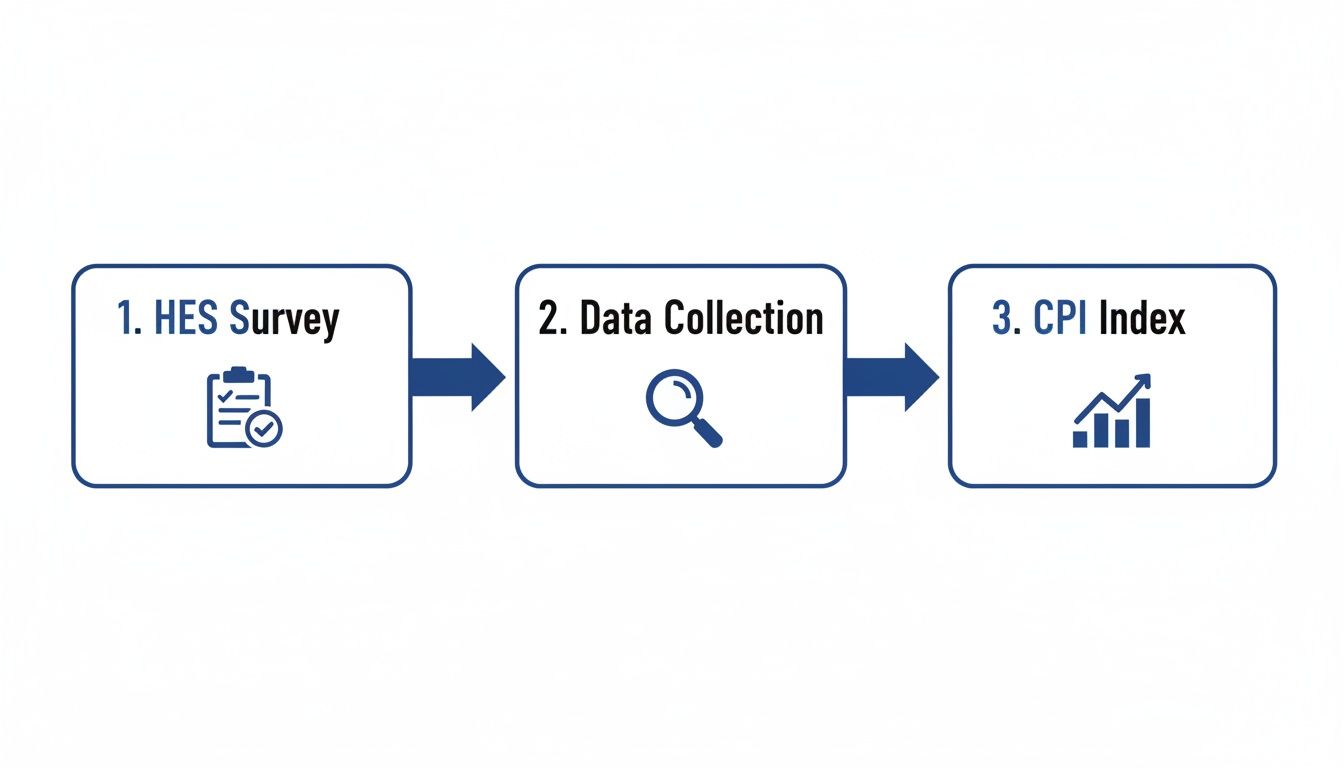
Understanding these distinctions is essential for building a profitable pricing strategy and avoiding common mistakes. With a clear grasp of these terms, you can more accurately calculate your earnings. To learn more, check out our detailed guide on margin vs markup.
If you sell on ecommerce marketplaces, your retail price must account for platform fees that traditional retailers never deal with. Every sale on Shopee, Lazada, or TikTok Shop incurs a stack of fees — commission, payment processing, shipping subsidies, and more — that eat directly into your margin.
This means your retail price calculation changes fundamentally. You are no longer just covering your product cost and overheads; you also need to absorb platform-specific charges that can vary from 2% to over 15% of each sale, depending on the marketplace and category.
Understanding the fee structures across platforms helps you set the right retail price for each channel. Here is a comparison for ecommerce sellers across major marketplaces:
| Fee Type | Shopee (SG) | Lazada (SG) | TikTok Shop | eBay | Etsy |
|---|---|---|---|---|---|
| Commission | 2–6% | 2–6% | 1–5% | 3–15% (category) | 6.5% |
| Transaction/Payment | 2.18% | 2% | 1% | 2.35% + $0.30 | 3% + $0.25 |
| Service Fee | 6.42% | varies | varies | — | — |
| Listing Fee | — | — | — | $0.35/listing | $0.20/listing |
| Affiliate Commission | — | — | 5–20% (seller-set) | — | 15% offsite ads |
| Typical Total | 10–14% | 6–10% | 7–15%+ | 13–16% | 10–12% |
These fees compound. A product with a $50 cost and a 40% markup would have a retail price of $70. But after Shopee’s fees of around 12%, your actual revenue drops to roughly $61.60 — leaving only $11.60 in gross profit instead of the $20 you planned for. To find the exact sales volume where you start turning a profit after platform fees, try our break-even calculator with ecommerce presets for Shopee, Lazada, and Amazon FBA.
Actionable Insight: Always calculate your retail price backwards from your desired profit margin after fees. Use our platform-specific fee calculators to see exactly what you keep: Shopee fee guide, Lazada fee calculator, TikTok Shop fee calculator, eBay fee calculator, or Etsy fee calculator. For a quick markup check, try our markup calculator or profit margin calculator.
A common mistake is using the same retail price across all channels. Each marketplace has different fee structures, different customer expectations, and different competitive landscapes.
For instance, TikTok Shop sellers who use affiliate marketing might need to price 10–20% higher than their Shopee listing to accommodate the affiliate commission on top of the platform’s base fees. Your own Shopify store, which has no commission fees, can afford to be priced more competitively or offer the same price with a higher margin.
A multi-channel pricing strategy treats each marketplace as its own pricing environment. Tools like OneCart allow you to manage separate pricing and inventory across all your channels from a single dashboard, so you can optimise each channel’s retail price without juggling multiple spreadsheets. For wholesale or B2B customers, generate a professional quotation with your channel-specific pricing built in. For a deeper look at how to segment your pricing, read our guide on price segmentation strategies.
Understanding the retail price definition is more than just a vocabulary lesson; it’s a powerful strategic tool for any Singaporean business owner. By using official data, you can turn abstract numbers into concrete actions that drive growth and profitability.
One of the most practical applications is benchmarking. You can use publicly available price data from sources like SingStat to compare your pricing against the broader market. This serves as a valuable reality check. Are your prices competitive, too high, or perhaps too low? Pricing too low can sometimes suggest lower quality to customers, so finding the right balance is key.
With a solid understanding of pricing data, you can make smarter operational choices. This allows you to move from guesswork to data-informed decisions across several critical areas of your business.
Here are a few practical applications:
This detailed information allows you to track specific price movements beyond the broad, average changes seen in the Consumer Price Index (CPI). While the CPI measures percentage shifts in a fixed basket of goods, this granular data reveals absolute price levels. You can dig deeper into how Singaporean prices and indices are compiled to better understand the mechanics.
Actionable Insight: Treat retail price data as strategic intelligence, not just a static number. Let it inform everything from your marketing campaigns to your supply chain logistics to give your business a tangible competitive edge.
The theory behind setting a retail price becomes clearer when you see it applied in the real world. In Singapore, there is no single formula for pricing. The final price tag on any item reflects a business’s unique operational realities and market position.
Let’s look at a few familiar local examples to see how different their pricing strategies are, based on their specific costs and business models.
For a hawker selling a bowl of laksa, the most significant costs are the daily ingredients. The market price of fresh prawns, coconut milk, and spices directly influences the cost of each bowl. Additionally, the stall’s monthly rent and utilities must be covered by every sale.
This is a practical example of cost-plus pricing. The hawker must ensure that every bowl sold covers its ingredients and contributes a small portion towards the rent. This business model relies on high daily volume to be profitable due to razor-thin margins.
Now, consider a large supermarket in a suburban mall. Its pricing strategy is completely different. They benefit from bulk purchasing, which allows them to secure a much lower cost per unit on thousands of items. However, they face massive overheads, including high mall rental fees, a large staff, and significant utility bills for refrigeration and lighting.
Import duties and logistics also play a major role, as over 90% of Singapore’s food is imported. The price of fresh produce, for example, must account for these external costs. It’s noteworthy that retail prices for oranges have remained stable at an average of 0.440 SGD each over a long period, showing incredible stability despite the reliance on imports.
Practical Insight: For large retailers, the final price is a careful balancing act. They juggle the savings from buying in bulk against the high operational costs of running a large physical store.
Finally, let’s examine a direct-to-consumer (DTC) online fashion brand. This business operates in a different environment, avoiding the high cost of physical retail rent. However, the savings on rent are often redirected to digital marketing and customer acquisition to stand out in a crowded online market.
Their pricing needs to cover manufacturing, shipping, and a significant budget for online ads and influencer marketing. These businesses often use value-based or dynamic pricing, enabling them to adapt quickly to online trends and customer demand. For anyone in e-commerce, learning to master dynamic pricing is essential for survival.
Your pricing strategy does not exist in a vacuum; it is constantly influenced by external forces. Staying aware of these market trends is vital to keep your retail prices relevant and your business profitable, especially in the fast-paced Singaporean market.
The rise of e-commerce is a major factor. Online shops often have lower overheads, allowing them to offer competitive prices. This puts pressure on brick-and-mortar stores to compete on factors other than price, such as exceptional customer service or unique in-store experiences.
Several forces are reshaping how ecommerce sellers set retail prices in 2026:
Global supply chain disruptions also directly impact your bottom line. A shipping delay or a sudden shortage of a key material can increase your cost of goods. This forces a difficult decision: absorb the extra cost or pass it on to your customers through a higher retail price.
Additionally, consumer behaviour is always evolving. There is a growing demand for sustainable and ethically sourced products. This means some shoppers are willing to pay a premium, creating opportunities for higher pricing if your brand aligns with these values.
Actionable Insight: The key is agility. Proactively monitoring these trends allows you to adjust your pricing thoughtfully, rather than being forced into reactive and often unprofitable decisions.
To adapt your retail prices effectively, you need to understand the underlying shifts. Regularly reviewing your sales data and market trends can provide clarity on where the market is heading. This approach turns market data from confusing noise into a strategic asset, ensuring your pricing remains both competitive and sustainable.
Before setting your retail price on any channel, run through this checklist to ensure your pricing is both competitive and profitable:
Actionable Insight: Most ecommerce sellers lose money not because their retail prices are too low, but because they don’t account for all fees and costs before setting the price. The formula in the section above — working backwards from your desired profit — prevents this.
Pricing your products can bring up many questions. Let’s address some of the most common ones for business owners in Singapore.
In Singapore, official retail price data is collected and updated monthly. The Department of Statistics (SingStat) gathers this information on an ongoing basis. This regular update is crucial as it feeds into key economic indicators like the Consumer Price Index (CPI), providing an accurate and timely view of the market.
The main difference lies in who the buyer is.
The wholesale price is what you, the retailer, pay the manufacturer or distributor when you buy products in bulk. The price per item is lower because you are purchasing a large quantity. You can use our wholesale price calculator to work out the right markup from your unit cost.
The retail price is the final price a customer pays in your store for a single item. The difference between the wholesale and retail prices is your markup, which must cover all your business costs (rent, staff, marketing) and generate a profit.
The Goods and Services Tax (GST) is a significant factor for retailers in Singapore. It is a consumption tax added to the price of most goods and services. As a retailer, the price displayed on your shelf must already include the current GST rate. It is your responsibility to collect this tax from the customer at the point of sale and remit it to the government.
For marketplace sellers, the retail price formula needs an extra layer. Start with your desired net profit per unit, add your product cost, then add the marketplace’s total fee percentage. The formula is:
Retail Price = (Product Cost + Desired Profit) ÷ (1 - Total Fee %)
For example, if your product costs $30, you want $15 profit, and Shopee takes 12% in total fees: $45 ÷ 0.88 = $51.14. This ensures you actually receive your target margin after the platform takes its cut. For a detailed breakdown of Shopee’s fee structure, check our dedicated guide.
A “good” margin depends on your industry and business model. As a general benchmark, ecommerce businesses typically target 20–50% gross profit margin on physical products. Fashion and accessories can command 50–65%, while electronics and consumables often operate at 10–30%. The key is that your margin must cover all operating costs (warehousing, marketing, staff, platform fees) and still leave a net profit. Use our profit margin calculator to check whether your current retail prices hit your target.
Yes, and you absolutely should. While it can be tempting to copy a competitor’s pricing or use a standard formula like “cost-plus,” your business is unique. A custom pricing formula should account for your specific costs, including raw materials, overheads, staff salaries, marketing expenses, and the profit margin you need to sustain and grow your business. This is the key to building a financially sound operation.
The formula is straightforward: Retail Price = Cost × (1 + Markup %). If your product costs $40 and you want a 60% markup, your retail price is $40 × 1.60 = $64. Note that markup and margin are different — a 60% markup equals a 37.5% profit margin. Our markup calculator converts between the two instantly so you always know your real margin.
Ready to stop juggling multiple sales channels and start pricing with confidence? OneCart centralises your inventory, orders, and listings from Shopee, Lazada, TikTok Shop, Amazon, eBay, Etsy, and more into a single powerful dashboard — including channel-specific pricing for every marketplace. Streamline your ecommerce operations today.
Automate & Scale Your Online Business with OneCart
Start a Free TrialUsed by hundreds of merchants in Singapore & Southeast Asia