Choosing The Best Payment Gateway Singapore For Your Business [2026]
A complete guide to choosing the best payment gateway Singapore offers. Compare fees, security, MAS compliance, and integration with Shopify, Lazada & Shopee.
A complete guide to choosing the best payment gateway Singapore offers. Compare fees, security, MAS compliance, and integration with Shopify, Lazada & Shopee.
Picking the right payment gateway in Singapore can feel like a massive task, but it’s a decision that impacts everything from customer trust to your bank account. A payment gateway is your online shop’s digital cashier—a secure go-between that handles the complicated process of getting you paid. It connects your website, your customer’s bank, and your bank, ensuring the funds are available and every dollar lands where it should.
Your payment gateway is the final, most critical step in your customer’s journey. A clunky, slow, or untrustworthy checkout can wipe out all the effort you poured into marketing and product design. When a customer hits that “buy” button, the payment experience must be completely smooth and secure.
This guide is built for Singaporean sellers, whether you’re on Shopify, juggling stores on Shopee and Lazada, or pulling it all together with a system like OneCart. We’ll give you a clear, practical roadmap to help you choose with confidence.
This decision directly impacts your revenue and reputation. The wrong choice can create a host of problems.
For example, a gateway that doesn’t support local favourites like PayNow or GrabPay will lead to abandoned carts. Singaporean shoppers expect these options. Not having them creates just enough friction to make someone click away.
A study on checkout experiences found that 57% of shoppers will abandon their cart if the process is too long or complicated. The payment gateway is a huge part of this experience.
On top of that, confusing pricing with hidden fees can quietly chew up your profit margins. A provider might advertise low transaction rates but then charge extra for refunds, chargebacks, or international payments.
This guide breaks down everything you need to know to select a payment gateway Singapore businesses can truly count on. We’ll walk through the essentials for making a smart, informed decision:
By the end, you’ll have a solid framework for evaluating your options and picking the best partner to help your business grow.
To sell successfully in Singapore’s bustling market, you have to understand its unique payment culture. Picking the right payment gateway Singapore businesses use involves plugging into local rules and shopper habits from day one.
Getting this right boils down to two things: staying compliant with the Monetary Authority of Singapore (MAS) and offering the payment methods Singaporeans actually use. This is essential for building trust and closing sales.
The MAS is the guardian of Singapore’s financial system. If you’re handling money online, their rules are the law. For any e-commerce seller, the most important regulation to know is the Payment Services Act (PSA).
The PSA sets a clear rulebook for all payment services, from digital wallets to the gateways that process your online sales. It ensures that providers meet high standards for security, protect consumers, and have strong controls against money laundering.
Actionable Insight: When a payment gateway holds a Major Payment Institution (MPI) license from MAS, it’s a huge trust signal to your customers. It tells them their financial data is in safe, regulated hands. Check for this license on the provider’s website before signing up.
By choosing a MAS-licensed provider, you outsource a large part of your compliance burden. You know the gateway has already been vetted against Singapore’s tough standards, which gives both you and your customers real peace of mind.
While credit cards are still common, Singaporean shoppers have embraced a whole world of local digital payments. Not offering these is like running a shop that only accepts cash in a cashless city—you’re just making it harder for people to buy from you.
The numbers don’t lie. Singapore is Southeast Asia’s leader in digital payment adoption, with a penetration rate of 57% and transaction values topping USD 39.37 billion. And while 80% of residents have a credit card, the national real-time payment system, PayNow, has hit 80% adoption among people and businesses. Instant bank transfers are now a daily habit.
Let’s break down the absolute must-haves for any online store in Singapore.
Essential Singaporean Payment Options:
For merchants, adding these options is a direct way to meet local shopper expectations and reduce abandoned carts. Imagine a customer, ready to buy, who can’t find their preferred option, PayNow. That small moment of friction is often enough to make them leave your site for good.
To learn more about how different tools can support your online business, explore our articles on e-commerce enablers. By embracing these local payment habits, you make the checkout feel effortless, building the confidence that turns casual browsers into loyal customers.
Understanding the costs of using a payment gateway in Singapore is crucial for protecting your profit margins. Pricing structures can look simple on the surface, but the real costs are often tucked away in the details.
Getting this right means you can accurately forecast your expenses and avoid surprises that chip away at your earnings. The fees you pay are usually a mix of different charges, and every provider has its own way of packaging them. To make a smart choice, you have to break them down and see how they apply to your business.
Most gateways build their pricing around a few core fee types. The most common one you’ll see is the transaction fee, which is usually a percentage of the sale plus a small fixed amount. It’s the cost of processing a single payment.
Beyond that, some providers charge a monthly subscription fee. This is a flat, recurring charge you pay to use their service, regardless of your sales volume. Lastly, you might run into a one-time setup fee for activating your account, though this is less common with modern gateways.
The payment methods your customers prefer will directly impact the fees you pay. In Singapore, the landscape is clear.
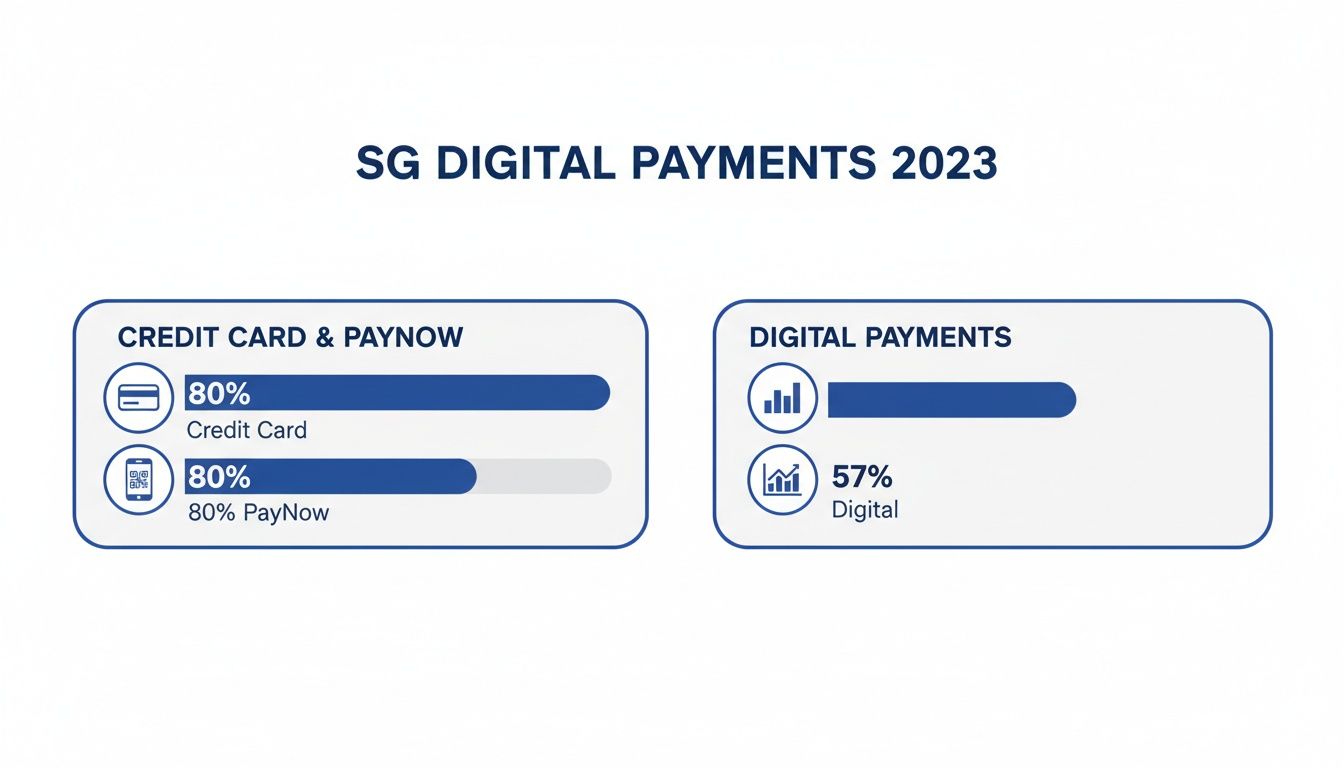
This data shows that with 80% of consumers using credit cards and another 80% using PayNow, your gateway must offer competitive rates for both. You can’t afford to overpay on the most popular payment methods.
Payment gateways usually package these fees into a couple of main models. The two you’ll encounter most often are flat-rate and interchange-plus.
A flat-rate model, used by providers like Stripe, is simple and predictable. You pay the exact same percentage for every transaction, such as 3.4% + S$0.50.
An interchange-plus model is more complex but can be cheaper for businesses with high sales volume. It splits the fee into three parts: the non-negotiable interchange fee (paid to the customer’s bank), the card scheme fee (for Visa or Mastercard), and the gateway’s own markup.
Actionable Insight: When comparing providers, use a simple spreadsheet. Model your costs based on your average transaction value and expected monthly sales volume. Run the numbers for both flat-rate and interchange-plus pricing to see which one is genuinely more cost-effective for your specific business.
Beyond the standard transaction and monthly fees, a number of “hidden” costs can blindside merchants. These are often buried in the fine print and can add up quickly.
Always be on the lookout for these extra charges:
To see how specific providers stack up, check out our complete list of payment gateways in Singapore to compare their features and fee structures side-by-side. Carefully reviewing all these potential costs is a critical step in choosing a partner that supports your business’s financial health.
Security is the foundation of trust in your e-commerce business. Every time a shopper enters their card details on your site, they’re putting their confidence in you. The right payment gateway Singapore provider acts as a powerful shield, protecting both your customers and your business from the constant threat of fraud.
Choosing a gateway with strong security is your first and best line of defence. It helps you avoid costly chargebacks and brand damage that’s hard to repair. A single breach can undo years of hard work, making these features non-negotiable.
You’ll see the term PCI DSS (Payment Card Industry Data Security Standard) a lot when discussing payment security. It’s a strict set of rules for handling sensitive credit card data.
A gateway that is PCI DSS compliant has proven it meets these rules for storing, processing, and transmitting cardholder information. This means they use powerful encryption and secure networks to keep that data locked down. By using a compliant gateway, you significantly reduce your own security burden, because they handle the riskiest parts of the payment process for you.
Actionable Insight: Always choose a payment gateway that is Level 1 PCI DSS compliant. This is the highest level of validation, ensuring your provider adheres to the most stringent security protocols. You can usually find their compliance certificate on their website.
Beyond compliance, your gateway should give you a toolkit of active fraud prevention features. These tools work in the background during every transaction, acting as checkpoints to stop fraudulent payments before they’re approved.
Here are the essentials you should look for:
These features are your frontline defence. During high-volume sales like 11.11, when fraud attempts tend to spike, having these automated checks in place is vital for protecting your revenue.
Modern payment gateways are moving beyond simple checks. They now use artificial intelligence (AI) and machine learning to fight fraud more effectively. These advanced systems are powerful because they learn and adapt over time.
Instead of just looking at one transaction, an AI-powered system analyzes thousands of data points in real-time, hunting for unusual patterns that indicate fraud.
Practical Example: Imagine a customer in Singapore suddenly tries to make a huge purchase with a card that was just used for a small transaction in another country minutes ago. An AI system will instantly flag this as suspicious, temporarily block the payment, and alert you to review it before any money changes hands.
This proactive approach helps you stop fraud before it becomes a costly chargeback. When you’re evaluating a payment gateway Singapore provider, ask about their AI and machine learning capabilities—it’s a clear sign of how seriously they take modern security threats.
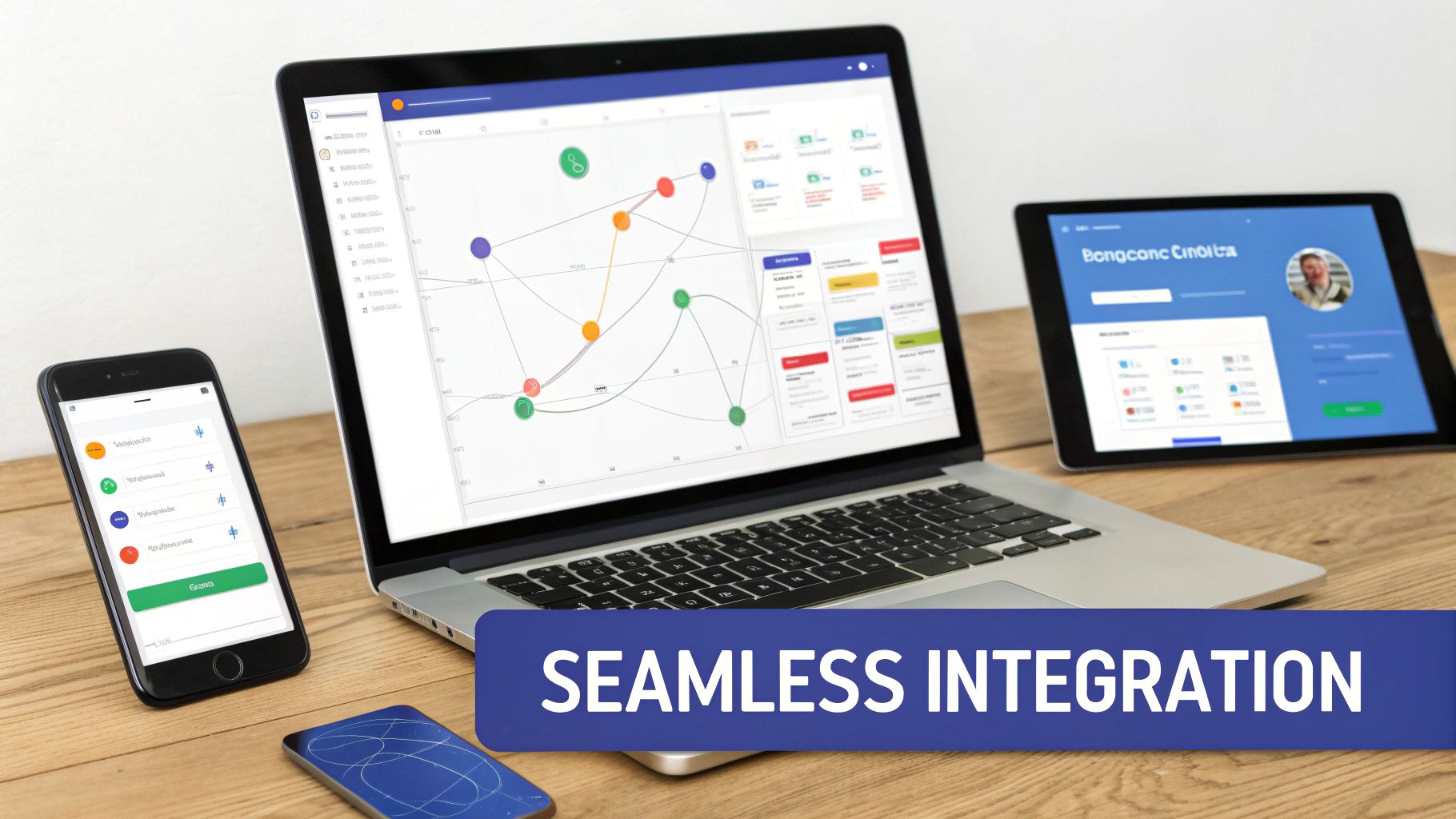
A top-tier payment gateway is only as good as its connection to the places you sell. Whether you’re running a Shopify store, managing a site on WooCommerce, or selling across marketplaces like Shopee and Lazada, the integration brings your payment system to life.
This connection is critical. It directly shapes your customer’s checkout experience and your own day-to-day operations.
The integration you pick determines how customers pay you. It’s the difference between a smooth, on-site checkout and being redirected to another website to finish the purchase—a small detour that often leads to abandoned carts. For Singaporean merchants, getting this right is crucial.
The value of payment transactions in Singapore is on a serious upward climb, projected to hit $1.02 trillion by 2026 from $948.9 billion in 2021. This growth is a clear sign of Singapore’s maturity as a payments powerhouse, with its e-commerce market reaching US$9 billion and consumers more than willing to spend. This is a massive opportunity for sellers who make paying easy. You can find more insights on the global payment gateway market at marknteladvisors.com.
When it comes to plugging a gateway into your store, you’ll encounter two main paths: hosted or integrated. Understanding the difference is key to controlling your customer journey and protecting your conversion rates.
A hosted gateway redirects your customer away from your website to a secure page run by the payment provider. Once they’ve paid, they’re sent back to your site.
An integrated gateway, which typically uses an API, keeps the entire payment process on your website. The customer never leaves your domain, entering their card details directly into your checkout page.
For most online stores, an integrated gateway is the clear winner. Keeping customers on your site creates a more professional, trustworthy, and seamless experience. This is proven to boost conversion rates by cutting out friction at the most critical step.
The good news is that most modern payment gateways are built for easy connections with major e-commerce platforms. They offer pre-built plugins or apps that make the setup process straightforward, even if you’re not a tech expert.
Actionable Steps for Shopify Integration:
This streamlined process is quite similar for other platforms like WooCommerce, where gateways are installed as plugins. For a deeper dive into getting your online presence set up, check out our guide on building an e-commerce website in Singapore.
If you’re selling across different channels—say, a Shopify store, a shop on Lazada, and a physical retail spot—a unified payment system is essential. Choosing a payment gateway Singapore provider that offers omnichannel solutions prevents your financial data from becoming a fragmented, unmanageable mess.
For merchants blending online sales with brick-and-mortar operations, exploring a Shopify POS system in Singapore can offer valuable insights on how to achieve this.
A unified provider lets you see all your transaction data from every channel in one central dashboard. This makes accounting simpler, helps with inventory management, and gives you a clean, accurate picture of your business’s overall financial health.
Picking the right payment gateway is a huge decision for your Singapore store, but it doesn’t need to be a headache. Use this practical checklist to cut through the marketing noise and find a partner that genuinely fits your business.
The goal is to find a provider that aligns with your sales volume, your specific customers, and how you run your operations. A methodical approach now will save you countless hours and lost sales later.
First, can the gateway operate effectively and safely in Singapore? If it fails here, nothing else matters. Singapore’s financial scene is well-regulated, so this is a non-negotiable starting point.
Next, let’s talk about money. You need crystal-clear pricing to protect your profit margins. It’s easy to focus on the headline transaction rate, but the real cost is often buried in the fine print.
Actionable Insight: The true cost of a payment gateway is the total sum of transaction rates, hidden charges for refunds or chargebacks, and the potential revenue you lose from a clunky checkout process that frustrates buyers.
Ask these direct financial questions:
Finally, the gateway has to work with your existing tech and have your back when things go wrong. A technical glitch can bring your sales to a dead stop, which makes reliable support incredibly valuable.
Singapore’s real-time payments market is exploding, generating USD 1,126.3 million in revenue and is projected to reach USD 11,622.5 million by 2030. This incredible growth is powered by person-to-business (P2B) payments, making it critical that your gateway handles these instant transfers without a hitch. You can check out more details about this trend in Grand View Research’s market analysis.
Now that you know what to look for, it’s time to put your top contenders to the test. A side-by-side comparison is the best way to see how they truly stack up against your specific business needs.
Use this checklist to compare your top payment gateway options side-by-side and make an informed choice for your business.
| Evaluation Criteria | Provider A | Provider B | Provider C |
|---|---|---|---|
| Local Payments | |||
| Supports PayNow? | |||
| Supports GrabPay? | |||
| Supports DBS PayLah!? | |||
| MAS Licensed (MPI)? | |||
| Pricing Model | |||
| Advertised Rate (%) | |||
| Setup Fee | |||
| Monthly Fee | |||
| Refund Fee | |||
| Chargeback Fee | |||
| Integration | |||
| Pre-built Shopify App? | |||
| Pre-built WooCommerce Plugin? | |||
| API Documentation Quality | |||
| Support | |||
| 24/7 Support Available? | |||
| Local SG Support Team? | |||
| Stated Response Time |
By filling this out, you move from guesswork to a data-driven decision. The best choice will become clear once you see all the critical details laid out in one place, helping you select a partner that will help you grow.
Got questions about payment gateways? You’re not the only one. Even experienced merchants sometimes need a quick refresher on the specifics.
Let’s clear up some of the most common queries we hear from sellers in Singapore.
For a small business in Singapore, the best gateway balances simplicity, clear pricing, and solid support for local payment methods. Providers like Stripe and HitPay are usually top contenders.
They are popular because they offer straightforward, flat-rate pricing without locking you into monthly fees, which makes your costs predictable. They also integrate smoothly with major platforms like Shopify and WooCommerce, and—most importantly—they support local must-haves like PayNow.
The key is to pick a partner that can grow with you. Always check how the fee structure looks as your sales volume climbs to make sure it stays competitive.
The setup time can be anything from a few hours to several days, but it has gotten much faster. For modern gateways with efficient onboarding and pre-built plugins for platforms like Shopify or WooCommerce, you can often get approved and integrated within 24 to 48 hours.
The process usually involves submitting your business documents, like your ACRA registration, for verification. The most common delays happen when documents are missing or if your business is considered high-risk.
Actionable Insight: To get set up as quickly as possible, gather all your business registration details, director identification, and bank account information before you start the application. Having everything ready to go makes for a much smoother and faster process.
Yes, you absolutely can. Many modern payment providers in Singapore now offer omnichannel solutions that unify payments across both your online and in-person sales channels.
For example, providers like Stripe and Adyen offer Point-of-Sale (POS) hardware—like card readers—that syncs directly with the same account you use for your Shopify store. This centralizes all your transaction data, makes your accounting simpler, and gives you a single, unified view of your sales.
Think of a payment gateway as the secure messenger and a payment processor as the financial network operator. They perform two different but equally critical jobs.
A payment gateway is the secure messenger. Its job is to safely capture and send the customer’s payment details from your website to the processor. It’s the front-end part of the transaction.
A payment processor is the network operator. It does the heavy lifting in the background, communicating with the banks—both your customer’s and yours—to check for funds and handle the actual transfer of money.
The good news? Most modern providers, often called Payment Service Providers (PSPs), bundle both of these services into one seamless solution. This means you only have to deal with one company to manage everything from checkout to payout.
Managing payments is just one piece of the e-commerce puzzle. As you scale across Shopee, Lazada, and your own website, keeping your inventory and orders in sync becomes a massive headache. OneCart centralizes your entire multi-channel operation, preventing overselling and saving your team hours every single day.
Discover how OneCart can streamline your e-commerce operations
Automate & Scale Your Online Business with OneCart
Start a Free TrialUsed by hundreds of merchants in Singapore & Southeast Asia