Last Mile Fulfilment Mastery: Boost Ecommerce Deliveries Fast and Cheap 2026
Discover last mile fulfilment strategies to cut costs, speed deliveries, and boost customer satisfaction in ecommerce.
Discover last mile fulfilment strategies to cut costs, speed deliveries, and boost customer satisfaction in ecommerce.
Last-mile fulfilment is the final step in getting an order from a distribution centre to your customer’s front door. It’s the most expensive and complex part of the supply chain, and it has a massive impact on whether a customer will buy from you again. For anyone selling on platforms like Shopee, Lazada, or their own Shopify store, mastering this final leg of the journey is essential for success.
Think of an online order’s journey as a marathon. The first twenty-five miles—manufacturing, warehousing, and sorting—are streamlined and predictable. But the last mile is a complex sprint to the finish line. It’s where the race is won or lost.
This final stage involves moving individual packages from a local hub to a customer’s unique address. Unlike bulk shipments that travel efficiently between warehouses, last-mile delivery is complicated. A single van might have to make dozens of stops in a dense city, fighting traffic, hunting for parking, and trying to find the right apartment in a massive building. Every stop burns time and fuel, and those costs add up fast.
The last mile is often the only physical, human touchpoint you have with your online customer. A great delivery experience can create a loyal fan, while a bad one can undo all the hard work you put into your product and marketing. For sellers juggling orders across multiple marketplaces, the pressure is even higher.
When last-mile fulfilment goes right, you see real results:
On the flip side, a botched final mile can be a disaster. Late packages, damaged items, or a rude driver can quickly lead to angry customers, terrible reviews, and a painful spike in returns. For a deeper look into the mechanics of this stage, you can learn more about the last mile of delivery in our comprehensive article.
The reality for modern ecommerce is that the delivery experience is the brand experience. Customers no longer separate the product from its journey to their door. A failed delivery is a failed promise.
At the end of the day, last-mile fulfilment is a core part of your customer service and marketing. Getting it right is non-negotiable for any marketplace seller or DTC brand looking to compete and win.
On a spreadsheet, your last mile delivery probably looks like a single line item: “shipping.” But that one number hides a tangled web of costs that can quietly drain your profits, especially once your daily orders climb past 50, 100, and beyond. To get a grip on it, you need to look past the basic courier fee and calculate your true cost-per-delivery.
The final price of delivery includes many components. You must factor in every direct expense—fuel, driver wages, vehicle maintenance, and insurance. Adding these up gives you a much clearer picture of your operational spending.
The single biggest direct cost, and the one that’s easiest to underestimate, is a failed delivery. When a driver shows up and nobody’s home, or the address is wrong, the delivery has to be re-attempted. That one mistake instantly doubles the fuel, labour, and time for that order, turning a profitable sale into a net loss.
Beyond the obvious expenses, a host of indirect costs can cause long-term damage. These are the slow leaks that can sink a business, especially during peak seasons like the 11.11 shopping festival. They appear in departments you might not normally connect to logistics.
Take your customer service team. Every “Where is my order?” ticket is a direct result of a breakdown in your last mile. That extra work pulls your team away from helping customers with product questions or other revenue-generating tasks, driving up your overheads. Worse, late or missed deliveries erode customer trust—something that’s far more expensive to rebuild than it is to maintain.
This infographic shows just how directly the last mile experience is tied to critical outcomes like customer loyalty and brand perception.
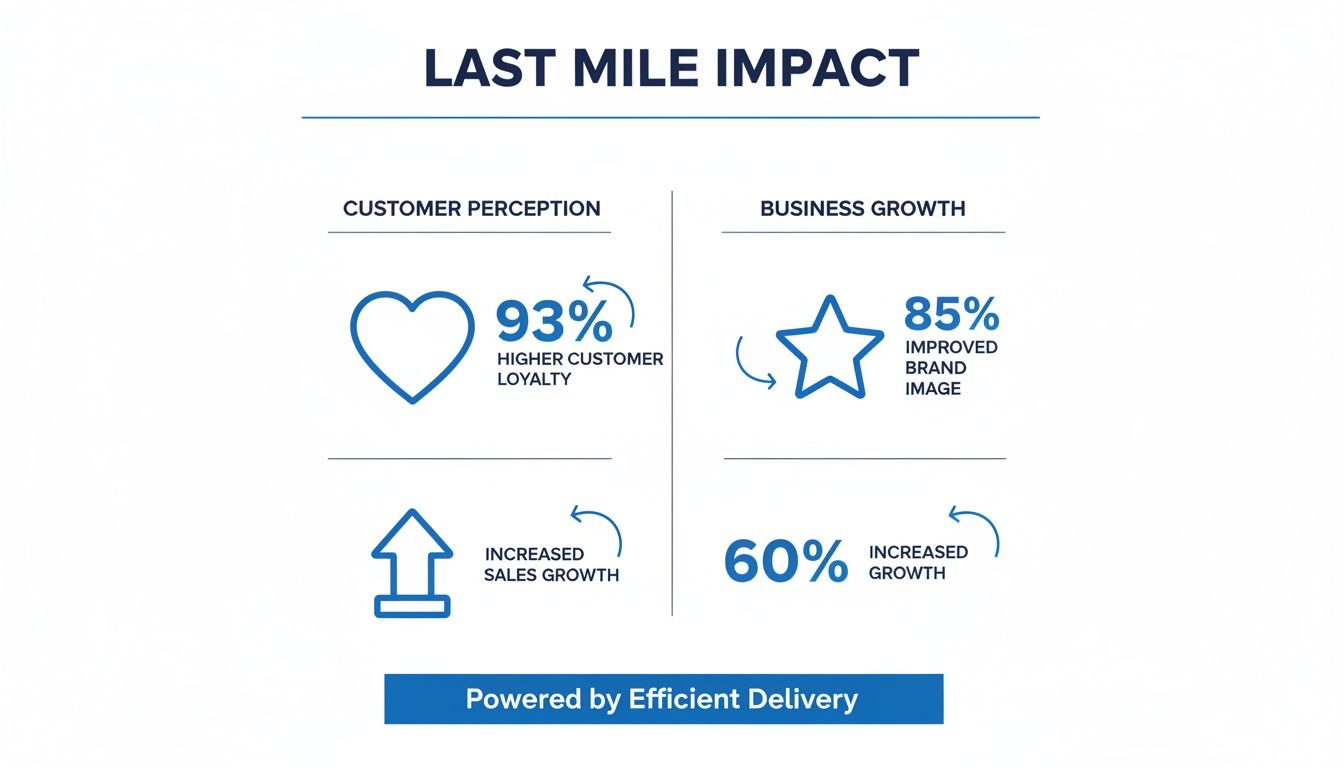
As you can see, a great delivery experience builds your brand and brings customers back. A poor one puts future sales at risk.
The costs associated with the last mile, both direct and hidden, can be overwhelming. Breaking them down helps you see exactly where your money is going and identify the biggest opportunities for savings.
Common Last Mile Costs and Their Business Impact
| Cost Category | Example Expenses | Impact on Business |
|---|---|---|
| Direct Delivery Costs | Fuel, vehicle maintenance, insurance, driver wages, leasing fees. | These are the obvious, recurring operational expenses that directly impact your cost-per-delivery and overall logistics budget. |
| Failed Delivery Costs | Re-delivery attempts (doubled fuel & labour), storage for returned items. | This is a profit killer. A single failed attempt can wipe out the entire margin on a sale and inflate your cost-per-delivery. |
| Customer Service Overhead | Increased support tickets (“Where is my order?”), staff time handling complaints. | Ties up your support team with non-revenue generating tasks, leading to higher operational costs and slower service for other customers. |
| Brand & Reputation Damage | Negative online reviews, social media complaints, loss of customer trust. | Erodes customer loyalty, increases churn, and makes acquiring new customers more difficult and expensive. |
By separating these costs, you can shift from just “paying for shipping” to strategically managing your delivery operation as a core part of your business.
The financial pressure of the final mile is intensifying across the entire industry. The global last-mile delivery market is exploding, skyrocketing from USD 146.81 billion in 2023 to a projected USD 340.56 billion by 2032. This growth is driven by the e-commerce boom, especially on high-volume marketplaces where sellers are under immense pressure to get that final step perfect.
Alarmingly, last-mile logistics now gobble up 53% of total shipping costs, a sharp increase from 41% back in 2018. It has officially become the most expensive and complicated part of the entire supply chain. You can explore more data on these market trends and their implications for sellers.
A failed delivery isn’t just a logistical headache; it’s a financial black hole. The cost isn’t just the re-delivery attempt—it’s the customer service hours you pay for, the potential negative review you have to fight, and the lost chance for a repeat purchase.
Ultimately, mastering the costs of last mile fulfilment demands a clear-eyed view of both the visible and invisible expenses. Once you understand where every dollar is going—from the fuel in the tank to the time spent on support tickets—you can start making smart changes to protect your bottom line.
Getting that final mile right means wrestling with a handful of operational headaches. These problems can stack up fast, turning what should be a simple delivery into a costly mess for you and a frustrating wait for your customer. Knowing these common hurdles is the first step to building a delivery system that works.
One of the biggest money pits is inefficient route planning. When drivers don’t have an optimised path, they burn time and fuel crisscrossing the city. For example, a driver with 50 packages and a poorly planned route might get sent back into rush hour traffic to deliver a forgotten parcel, delaying every other drop-off and racking up costs with every extra kilometre.
This gets even trickier in today’s cities. Drivers are trying to figure out confusing apartment buildings with broken buzzers, navigating massive office towers, and decoding vague delivery notes like “leave by the blue pot.” Every one of these small frictions adds minutes—and costs—to the delivery.
If your business uses a mix of couriers—say, a national carrier for bigger orders and a local on-demand service for same-day drops—things get complicated. You’re left juggling different booking portals, tracking systems, and service agreements for each one.
This scattered approach almost always leads to inconsistent service quality. It also makes it nearly impossible to get a single, clear picture of your entire delivery operation. Your team ends up manually checking multiple websites just to find out where an order is, wasting time and inviting human error that leads to delays and unhappy customers.
Modern shoppers expect to see their order’s journey in real time. The “Where is my order?” question is a standard part of the customer experience. If you can’t provide accurate, live tracking, you’ll quickly lose their trust and get buried in customer service tickets.
Shoppers are obsessed with speed, and it’s completely changing the game for last mile fulfilment. Same-day and next-day options are now the standard. Over 90% of customers will abandon their carts if delivery fees are too high or delivery is too slow, and 91% demand real-time tracking. But the reality is messy—75% of customers still report delivery problems, and every failed delivery attempt costs businesses a significant amount. You can dig into more data on these evolving consumer expectations.
This expectation forces sellers to have systems that can instantly feed location updates from the courier straight to the customer.
For sellers on platforms like Shopee, TikTok Shop, and their own website, the challenge is even greater. Orders flood in from different directions, each with its own set of rules and deadlines. Without one system to manage everything, trying to handle fulfilment is like directing traffic at an intersection with no stoplights.
This disorganisation often leads to costly mistakes, like:
These operational tangles directly damage the customer experience. Getting a clear view of these common last mile fulfilment problems is the essential first step before you can start putting real, lasting solutions in place.
Knowing the challenges is one thing; actively solving them is what separates growing businesses from the ones that get left behind. Optimizing your last-mile operations is about making a series of smart, practical moves that deliver immediate improvements to your speed, costs, and customer happiness.
These tactics make your delivery process leaner, more flexible, and more intelligent. By implementing even one of these ideas, you can start cutting costs and building a more dependable last-mile fulfilment system that your customers will appreciate.
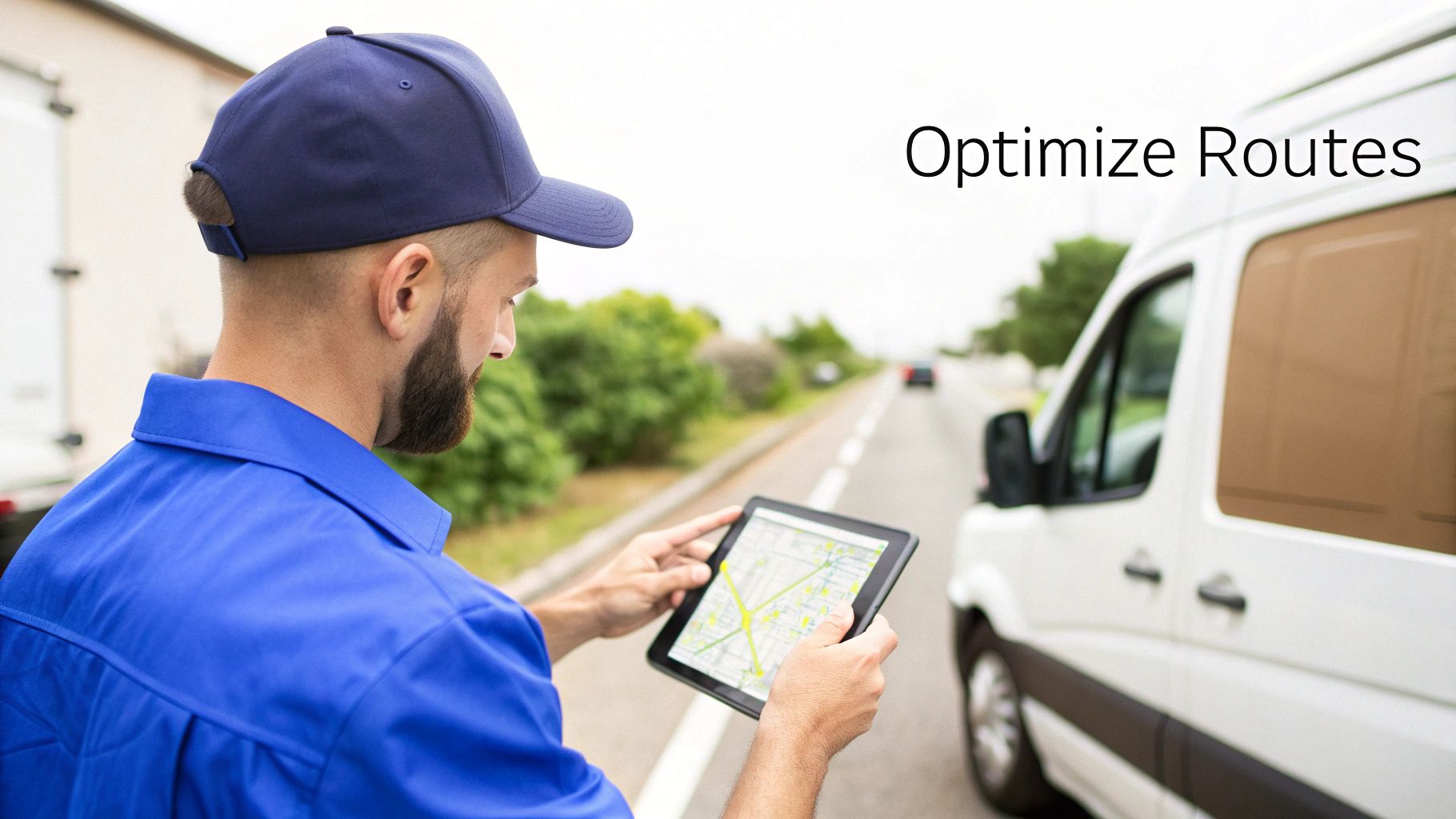
Inefficient delivery is often a routing problem. Handing a driver a list of addresses and hoping for the best leads to wasted fuel, missed time slots, and frustrated customers. Modern route optimization software is the single most powerful tool you can use to fix this.
This software calculates the most efficient multi-stop route by juggling dozens of variables in real time.
Actionable Insight: A floral delivery service in a dense city could use route planning software to group orders by neighbourhood. The system would then map out a path that sidesteps morning traffic and guarantees all bouquets are delivered before 5 PM, cutting fuel costs by 15-20% on an average day.
Relying on a single courier for everything is rarely the best approach. A multi-carrier strategy means you use a mix of different shipping providers to perfectly match the needs of each specific order.
This approach gives you the flexibility to balance cost, speed, and reliability. You can set up rules that automatically pick the best carrier for every single shipment.
A smart multi-carrier approach is your best defence against service disruptions. When one carrier gets overwhelmed or has delays, you can seamlessly shift your packages to another, making sure your delivery promises are kept.
Today’s customers want their orders on their own terms. Offering a range of delivery options at checkout can slash the number of failed delivery attempts and boost customer loyalty. This is a crucial part of modern last-mile fulfilment.
Consider adding these to your checkout page:
To help you decide which delivery methods fit your business best, here’s a quick comparison of the most popular strategies.
Choosing the right delivery strategy is a balancing act between customer expectations, operational costs, and your brand promise. This table breaks down different approaches to help you find the best fit for your business, budget, and customer base.
| Strategy | Best For | Key Benefit | Potential Challenge |
|---|---|---|---|
| Standard Delivery | Cost-conscious businesses selling non-urgent items. | Lowest operational cost; simple to manage. | Slower speeds can lead to cart abandonment. |
| Same-Day Delivery | Urban brands selling high-demand or perishable goods. | Huge competitive advantage; meets impulse-buy needs. | High cost; requires sophisticated local logistics. |
| Scheduled Delivery | High-value goods or items requiring a signature. | Reduces failed deliveries; improves customer convenience. | More complex scheduling and route planning required. |
| Click-and-Collect | Retailers with physical locations or pickup partners. | Lowers delivery costs; offers customer flexibility. | Requires managing inventory across multiple locations. |
| Subscription Delivery | Businesses with repeat customers (e.g., coffee, pet food). | Predictable revenue; builds customer loyalty. | Requires strong inventory forecasting and management. |
Ultimately, the best approach is often a hybrid one. Offering a mix of standard, expedited, and scheduled options allows you to cater to different customer needs and price points, turning your delivery experience from a cost centre into a powerful conversion tool.
A micro-fulfilment centre (MFC) is a small, often automated warehouse located deep inside a dense urban area. The strategy is simple: store your most popular products closer to where your customers actually live.
This move drastically shortens the final delivery distance, making one-hour or two-hour delivery windows possible and affordable. Practical Example: A DTC brand selling cosmetics could set up an MFC in a major city. When an order comes in from that area, it’s picked, packed, and dispatched from the local MFC, travelling only a few kilometres instead of fifty.
Manual processes are the enemy of a solid last mile fulfilment operation. Juggling spreadsheets, plotting routes by hand, and calling drivers for updates might work when you’re small, but that approach doesn’t scale.
Modern technology turns this operational chaos into a streamlined, data-driven process that cuts costs and improves the customer experience.
Accessible tools like AI and machine learning now power route optimization software that can find the most efficient delivery paths on the fly. This software chews through dozens of real-time variables like traffic predictions, delivery windows, and even vehicle capacity to build the smartest route possible.
This means your drivers spend less time stuck in traffic and more time dropping off packages. For the business, that translates directly to lower fuel costs, more deliveries per shift, and happier customers who get their orders on time.
A modern delivery management platform is the command centre for your entire last-mile operation. It gives you a single dashboard where you can see everything in real time, from the moment an order is dispatched to the final proof-of-delivery photo.
Instead of reacting to problems after they’ve already happened, technology lets you manage your last mile proactively. Real-time visibility means you can spot a potential delay and ping the customer before they even think to ask, “Where is my order?”
These platforms act as the central nervous system for your team, making sure everyone from the warehouse staff to the drivers on the road is working from the same playbook. Integrating with specialized shipping platforms, like a shipping management platform, can take this even further by connecting you to a massive network of couriers all through one interface.
While futuristic tech like delivery drones and sidewalk robots gets all the headlines, the practical solutions you can implement today are just as impactful. Innovations in autonomous vehicles and AI are changing the game—the autonomous delivery market alone is projected to rocket from USD 25.45 billion in 2025 to a massive USD 212.46 billion by 2034.
But the most immediate wins come from software that helps you make smarter decisions right now. A modern order management system (OMS) is a perfect example. An OMS pulls all your sales data from channels like Shopee, Lazada, and your own website into one place. This unlocks powerful analytics that help you spot sales trends, manage inventory more accurately, and understand your true profit per order.
For any business looking to grow, these tools are no longer a nice-to-have; they’re essential. If you want to dig deeper, you might be interested in our guide on how last-mile delivery solutions can transform your business.
By bringing these accessible technologies into your workflow, you can turn your last-mile fulfilment from a necessary cost into a powerful competitive advantage that drives real growth and builds lasting customer loyalty.
Selling across Shopee, Lazada, and your own Shopify store is a fantastic way to reach more customers. But behind the scenes, it can quickly turn into operational chaos. Your team ends up bouncing between different seller portals, trying to stitch together a complete picture of the day’s orders. This disjointed approach is inefficient and a breeding ground for expensive mistakes.
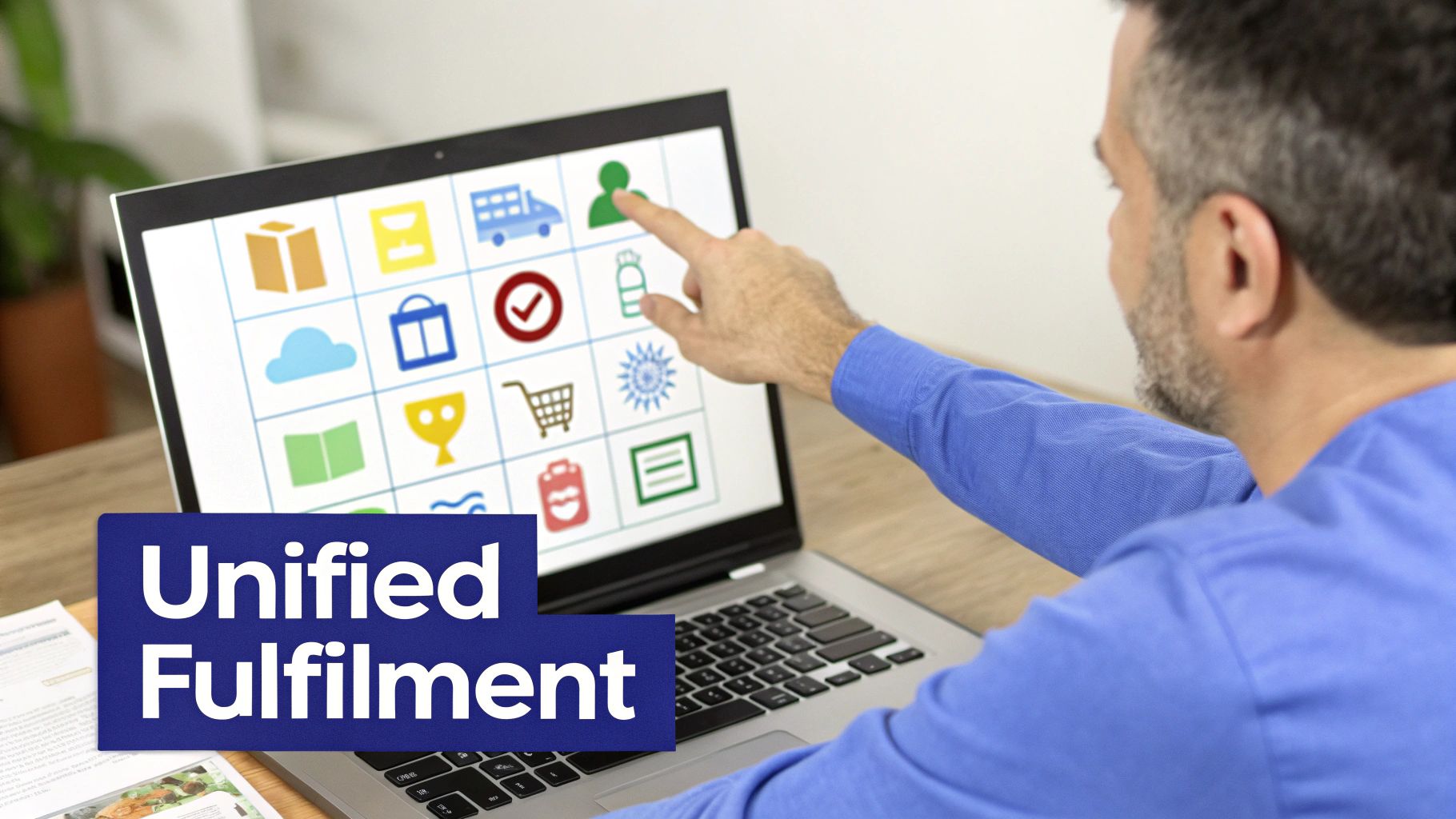
A centralized platform acts as the single source of truth for your entire ecommerce operation. It pulls every order from every channel into one unified dashboard. This means you can stop juggling a dozen browser tabs and start managing your business from a single command center.
Imagine your warehouse team getting one single, consolidated picklist for every order that came in overnight, whether it was from TikTok Shop or your own website. This is the real power of centralization. Instead of printing separate lists from each marketplace, a platform like OneCart generates one master list for all orders.
This simple change has a massive impact on your daily operations:
Once the items are picked, you can bulk-print all the necessary shipping labels, packing slips, and invoices right from that same dashboard. No more logging into each seller center to prepare shipments. This saves hours of manual work every day and dramatically speeds up your last mile fulfilment process. For businesses expanding their reach, understanding different international shipping strategies becomes a crucial part of an effective delivery experience.
One of the biggest headaches of selling on multiple channels is overselling—accepting an order for an item you no longer have. This happens when a sale on one channel doesn’t update your stock levels on the others fast enough. The result? A cancelled order, a disappointed customer, and a potential penalty from the marketplace.
A centralized system with real-time inventory syncing is your best defence against stockouts. When your last unit of a product sells on Shopee, the platform instantly updates the stock level to zero on Lazada, Shopify, and TikTok Shop, making it impossible to oversell.
This automated process protects your seller ratings and your customer’s trust. It also gives you a crystal-clear, accurate view of your stock levels at all times, helping you make smarter purchasing decisions and avoid tying up cash in slow-moving products. To get a better sense of how these systems work, have a look at our article on what an order management system is and why your business needs one.
By unifying your operations, you transform a chaotic, reactive fulfilment process into a smooth, proactive system. This simplification doesn’t just cut down on daily headaches and costly mistakes; it builds the solid operational foundation you need to scale your business.
Even with a solid game plan, last-mile fulfilment can feel like a moving target. Let’s clear up some of the most common questions we hear from ecommerce sellers to help you put these strategies into action.
The single biggest cost is labour. Driver wages, plus the time they spend at every single stop, consume the largest chunk of the budget. Fuel and vehicle maintenance are a close second.
These costs snowball when inefficiencies creep in. A driver stuck in traffic or backtracking because of a bad route isn’t just burning fuel—they’re burning expensive labour hours for every minute they’re delayed. A single failed delivery attempt can instantly double these costs for that one order.
You don’t have to break the bank to offer faster delivery. The key is to be strategic, not to promise free same-day shipping on everything.
Practical Example: A boutique in the city could offer a $15 same-day delivery option for customers within 10km, using an on-demand local courier. For everyone else, they’d use a standard national service.
When your tracking status updates to “accepted by last mile carrier,” it means your package has been handed off to the final delivery service that will bring it to the customer’s doorstep. This is a common step when a national carrier like FedEx or UPS moves a package across the country and then passes it to a local postal service or regional courier for the final leg.
This handover is a critical moment. It signals that the package has left the long-haul network and is officially in the final stage of last mile fulfilment—usually just a few hours or a day away from its destination.
This is an efficient system. It lets the big carriers use the extensive local routes of partners like USPS, making those final drops in residential or rural areas more cost-effective.
Ready to stop juggling multiple seller portals and simplify your entire fulfilment process? OneCart centralizes your orders, inventory, and shipping from Shopee, Lazada, TikTok Shop, and more into a single, powerful dashboard. Book a demo today and see how you can scale your business without the chaos.
Automate & Scale Your Online Business with OneCart
Start a Free TrialUsed by hundreds of merchants in Singapore & Southeast Asia