Is TikTok Shop Safe? Risks, Scams & Protection Tips [2026] 2026
TikTok removed 700K fraudulent sellers and blocked 70M fake listings. Discover common scams, payment security, and how to stay protected on TikTok Shop in 2026.
TikTok removed 700K fraudulent sellers and blocked 70M fake listings. Discover common scams, payment security, and how to stay protected on TikTok Shop in 2026.
Is TikTok Shop safe? Yes — TikTok Shop is a legitimate, safe platform backed by encrypted payments, formal dispute resolution, and aggressive fraud prevention that blocked 70 million counterfeit listings and removed 700,000 fraudulent sellers in the first half of 2025 alone. But no marketplace is completely risk-free. From return fraud schemes to phishing scams, the threats are real and require both buyers and sellers to stay vigilant. Here’s what you need to know to protect yourself and your business in 2026.
So, is TikTok Shop safe? The answer involves a partnership. TikTok has poured a lot of resources into building a secure framework, complete with moderation tools, buyer protection, and seller safeguards. Your own operational diligence — whether you’re buying or selling — is the other, equally important, half of that equation.
Imagine TikTok provides the secure building, locks, and security guards for your market stall. That’s their framework. It’s still your job, though, to manage your inventory, describe your products accurately, and handle customer interactions with professionalism. This shared responsibility is the key to a secure and profitable experience.
To help you get a quick sense of where the responsibilities lie, this table breaks down the main safety areas.
| Safety Aspect | Platform Protection Level | Key Seller Consideration |
|---|---|---|
| Payment Security | High | All payments are processed through TikTok’s secure gateway. You never handle buyer card details directly. |
| Policy Enforcement | Medium to High | TikTok actively moderates listings and enforces rules, but you must know and follow them to avoid violations. |
| Dispute Resolution | Medium | The platform offers a formal process, but your success depends heavily on the quality of your own documentation. |
| Scam Prevention | Shared | TikTok has anti-fraud systems, but sellers must be vigilant against phishing and fake “buyer” messages. |
| Operational Risk | Seller-Managed | Risks from poor inventory, fulfillment errors, or bad customer service are almost entirely on the seller to manage. |
As you can see, the platform handles the big technical stuff, but the day-to-day operational safety is squarely in your court.
Succeeding safely on TikTok Shop really comes down to mastering a few core areas. Each one acts as a layer of protection for your business, cutting down on risks and helping you build a trustworthy reputation that brings in more buyers.
The safest sellers are those who view TikTok’s policies not as a list of restrictions, but as a playbook for success. When you align your business practices with their framework, you actively minimize your risk and create a stable foundation for growth.
Here’s a practical example: a seller who films a quick video of themselves packing a high-value item has powerful evidence to shut down a fraudulent “item not received” claim. That simple, proactive step shows exactly how your own diligence works hand-in-hand with platform tools to protect your revenue.
Ultimately, with the right knowledge and sound business practices, you can confidently navigate this high-growth channel. The risks are definitely real, but they are more than manageable for any seller who’s committed to running a tight ship.
When people talk about platform safety, the conversation usually revolves around buyers. But what about the sellers? TikTok Shop has a structured ecosystem with multiple layers of protection built specifically to shield merchants from fraud and create a stable place to do business.
These protections aren’t just an afterthought. They kick in the second you start the sign-up process and follow you through every single transaction.
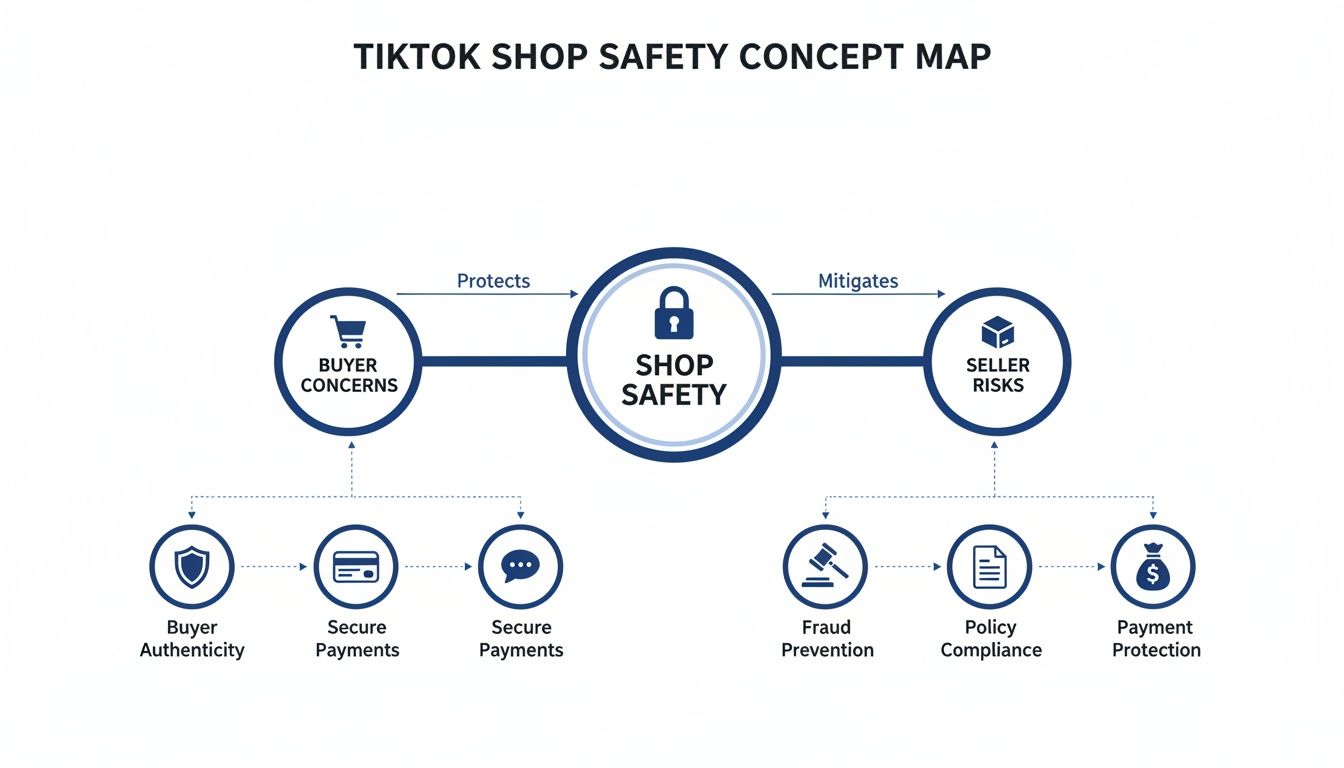
It all starts with a strict verification process. Before you can list a single product, you have to submit official business documents and personal ID. This initial screening is designed to weed out bad actors from the jump, ensuring only legitimate businesses can open up shop.
Once you’re verified, you enter a probation period. Think of it as a warm-up phase where TikTok keeps a close eye on your performance and puts some temporary guardrails on your store. This is a critical safety net for everyone involved.
During this time, you might run into limits on things like:
These limits are designed to make sure you can get your operations running smoothly before you scale up. By showing you can handle fulfillment reliably and provide good customer service, you build a solid track record. Graduate from this period, and you unlock your store’s full potential, signaling to the platform that you’re a dependable seller.
TikTok’s probation system is a bit like a tiered driver’s license. It gets you on the road but makes sure you master the basics in a controlled environment before letting you hit the highway at full speed. This protects both you and everyone else in the marketplace.
One of the biggest reliefs for sellers is TikTok’s centralized payment system. Every transaction runs through the platform’s secure gateway, which means you never have to touch a customer’s sensitive credit card details. This dramatically cuts down your risk and liability because TikTok handles the financial security of every single sale.
Of course, disputes are bound to happen. It’s just part of e-commerce. Whether a customer claims a package never showed up or tries to return a used product, TikTok gives you a formal dispute resolution process right inside the Seller Center.
This is a structured case management system where you can formally challenge bogus claims. Your best friend in this process is documentation.
Here’s a practical example of how to fight a claim that a buyer received an empty box:
This system ensures that decisions are based on proof, not just accusations. If you keep meticulous records, you can effectively use these tools to protect your revenue from common scams. For a complete walkthrough of getting started on the platform — from registration to your first sale — see our guide on how to sell on TikTok Shop.
On top of that, the platform uses a mix of AI and human moderators to constantly scan listings for policy violations. This proactive surveillance helps take down counterfeit goods and prohibited items, creating a more level playing field and protecting the reputation of legitimate sellers. If you find your operations getting too complex to manage, our guide on how to connect Shopify to TikTok Shop can help streamline your workflow. This constant enforcement helps keep the marketplace a trustworthy place for everyone to do business.
While TikTok throws a decent safety net around its marketplace, no platform is completely scam-proof. Knowing the official policies is a great start, but understanding the specific schemes sellers face is what will actually protect your business. Proactive awareness is your best line of defense against people trying to game the system.
The most common threats are often simple, opportunistic plays that catch busy or unprepared sellers off guard. If you don’t know the red flags, these scams can hit your revenue, sink your seller rating, and give you a massive headache.
One of the oldest tricks in the book is the fraudulent return. A customer buys your product, files for a return, but sends back something completely different. It could be an old, busted version of what you sold, a cheap counterfeit, or even just a box of rocks weighted to match the original package.
For example, you might ship out a brand-new pair of high-end headphones. The buyer initiates a return, but what you get back is their old, broken pair. They just scored a free upgrade, and you’re left holding the bag.
Actionable Insight: The single best defense against return fraud is documentation. A quick, timestamped video of you packing the item—especially for high-value goods—provides indisputable evidence of what was in the box and its condition when it left your hands.
This simple step can be the silver bullet when you file a dispute in the Seller Center. Without that proof, it’s just your word against theirs.
Another go-to tactic is the false “Item Not Received” (INR) claim. The buyer gets their order just fine, but then opens a dispute claiming the package vanished into thin air. Their goal is simple: get a full refund from TikTok while keeping your product for free.
This is where your fulfillment process doubles as your security strategy.
Phishing scams are a bit more cunning and are aimed squarely at your account credentials. Scammers might set up fake profiles or blast out emails that look like official communications from TikTok Shop support. They’ll invent a problem—an issue with your account, a policy violation, a delayed payout—that requires you to “verify” your login details.
These messages are designed to create a sense of urgency, pressuring you to click a link that leads to a fake login page. The moment you type in your username and password, they’ve got the keys to your store, your funds, and your personal information.
Actionable Insight: Never, ever communicate or share sensitive information outside of TikTok’s official channels. TikTok support will only contact you through the Seller Center. If you get a DM, email, or WhatsApp message claiming to be from them, ignore it. For a broader look at payment security, our guide on choosing a payment gateway in Singapore covers security principles useful for understanding safe online transactions.
The platform’s sheer scale is what makes it a magnet for these kinds of risks. Projections show TikTok Shop is on track to hit over $20 billion in global sales by 2026, with nearly half of all users having bought something on the platform. That explosive growth creates massive opportunities, but it also paints a huge target on its back. To its credit, TikTok is fighting back hard, blocking millions of malicious IPs and taking down hundreds of thousands of fraudulent listings since its launch. You can explore more data about these safety measures and how TikTok is handling its rapid growth.
Knowing the common scams is half the battle. The other half is understanding what TikTok itself is doing to keep its marketplace safe. The platform isn’t just sitting back and waiting for problems to pop up; it’s actively building a strong defense to stop scammers before they can ever reach legitimate sellers and buyers. This is backed by hard numbers.
These enforcement actions create a much safer environment for everyone. For sellers, it means facing fewer bad actors and competing on a more level playing field. It’s proof that you’re building a business on a platform that’s genuinely invested in its own integrity.
This graphic gives you a quick snapshot of TikTok Shop’s growth and the sheer scale of its security challenges.
The data shows just how massive the commercial activity is and, in turn, the volume of malicious attempts the platform has to block every single day.
One of the clearest signs of TikTok’s dedication to safety is its tough, front-end vetting process. The platform doesn’t wait for a scam to happen; it works hard to keep bad sellers from ever getting a foot in the door in the first place.
The numbers behind this effort are pretty staggering. According to recent reports, TikTok is turning away a huge number of suspicious or unqualified seller applicants. This strict gatekeeping ensures that the vast majority of sellers you’re competing against have at least met a baseline for legitimacy.
Think of TikTok’s enforcement strategy like having a bouncer at the door of a massive nightclub. By checking IDs and turning away troublemakers at the entrance, they create a safer and more enjoyable environment for everyone inside. It’s a pre-emptive approach that’s far more effective than just dealing with problems after they’ve already started.
This aggressive approach goes for product listings, too. Automated systems, powered by AI, scan millions of new product submissions every day. They’re trained to spot signs of counterfeit goods, prohibited items, and misleading descriptions, stopping them before they even have a chance to go live.
The scale of TikTok’s moderation efforts is genuinely impressive and offers tangible proof of its commitment. The platform has seriously ramped up its safety measures, showing it’s not messing around when it comes to weeding out fraud.
For example, in just the first half of a recent year, TikTok rejected a whopping 1.4 million seller registration applications because they failed to meet the platform’s strict standards. During that same period, over 700,000 existing sellers were kicked off the platform for violations like selling fake or unsafe goods.
Even more impressive, their systems blocked more than 70 million product listings before they ever saw the light of day, with most being flagged as potential counterfeits or dangerous items. You can read more about these impressive safety statistics and how TikTok is cleaning up its marketplace.
This is a large-scale, systematic effort to cleanse the entire ecosystem. For honest sellers, these actions have direct benefits:
Knowing the platform’s rules and common scams is a great start, but it’s only half the battle. Now, it’s time to build on that foundation with disciplined, scalable business operations that can handle the wild ride of social commerce.
A secure business is about creating resilient processes that protect your revenue, reputation, and sanity—especially when a product goes viral overnight. This is where you turn theory into action.
Fortifying your own operations is the most powerful step you can take to make TikTok Shop safe for your business. This means crystal-clear product listings, disciplined inventory management, and streamlined fulfillment. Each piece acts as a layer of armor, protecting you from disputes, stockouts, and shipping delays that can torpedo your store’s health score.
This kind of operational diligence isn’t a “nice-to-have.” In a fast-paced environment like TikTok Shop, where a single video can generate thousands of orders in a few hours, it’s non-negotiable.
Think of your product listing as your first line of defense against misunderstandings and disputes. Vague descriptions or misleading photos are basically open invitations for customer complaints and return requests. The goal here is to set crystal-clear expectations right from the jump.
Here’s how to build a listing that works for you, not against you:
Every detail you add is another piece of evidence working in your favor. If a dispute ever comes up, you can point directly to the clear information you provided from day one.
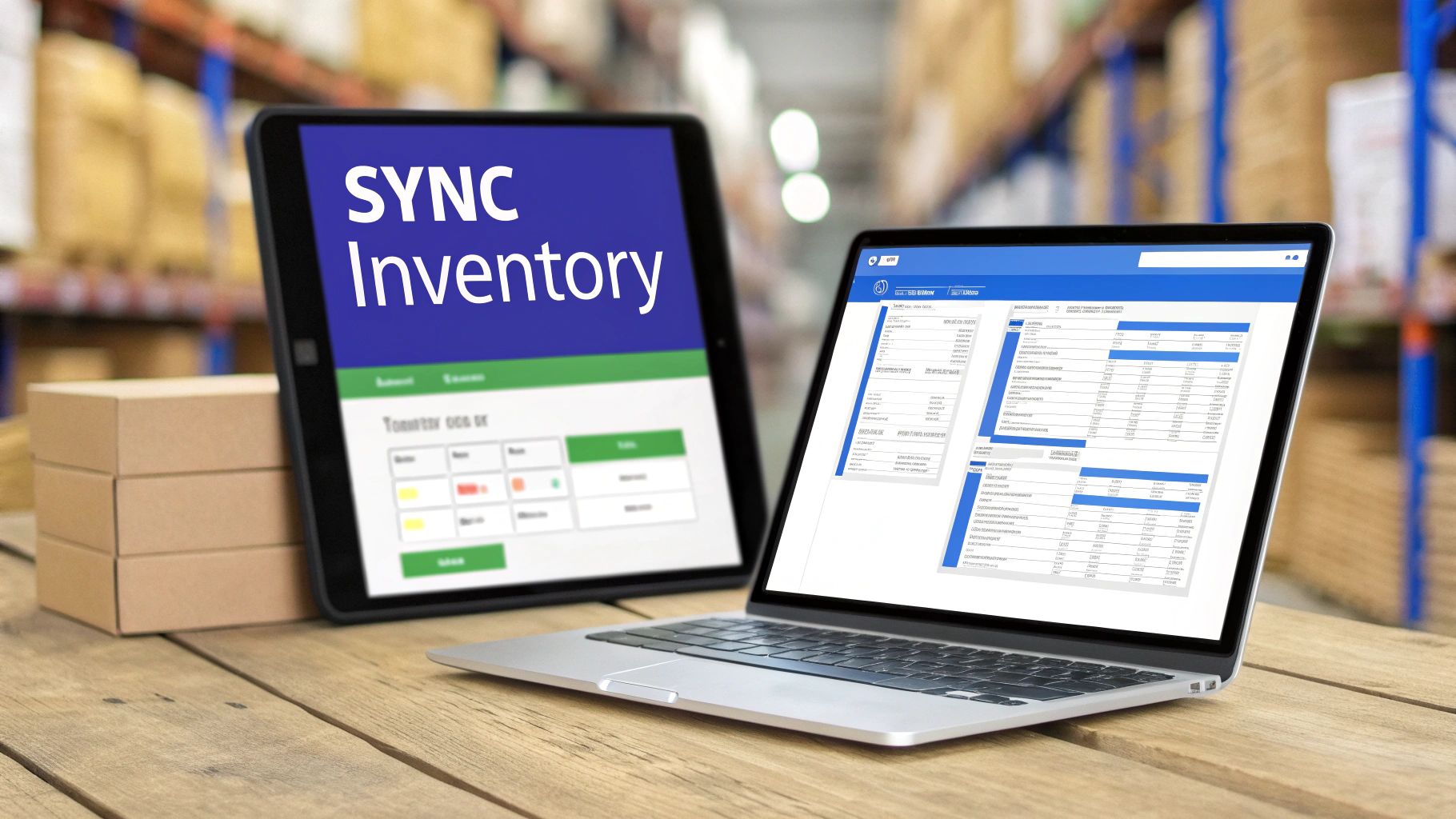
Overselling is one of the fastest ways to get your TikTok Shop account flagged. When a product goes viral, trying to track inventory manually is a recipe for disaster. This is where a centralized system becomes a core part of your security strategy, not just an operational one.
A classic mistake we see is sellers managing inventory separately for each sales channel. A TikTok video blows up, they sell hundreds of units, but those units were already allocated to their Shopify store. The result? A wave of canceled orders, angry customers, and painful platform penalties. This isn’t just a fulfillment headache; it’s a direct threat to your account’s good standing.
Using a platform like OneCart to sync your inventory in real-time across all your channels—like TikTok Shop, Shopify, and Shopee—is essential. When an item sells on one platform, the stock count is automatically updated everywhere else in seconds. This completely prevents overselling and protects your seller rating. You can learn more about how to set up this crucial integration in our guide on how to connect Shopify to TikTok Shop.
A slick fulfillment process is just as critical. Timely, trackable shipping is a huge factor in TikTok’s seller performance metrics. Juggling orders by logging into multiple platforms individually is slow, chaotic, and riddled with potential for human error.
A unified order management dashboard pulls all your orders into one clean interface. This creates a single, undeniable audit trail for every single transaction. So, when a customer claims an item wasn’t delivered, you have all the shipping details, tracking numbers, and order history right at your fingertips. That kind of documentation is priceless when it comes to winning disputes.
To really get a handle on your performance and protect your sales, it’s also worth looking into tools like a specialized TikTok tracker. At the end of the day, centralizing your operations isn’t just about being more efficient. It’s about creating a robust, evidence-based system that makes your business fundamentally more secure and ready to scale.
To help put this into practice, here’s a checklist comparing manual safeguards with the automated security that a system like OneCart provides.
This checklist outlines the key operational areas where sellers face risks and shows how to mitigate them, both through manual discipline and through the power of automation.
| Operational Area | Manual Safeguard | How OneCart Automates and Enhances Security |
|---|---|---|
| Inventory Management | Manually updating spreadsheets after sales on each channel, hoping to catch everything before overselling. | Real-time, multi-channel inventory sync. Automatically deducts stock across all stores (TikTok, Shopify, etc.) the instant a sale is made anywhere, eliminating overselling risk. |
| Order Fulfillment | Logging into TikTok Shop, Shopify, and other seller centers separately to download orders and update tracking info. | Unified order dashboard. All orders from all channels appear in one place, creating a single source of truth and a clear audit trail with time-stamped tracking updates. |
| Product Listings | Copying and pasting product details, descriptions, and images to each new channel, risking inconsistencies. | Centralized product information management (PIM). Push accurate, consistent, and “dispute-proof” listings to all channels from one master catalog, ensuring uniformity. |
| Dispute Resolution | Scrambling through different email accounts and seller dashboards to find order details and tracking numbers. | Instant access to complete order history. All customer data, order timelines, and tracking information are consolidated, providing immediate evidence to resolve disputes. |
| Scalability | Hiring more staff to manually process a sudden surge in orders after a viral video, increasing labor costs and error rates. | Automated workflows that scale instantly. Handles thousands of orders without manual intervention, ensuring fulfillment keeps pace with demand and protecting your seller metrics during high-volume periods. |
By focusing on these operational pillars, you’re not just preparing for the best-case scenario of going viral; you’re building a resilient business that can handle the pressures and protect itself from the risks inherent in any fast-moving marketplace.
So, after digging into all the platform protections and the potential risks, what’s the real takeaway for e-commerce brands? Let’s be honest: no online marketplace is 100% risk-free. What’s clear is that TikTok Shop has made a serious commitment to seller safety, pouring money into moderation and enforcing its policies aggressively.
The platform has built a solid foundation of protections, from its tight seller verification process to a formal system for handling disputes. The sellers who truly succeed, however, are the ones who see security as a partnership. They take the tools TikTok gives them and combine them with their own smart, centralized business habits. Before you dive in, make sure you understand the fee structure—use our TikTok Shop fee calculator to model your margins and ensure your pricing can handle affiliate commissions while staying profitable.
The ultimate answer to “is TikTok shop safe for sellers” is a confident yes—but with one big condition. It’s safe for sellers who show up ready to work with diligence and a clear strategy. Fear of scams shouldn’t stop you from jumping in, but a healthy respect for the risks should absolutely shape how you operate.
This means building your own operational armor. Here’s what that looks like in practice:
The core message is to approach the platform with informed confidence, not fear. Your operational discipline is the most critical factor in your security and success on TikTok Shop.
Looking ahead, you should see TikTok Shop as a core, long-term sales channel, not just a passing trend. Its massive, highly engaged user base is an opportunity that’s simply too big for most brands to ignore. For a deeper look into how it stacks up, check out our analysis of the top social commerce platforms.
TikTok Shop’s live selling features are a key differentiator, turning passive scrollers into active buyers in real time. The brands that will win on TikTok are the ones that integrate it thoughtfully into their multi-channel strategy, all supported by rock-solid operational infrastructure. When you pair the platform’s built-in protections with your own proactive safety measures, you can securely tap into one of the most powerful e-commerce engines available today.
Even with a solid game plan, you’re bound to run into specific questions about the day-to-day security challenges on the platform. Let’s get into some of the most common concerns we hear from sellers, with clear answers to help you handle these tricky spots with confidence.
TikTok Shop gives you a formal dispute process right inside the Seller Center. If you think a buyer is playing games with a return—say, sending back a broken item or something completely different—you can file a dispute and upload your proof.
To build a solid case, you absolutely need good documentation. A few things that work wonders are:
TikTok’s team will look at the evidence from both sides before they make a call. Keeping detailed records is honestly your best defense.
If one of your products gets taken down for a policy violation you know it didn’t commit, you can file an appeal straight from the Seller Center. The first step is not to panic. Automated systems make mistakes all the time, and the appeals process exists for exactly this reason.
To give yourself the best shot at a successful appeal, you need to provide clear, direct proof that your product follows all the rules. This could be anything from manufacturer details and safety certifications to a simple, logical explanation of why the flag was a mistake. Moving quickly and providing strong evidence is key.
Actionable Tip: A vague appeal won’t work. Don’t just say, “My product is fine.” You need to explain why. For instance: “This skincare product was flagged as a medical item, but here is the ingredient list and its FDA cosmetic registration number, proving it is a cosmetic.”
Yes, your financial data is locked down. TikTok Shop uses encrypted, industry-standard payment gateways for every transaction. This means you never directly handle a customer’s sensitive credit card info, which massively reduces your liability.
The platform also has to follow data privacy laws like GDPR, which sets strict rules for how customer data is stored and used. But remember, your own account security is a shared responsibility. To protect your store, you absolutely must:
By sticking to these basic security habits, you can make sure your business and your customers’ information stay protected.
Ready to stop overselling and streamline your operations for maximum security? OneCart centralizes your inventory, orders, and listings from TikTok Shop, Shopify, and more into a single, powerful dashboard. Learn how OneCart can help you scale safely and efficiently.
Automate & Scale Your Online Business with OneCart
Start a Free TrialUsed by hundreds of merchants in Singapore & Southeast Asia