
eCommerce APIs: Why It’s Essential and How to Use It Effectively [2026]
Discover how eCommerce APIs streamline operations, automate workflows, and drive growth for your online business. Learn why they’re essential and how to use them effectively.

Discover how eCommerce APIs streamline operations, automate workflows, and drive growth for your online business. Learn why they’re essential and how to use them effectively.
eCommerce APIs (Application Programming Interfaces) are the digital connectors that enable seamless communication between different systems in an eCommerce ecosystem. Think of them as virtual bridges that let your online store, inventory tools, shipping services, and payment gateways “talk” to one another, streamlining operations and enhancing the shopping experience for your customers.
Whether you’re automating inventory updates or enabling real-time order tracking, APIs are essential for building a scalable and efficient eCommerce platform.
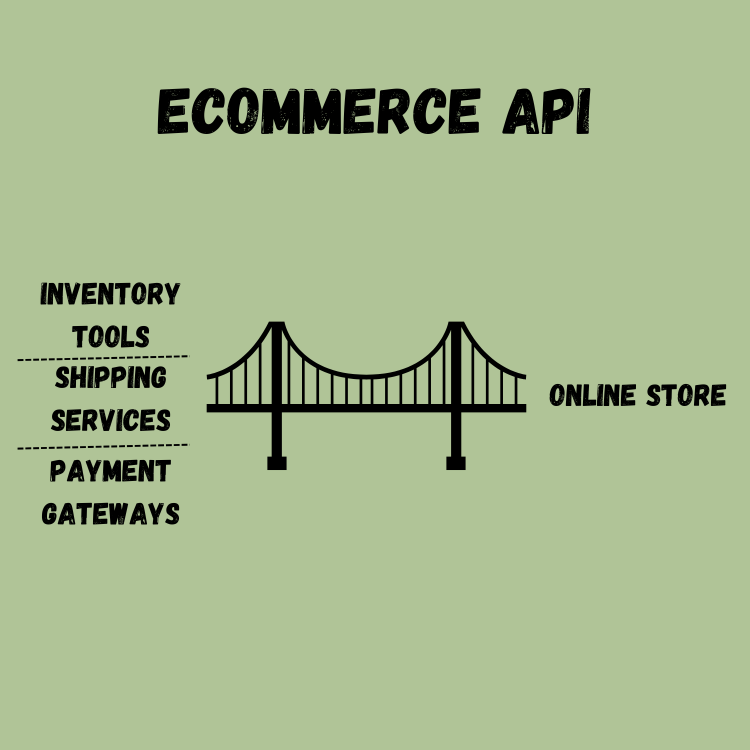
eCommerce APIs (Application Programming Interfaces) are the digital connectors that enable seamless communication between different systems in an eCommerce ecosystem. Think of them as virtual bridges that let your online store, inventory tools, shipping services, and payment gateways “talk” to one another, streamlining operations and enhancing the shopping experience for your customers.
Whether you’re automating inventory updates or enabling real-time order tracking, APIs are essential for building a scalable and efficient eCommerce platform.
At their core, APIs define how software applications interact, exchanging data to perform specific functions. For instance:
By facilitating these interactions, APIs eliminate manual tasks, reduce errors, and ensure that all parts of your business operate in harmony.
By leveraging APIs effectively, businesses can create a connected, efficient system that reduces friction for both the merchant and the customer.
In the fast-paced world of eCommerce, efficiency and scalability are critical to staying competitive. eCommerce APIs enable businesses to connect tools and platforms, automate repetitive tasks, and deliver a seamless customer experience. Here’s why they’ve become indispensable:
APIs allow different systems to communicate effortlessly, creating a unified workflow. For instance:
This interconnected system ensures your operations run smoothly, regardless of the number of platforms you use.
APIs reduce manual work by automating key processes. This leads to faster workflows, fewer errors, and more time to focus on growing your business. Examples include:
Discover 10 ways to prevent overselling here.
Customer expectations are higher than ever, and APIs play a crucial role in meeting those demands. They enable:
APIs centralize data from multiple channels, giving you a comprehensive view of your business. By leveraging analytics APIs, you can:
This data empowers smarter decision-making and helps you adapt quickly to market trends. Learn more about demand planning and forecasting.
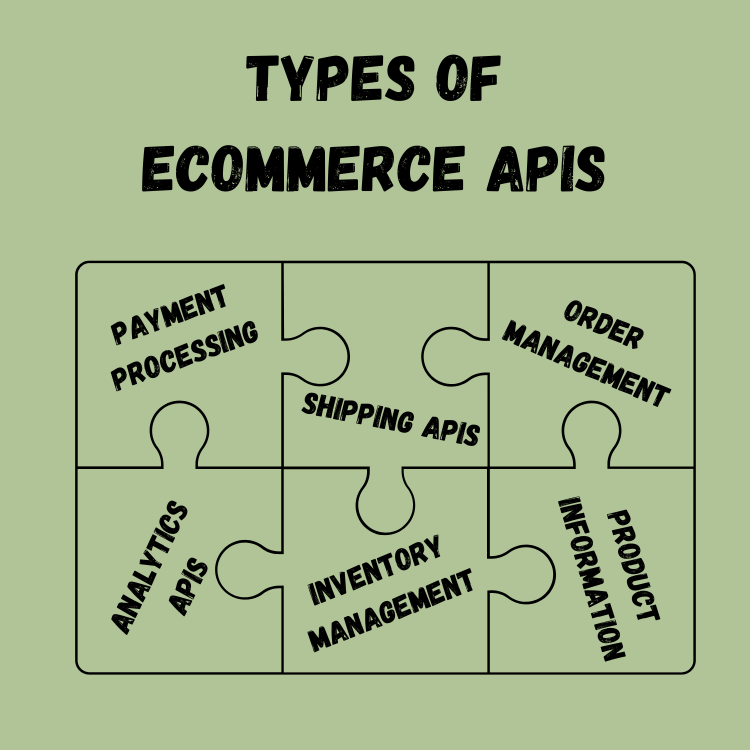
eCommerce APIs come in various forms, each tailored to address specific operational needs. Understanding these API types can help you choose the right solutions to streamline your business. Below are the key types of eCommerce APIs and how they drive efficiency.
Product Information APIs manage and synchronize your product catalog across multiple platforms. Whether you’re updating prices, descriptions, or images, these APIs ensure consistency across all sales channels.
Inventory Management APIs keep stock levels accurate in real time by syncing data across your warehouse, online store, and marketplaces. This helps prevent overselling and stockouts.
Order Management APIs centralize the processing of orders from different channels, allowing you to automate fulfillment and shipping.
Payment APIs integrate secure payment gateways into your eCommerce platform. They handle everything from processing transactions to supporting multiple payment methods.
Shipping APIs streamline the logistics process by automating label creation, tracking, and customer notifications.
Analytics APIs collect and present data from multiple channels, helping you gain actionable insights into your eCommerce operations.
| API Type | Example | Purpose |
|---|---|---|
| Product Management APIs | OneCart, Shopify Product API | Updates product listings |
| Inventory APIs | OneCart Inventory API | Syncs stock levels |
| Payment APIs | Stripe, PayPal | Processes payments |
| Shipping APIs | DHL, FedEx API | Tracks deliveries |
Examples of types of eCommerce APIs
To fully harness the power of eCommerce APIs, it’s essential to approach their integration strategically. Poorly implemented APIs can lead to inefficiencies, data silos, or even security risks. Here’s a step-by-step guide to using eCommerce APIs effectively:
Before diving into API integration, identify the specific challenges or inefficiencies your business faces.
By pinpointing these needs, you can select APIs that align with your goals and deliver the greatest impact.
Not all APIs are created equal. Look for providers that offer reliability, scalability, and strong support.
Ensure your APIs integrate smoothly with your existing systems to avoid data silos and operational disruptions.
After implementation, regularly track API performance to ensure smooth operation and troubleshoot any issues.
Good API documentation is your roadmap for success. Providers typically offer detailed instructions, including sample code, to guide integration and troubleshooting.
APIs handle sensitive data, from payment details to customer information, so security is non-negotiable.
APIs evolve over time, and so should your usage of them.
eCommerce APIs are not just technical tools; they are strategic enablers that drive growth, efficiency, and customer satisfaction. Here’s a closer look at how APIs can transform your eCommerce operations.
APIs allow businesses to expand their capabilities without overhauling existing systems.
By automating repetitive tasks, APIs save time, reduce manual errors, and streamline workflows.
APIs enable you to deliver a seamless, personalized shopping experience that meets modern customer expectations.
APIs consolidate data from multiple sources into a single system, giving you a unified view of your business.
By automating processes and reducing dependency on manual labor, APIs save operational costs.
Analytics APIs collect and process data in real time, offering actionable insights into your eCommerce performance. Check out our ultimate guide to sales reports.
APIs simplify integration with third-party platforms, reducing the time it takes to implement new tools or launch on additional marketplaces. Explore how OneCart can streamline integrations.
While eCommerce APIs offer significant advantages, integrating and maintaining them comes with challenges. Understanding these issues in advance helps businesses navigate potential pitfalls and ensure seamless API implementation.
Setting up APIs can be challenging, especially for businesses with limited technical expertise or fragmented systems.
When APIs aren’t integrated correctly, systems may not sync properly, creating data silos.
APIs handle sensitive data, including customer details and payment information, making them a target for cyberattacks.
API providers often release updates, which can impact older integrations if businesses fail to adapt.
APIs depend on external providers, and downtime or slow response times can disrupt business operations.
APIs require ongoing maintenance to ensure smooth performance, which can add to operational costs.
Managing too many APIs can complicate workflows and lead to inefficiencies.
| Challenge | Cause | Solution |
|---|---|---|
| Complex Setup | Fragmented systems | Use middleware tools, follow documentation |
| Data Silos | Poor integration | Centralized platforms like OneCart |
| Security Risks | Weak encryption/authentication | HTTPS, OAuth2, regular updates |
| Versioning Issues | Outdated API versions | Monitor updates and test in sandboxes |
| API Downtime | External provider issues | Monitor uptime, have backup plans |
| High Maintenance | Ongoing updates and fixes | Automate monitoring and maintenance |
| API Overload | Too many disconnected APIs | Consolidate tools and prioritize APIs |
Understanding these challenges and implementing the right strategies ensures that your eCommerce APIs remain reliable, secure, and efficient. With tools like OneCart, businesses can simplify API management, enabling seamless integrations without the headaches.
When it comes to managing a multi-channel eCommerce business, choosing the right API can make all the difference. OneCart’s robust and stable API offers businesses the tools to automate operations, streamline workflows, and scale efficiently. Here’s how OneCart’s API stands out as the ultimate solution for modern eCommerce needs:
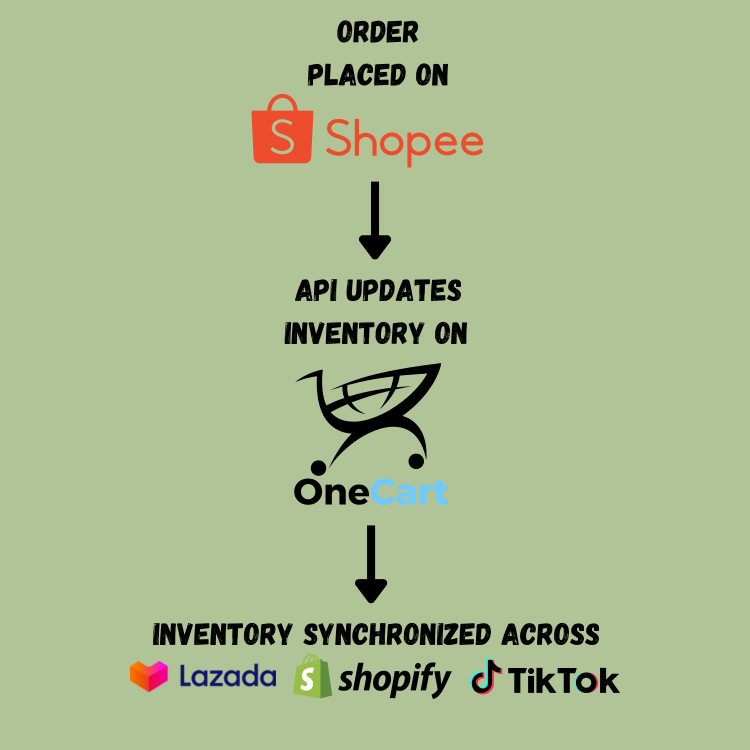
Managing inventory across multiple platforms can be complex and error-prone. OneCart’s API solves this by automatically updating stock levels in real time.
OneCart’s API consolidates orders from all your sales channels into a single, unified system.
With OneCart’s API, businesses can implement dynamic pricing strategies across different platforms. Read our guide on price segmentation strategies.
OneCart’s API provides access to advanced reporting and analytics, enabling you to make data-driven decisions.
OneCart offers a stable, well-documented API designed to integrate seamlessly with other systems like ERP, CRM, and shipping platforms. Learn how to master ERP integration.
Whether you’re managing 10 orders a day or 10,000, OneCart’s API is designed to scale with your business.
OneCart provides local Singapore-based support, ensuring that businesses receive timely assistance during API setup and operation.
One integration gives your developers a single, consistent REST API to manage products, inventory, orders, and listings across every marketplace you sell on. Your team works with one OneCart endpoint, and OneCart handles the connection to each platform underneath. Explore the full reference, authentication, and rate limits in the OneCart Developer API Documentation.
Sync inventory, create and update product listings, and pull orders from your Shopify store through the OneCart API, kept in step with every other channel you sell on.
List and update products, manage stock, and retrieve orders from Amazon through a single OneCart integration, so your team ships an Amazon connection quickly with one consistent API.
List and revise products, sync inventory, and pull orders from eBay through the OneCart API, unified with every other channel you sell on.
Manage Walmart Marketplace listings, stock, and orders through a single OneCart integration, kept in sync with all of your other stores.
Sync your Etsy listings, inventory, and orders through the OneCart API, so your catalog stays accurate across every marketplace at once.
Connect your WooCommerce store to OneCart to keep catalog, inventory, and orders synced with your marketplaces in real time.
Create and edit listings, sync stock, and pull order details from Shopee through the OneCart API, so your Shopee storefront always reflects your true inventory.
Manage TikTok Shop products, inventory, and orders alongside the rest of your channels through one OneCart connection.
Push listings, sync inventory, and retrieve orders from Lazada through the OneCart API, unified with Shopee, Amazon, and your other stores.
The OneCart inventory management API keeps stock levels accurate across every channel in real time. When a sale happens on one marketplace, OneCart updates availability everywhere, which is how growing sellers prevent overselling as they add channels.
The OneCart order management API consolidates orders from all of your sales channels into one flow, so your systems read and process every order from a single, consistent source.
The OneCart API is a standard REST API that returns JSON. Point your integration at the base URL and authenticate with your API key:
https://app.getonecart.com/api/v2Authorization headerA simple request to list your products looks like this:
curl https://app.getonecart.com/api/v2/products \
  -H "Authorization: YOUR_API_KEY"
Generate your API key in your OneCart dashboard, then browse the full endpoint reference, including products, orders, listings, and sales insights, in the OneCart Developer API Documentation. Start a free OneCart trial to get your keys.
An eCommerce API (Application Programming Interface) allows different software systems, such as online stores, inventory tools, payment gateways, and shipping platforms, to communicate and share data seamlessly. It automates processes like inventory synchronization, order fulfillment, and payment processing, saving time and reducing errors.
APIs provide the foundation for automation, scalability, and integration in eCommerce operations. Key benefits include:
Yes, Inventory Management APIs sync stock levels across platforms in real time. For example, if a product sells on Shopee, the inventory automatically updates on Lazada, Shopify, and your warehouse system. This prevents overselling, stockouts, and manual errors.
Security is a top priority for APIs, especially when handling sensitive data like payments and customer details. Best practices include:
To ensure a smooth integration, follow these steps:
APIs enable omnichannel commerce by syncing data across all sales and communication channels, whether online, in-store, or mobile. For example:
The most important APIs for eCommerce businesses include:
OneCart’s API offers a comprehensive solution for businesses managing multi-platform sales. Benefits include:
eCommerce APIs are the backbone of modern online businesses, enabling seamless integration, automation, and scalability across platforms. By connecting critical systems like inventory management, order processing, payment gateways, and analytics tools, APIs streamline operations, reduce errors, and enhance customer experiences. From real-time inventory synchronization to personalized shopping and data-driven insights, APIs empower businesses to stay competitive and efficient in an evolving digital landscape. With tools like OneCart, businesses can simplify API implementation, optimize workflows, and unlock new growth opportunities.
Ready to simplify and automate your eCommerce operations? Sign up for OneCart's free trial today and experience the power of seamless API integration!
The OneCart API gives your team a single REST integration to manage products, inventory, orders and listings across Shopee, Lazada, Amazon, Shopify, TikTok Shop and 20+ platforms. Full documentation, authentication and rate limits included.
Get your free API keysUsed by hundreds of merchants in Singapore & Southeast Asia