A Guide to E Commerce Enablers for Digital Success in Singapore [2025]
Discover how the right e commerce enablers can scale your Singapore business. This guide covers platforms, logistics, payments, and marketing partners.
Discover how the right e commerce enablers can scale your Singapore business. This guide covers platforms, logistics, payments, and marketing partners.
E-commerce enablers are specialised companies and technologies that handle the critical, behind-the-scenes jobs of running an online business. Think of them as your professional support crew, managing everything from your website platform and payment processing to warehouse storage and last-mile delivery.
They provide the essential infrastructure that lets you operate efficiently, scale up, and grow your business.
Imagine trying to run a professional racing team all by yourself. You’d have to be the driver, mechanic, engineer, and strategist all at once. E-commerce enablers are your pit crew, with each member expertly handling a specific job so you can focus on the race: growing your business.
These partners form the backbone of your online store. They are the invisible yet indispensable services powering every step of a customer’s journey, from the moment they land on your product page to the unboxing of their order. Without them, even the best product would struggle to find an audience, let alone reach its destination.
Every successful online purchase is the result of multiple enablers working in harmony. This powerful ecosystem includes:
Getting this collaboration right is crucial for success, especially in a competitive market.
Actionable Insight: You don’t have to build every capability from scratch. By partnering with the right e-commerce enablers, you can access world-class infrastructure and expertise instantly. This allows you to compete with much larger brands from day one.
Singapore’s e-commerce scene is highly advanced, thanks to exceptional internet penetration and high smartphone adoption that makes online shopping a daily norm. With one of the highest internet penetration rates globally, Singaporeans are always connected, creating fertile ground for online businesses.
Government initiatives under the Smart Nation programme have bolstered this digital infrastructure. E-commerce GMV is forecasted to jump from USD 8.2 billion in 2022 to USD 11 billion by 2025. You can dig deeper into these trends and what they mean for your business in this detailed market analysis.
This digital readiness means customer expectations are high. They demand fast delivery, seamless payments, and a flawless online experience. The key takeaway is to see enablers not as costs, but as vital investments in meeting and exceeding these expectations.
Success is about building a robust ecosystem of partners to support your growth and deliver the experience modern shoppers demand.
Every successful online business is built on four key pillars of support. Think of them as the legs of a table – if one is wobbly, the whole thing can fall.
These pillars are powered by different types of e-commerce enablers, and they all work together to create a smooth, scalable, and customer-friendly operation. Getting this framework right from the start helps you map out your entire business and see exactly which areas need support.
A simple analogy is building a house. You need a solid foundation (technology), the walls and roof (logistics), the plumbing and electricity (payments), and the interior design (marketing and customer experience). If any one of these is weak, the whole structure is at risk.
This flow chart shows how it all fits together, from the moment a customer first clicks on your site to the final delivery at their doorstep.

This visual reminds us that the digital storefront, internal operations, and physical delivery must work in sequence to complete a sale and keep a customer happy.
Let’s break down each of these core pillars.
This is your digital foundation—the online shopfront where customers find and buy your products. It’s the engine that runs your website, manages your product catalogue, and processes orders. Without a solid technology pillar, your business has no public face.
Actionable Insight: Choose a platform that can grow with you. Platforms like Shopify or WooCommerce are excellent starting points for small businesses in Singapore. They offer user-friendly interfaces and access to apps that add functionality as your needs become more complex. Your goal is to make the customer’s journey from browsing to buying as effortless as possible.
This pillar represents the physical engine of your e-commerce business. It covers everything that happens after a customer clicks “buy”—from storing your inventory in a warehouse to picking, packing, and shipping the order. A strong logistics partner turns a digital transaction into a tangible, positive customer experience.
For example, a reliable partner like Ninja Van can manage deliveries and the entire returns process. A smooth and easy return policy protects your brand’s reputation and encourages repeat purchases, as 84% of shoppers say a positive returns experience would make them buy from a retailer again.
The promise you make on your website becomes a physical reality through logistics. Excellent logistics builds trust and loyalty, while poor fulfilment can quickly damage your brand, regardless of how good your products are.
This is the transactional heart of your operation. Payment enablers are the secure gateways that allow you to accept money from customers safely and efficiently. This pillar builds trust at the most critical moment of the sale—the checkout.
In the Singaporean market, offering locally preferred payment methods is essential.
Practical Example: Integrating a payment gateway like HitPay is a smart move. It allows you to offer multiple local payment options through a single integration. This simple step can boost your conversion rates by giving customers the convenient payment methods they already use and trust.
This final pillar is how you attract, engage, and retain your customers. It includes all the tools and strategies you use to build your brand and communicate with your audience. These e-commerce enablers help you turn one-time buyers into loyal fans.
This can range from email marketing platforms like Mailchimp for sending newsletters to live chat software that provides instant support on your website. As you build your business, gaining insights on AI transforming e-commerce strategy and customer support is crucial for future-proofing your brand.
These four pillars are interconnected. A great marketing campaign is wasted if your logistics fail to deliver on time, and the best website won’t succeed if its payment system is unreliable. By viewing your business through this framework, you can strategically select the right enablers to build a strong, resilient, and successful e-commerce operation.
Think of your technology platform as the digital version of a prime retail location. It’s the ground your online business is built on. Picking the right platform is one of the most critical decisions you’ll make.
The right platform is a powerful e-commerce enabler. It directly shapes how efficiently you can run your operations, your ability to grow, and whether your customers have a good experience shopping with you.
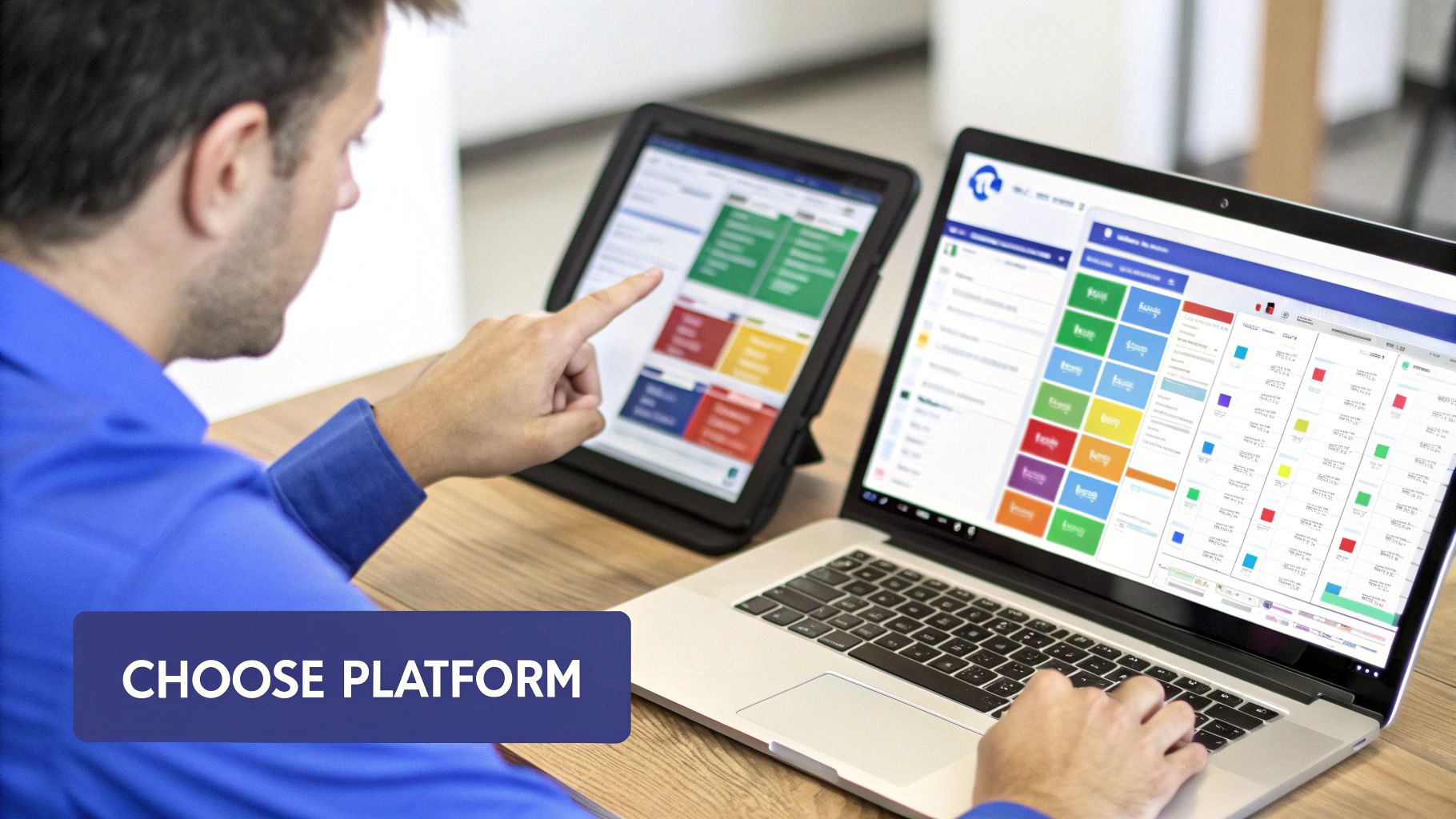
The right choice is the one that fits how you sell. Different business models have different needs, and your tech has to be up to the task.
Actionable Insight: Start by mapping out your ideal customer journey. Draw out every step from the first ad they see to the final “thank you” email they receive. Then, find a platform that makes each of those steps feel smooth and effortless.
In Singapore’s market, selling only on your own website may not be enough. The most successful businesses are often on their own site and tapping into the massive audiences on marketplaces like Lazada, Shopee, and TikTok Shop.
This is where multi-channel e-commerce enablers become vital. Trying to manage inventory, orders, and pricing separately for each channel can lead to chaos, overselling, stockouts, and unhappy customers.
Practical Example: A multi-channel operations platform like OneCart brings all your sales channels into a single, unified dashboard. This means you see every order in one place, update stock levels everywhere at once, and run your whole business from a central hub. This is a strategic advantage that unlocks scalable growth.
This unified approach cuts out countless hours of manual data entry and reduces the chance of human error. It allows a small team to manage an operation that would otherwise need several more people. It’s one of the most impactful enablers you can bring into your business.
For a deeper look, check out our guide on building an effective e-commerce website in Singapore.
When you start talking to potential platform providers, it’s easy to get distracted by long feature lists. Use these specific questions to get the answers that matter for your day-to-day operations.
Ask potential partners these questions:
Choosing your technology is a foundational move. By matching it to your business model, planning for multi-channel sales, and asking the right questions, you’ll build an operational backbone that supports your business today and is ready for future growth.
The moment a customer clicks ‘buy,’ the digital part of their journey ends and the physical one begins. This is where logistics and fulfilment e-commerce enablers become the backbone of your customer satisfaction and repeat business. A strong fulfilment partner does more than just move boxes; they are the physical manifestation of your brand promise.
Getting this right involves a coordinated process of warehousing your products, managing stock levels, and efficiently picking and packing orders for shipment. This entire chain has to work smoothly to create a positive experience that builds trust and loyalty.
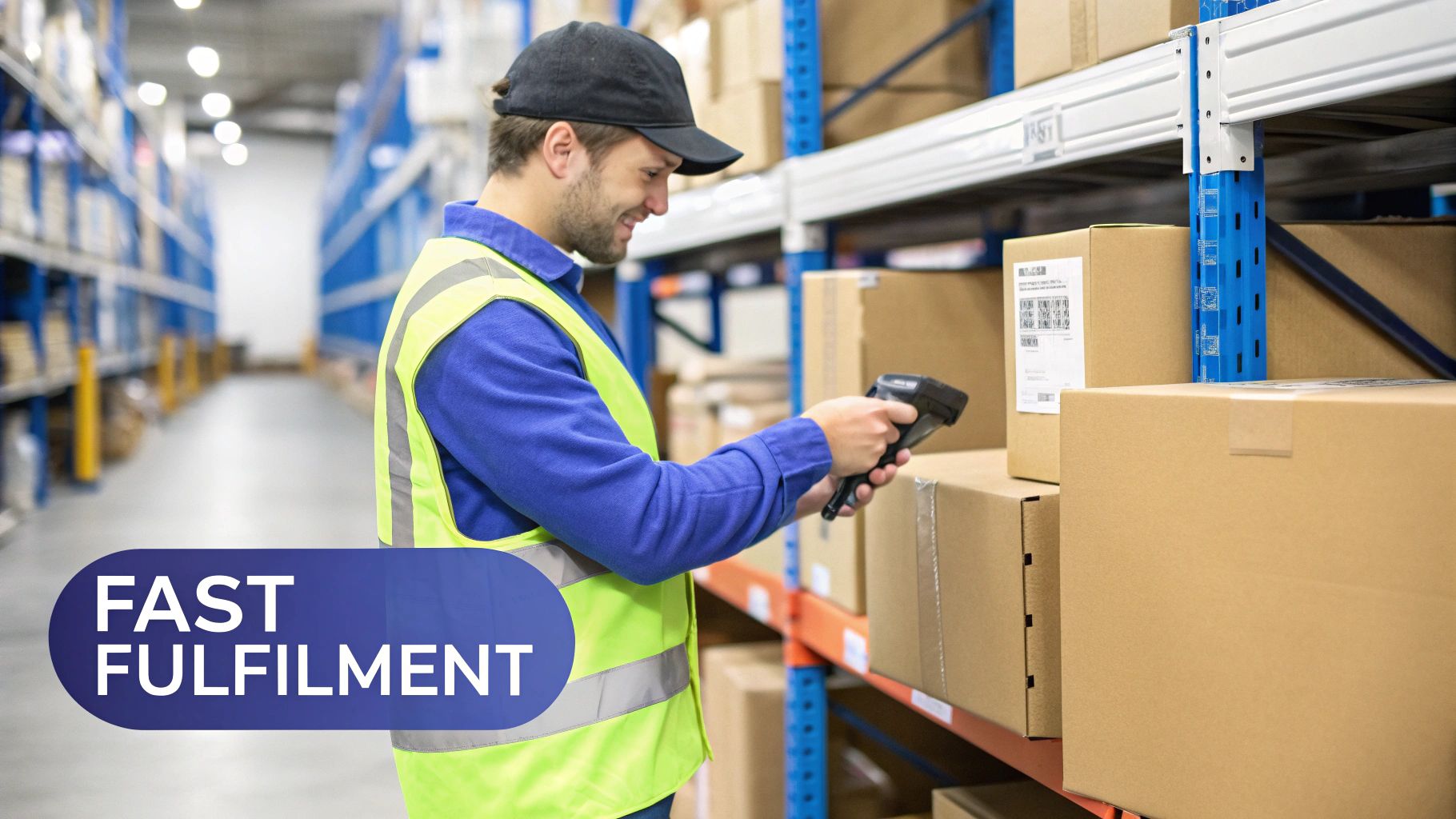
The journey from a customer’s click to their doorstep involves several critical stages, all managed by your logistics enabler. For a small business, partnering with a Third-Party Logistics (3PL) provider can be a game-changer.
Practical Example: A local fashion startup in Singapore can team up with a 3PL instead of leasing an expensive warehouse and hiring staff. This partner handles all their storage, inventory management, and shipping. This frees up the startup’s capital and time, letting them focus on designing new collections and marketing their brand.
The core services these partners provide include:
Efficient logistics is tied to precise inventory control. If you’re selling on specific marketplaces, it pays to dive deeper into resources about mastering Amazon inventory management.
The right delivery model depends on what you sell and what your customers expect. Pick the wrong one, and you could face high costs, damaged goods, or unhappy customers.
For instance, a business selling fresh groceries needs an on-demand courier service built for speed. A company selling large furniture would use a scheduled delivery network to plan routes and coordinate convenient delivery times with customers.
The final step, known as the last mile, is often the most expensive and complex part of the delivery journey, but it’s also where you make the biggest impression. Optimising your last-mile delivery services is essential for controlling costs and ensuring a great customer experience.
Your fulfilment strategy directly impacts your bottom line and brand reputation. Two areas to focus on are shipping costs and package tracking.
Actionable Insight 1: Calculating Shipping Costs To protect your profit margins, you must understand all the costs tied to shipping. This includes the courier’s fee, packaging materials, and the labour involved in packing the order. A good practice is to offer a few clear shipping options at checkout, like a standard economy option and a faster, paid express option. This gives customers control while helping you manage their expectations.
Actionable Insight 2: Leveraging Package Tracking Excellent package tracking is a powerful tool for reducing customer anxiety and support tickets. Choose a logistics partner that provides real-time, detailed tracking updates. This transparency keeps customers in the loop and turns the waiting time into a positive part of their experience. When customers can see exactly where their package is, they are less likely to flood your support team with “Where is my order?” questions.
A clunky or untrustworthy checkout is the quickest way to lose a sale. When a customer decides to buy, your payment systems must deliver a flawless, secure experience. These enablers do more than just move money; they build the final bridge of trust that turns a browser into a paying customer.
Picking the right payment gateway is a balance between what is simple for your customers and affordable for your business. This decision has a massive effect on your conversion rates, operating costs, and brand perception in Singapore.
To succeed in Singapore, you must offer payment methods that locals know and trust. While credit cards are a global default, offering only that option can limit your market reach.
Offering a mix of local favourites shows you understand the local market.
The rise of digital wallets and mobile payments has been a massive driver for Singapore’s e-commerce scene. People here trust digital banking, and strong cybersecurity has made frictionless checkouts the new standard. With mandatory e-invoicing on the horizon from 2025, digital transactions will become even more streamlined.
When choosing a payment partner, look beyond the headline transaction fee. A slightly cheaper option could cost you more in lost sales or integration issues. Your decision should focus on three key areas.
1. Security and Compliance Your payment gateway must be PCI DSS (Payment Card Industry Data Security Standard) compliant. This is not optional—it protects you and your customers from data breaches. A secure provider handles sensitive card data on their own servers, which reduces your liability.
2. Ease of Integration How easily does the payment gateway connect to your e-commerce platform, like Shopify or WooCommerce? A provider that offers a pre-built plugin or clear API documentation will save you development costs and time.
3. Total Cost of Ownership Don’t focus only on the per-transaction percentage. Ask about setup fees, monthly charges, and hidden costs for things like fraud protection or handling refunds. Look for a partner with a transparent, easy-to-understand fee structure.
Actionable Insight: Your goal is simple: find a payment enabler that delivers a secure, reliable, and easy checkout. Every bit of friction you remove at this final step translates directly into better conversion rates and happier customers.
For a deep dive, check out this comprehensive list of payment gateways available in Singapore to compare how different providers measure up on features and pricing. Getting your payment mix right is one of the most powerful things you can do to reduce cart abandonment.
Choosing and connecting the right e-commerce enablers can feel like a complex project. With a structured approach, you can make the process manageable. This is about finding the right tool that solves the specific problem you’re facing right now.
Before you look at software demos or logistics promises, you need to look inward. The first step is to be honest about your biggest operational headaches.
What is holding your business back day-to-day? Get specific.
Practical Example: List your top three daily frustrations.
These are your targets. Now you’re not just looking for “an inventory tool.” You’re looking for a solution that saves you 10 hours a week of manual data entry. That’s a clear goal.
With your problems clearly defined, you can start shortlisting partners who specialize in solving them. Look for providers with strong case studies or testimonials, especially from Singaporean businesses similar to yours.
Once you have a list of two or three options, it’s time to dig in.
Get a demo from each one. During the call, focus on how their solution tackles your specific pain points from Phase 1. It’s easy to get distracted by features you may never use.
Actionable Insight: To keep things objective, create a simple evaluation scorecard. Rate each potential partner on a scale of 1-5 across key criteria: cost, ease of integration with your current tools, relevant features, and the quality of their customer support.
After you’ve made your choice, the final steps are a smooth rollout and proving it was worth the investment. Plan the integration carefully. If possible, start with a small test run before a full rollout.
Most importantly, define how you’ll measure success. Your metrics should be the direct solution to the problems you identified in Phase 1.
By tying your new e-commerce enablers to clear, measurable results, you can confidently calculate your return on investment. This proves that your new partner is actively helping you build a more efficient, profitable business.
As you piece together your e-commerce strategy, a few practical questions often come up. Let’s tackle some of the most common ones.
Yes. You don’t need a massive budget to get started. Many enablers are built for growing businesses, with pricing that scales with you.
For example, you can get a Shopify store running for an affordable monthly fee. For payments, gateways like Stripe take a small percentage from each sale. For logistics, you can start with on-demand delivery services before committing to a larger third-party logistics (3PL) provider.
The trick is to focus on solving your biggest problems first. The time you save and the mistakes you avoid often mean these tools pay for themselves quickly.
This is a simple but important distinction. An e-commerce platform like Shopify is one type of technology enabler. It’s the software that helps you build your digital shopfront where customers browse and buy.
The term e-commerce enabler covers everything else you need to run the business. This includes your delivery partner, your payment processor, your email marketing tool, and your inventory system.
In simple terms: your platform is the shop, but the other enablers are your cashier, your delivery driver, and your stockroom manager.
The key is to make integration a top priority. When choosing partners, your first question should be: “How well does your service connect with my other tools?”
For example, your logistics provider must connect with your e-commerce platform to automate order updates and tracking information, saving you from manual data entry.
Actionable Insight: The best way to stay in control is with a central operations hub. A dedicated platform can pull all the data and workflows from your different services into one unified dashboard. It gives you a single source of truth for your business, so you’re not constantly switching between different logins.
If you’re launching a new online business, you need two things to start: a technology platform (like Shopify or WooCommerce) and a payment gateway (like Stripe or HitPay). This is the minimum you need to build your store and start taking money securely.
Once orders start coming in, your next move should be to find a reliable logistics partner to handle shipping. With that foundation in place, you can then add marketing enablers to find more customers and drive sales.
Ready to unify your operations and scale your business without the chaos? OneCart centralises your orders, inventory, and listings from Shopee, Lazada, TikTok Shop, and Shopify into a single, powerful dashboard. Discover how you can save time and prevent overselling by visiting https://www.getonecart.com.
Automate & Scale Your Online Business with OneCart
Start a Free TrialUsed by hundreds of merchants in Singapore & Southeast Asia