Calculate Safety Stock to Prevent Overselling in Singapore 2026
A practical guide for Singapore sellers on Shopee, Lazada, and Shopify. Learn how to calculate safety stock with clear formulas, examples, and templates.
A practical guide for Singapore sellers on Shopee, Lazada, and Shopify. Learn how to calculate safety stock with clear formulas, examples, and templates.

Here’s a quick look at the main formulas we’ll be covering. Think of this as your cheat sheet for later.
| Formula Type | Best For | Key Inputs Required |
|---|---|---|
| Basic Rule-of-Thumb | Sellers who are new to safety stock or have relatively stable sales and reliable suppliers. A great starting point. | Max/Average Daily Sales, Max/Average Supplier Lead Time |
| Demand Variance (Z-Score) | Businesses with unpredictable customer demand but consistent supplier lead times. Perfect for trending products. | Standard Deviation of Sales, Average Lead Time, Desired Service Level (Z-score) |
| Lead Time Variability | Sellers who face unreliable supplier delivery times but have steady customer demand. Essential for managing import delays. | Average Daily Sales, Standard Deviation of Lead Time, Desired Service Level (Z-score) |
| Periodic Review Adjustments | Anyone not using a perpetual inventory system; those who review and order stock at fixed intervals (e.g., weekly). | All of the above, plus the time between your inventory reviews. |
Each of these methods solves a slightly different problem, from basic protection to fine-tuning for specific supply chain headaches. We’ll walk through exactly how to use them.
Let’s start with the classic formula that every seller should know: (Maximum Daily Sales × Maximum Lead Time in Days) – (Average Daily Sales × Average Lead Time in Days). This simple calculation gives you a solid inventory buffer to guard against surprise demand spikes or unexpected supplier delays.
For any online store in Singapore, whether you’re a small Instagram shop or a power seller on Lazada, running out of stock is a disaster. It’s more than just a missed sale.

During massive sales events like 11.11 or the Great Singapore Sale, a stockout can torpedo your business. Suddenly you’re dealing with negative reviews, a sinking seller rating, and a loss of customer trust that is incredibly difficult to win back.
This is exactly where safety stock comes in. It is a carefully calculated buffer that acts as your insurance policy against the chaos of e-commerce.
Let’s be honest, guessing your inventory levels is just gambling with your business. Order too little, and you’re guaranteed to stock out. Order too much, and you’ve locked up precious capital in products that aren’t moving, all while paying expensive storage fees.
Strong e-commerce operations are built on avoiding these extremes. Proper safety stock helps you find that profitable middle ground.
Imagine this very common scenario for a local merchant:
This is a real problem many online businesses face without a plan. You lose real revenue, tarnish your brand, and then have to spend time and money just to get back to where you were.
The good news is, there are simple, effective formulas to prevent this from happening. If you want a quick primer first, check out our guide on understanding safety stock and how it prevents stockouts.
Safety stock is about making smart, calculated decisions to minimize risk. The goal is to perfectly balance the cost of holding inventory against the very real cost of a stockout.
Switching from gut feelings to data-driven decisions has a massive payoff. One study found that Singaporean businesses using optimised safety stock levels slashed their overselling incidents by an incredible 68%.
Even better, this data-first approach helped them cut holding costs by 18%—a huge saving when warehouse space is at a premium. By taking the time to properly calculate your safety stock, you turn inventory management from a constant headache into a powerful strategic advantage.
Before we even get into the formulas, you need to answer a pretty fundamental question: how often are you okay with running out of stock? This is a strategic choice known as your service level, and it’s basically a promise you make to your customers.
A 95% service level means you’re aiming to have an item ready to ship 95 out of 100 times a customer wants to buy it. This implies you’re accepting a 5% chance of a stockout. Aiming for a higher service level keeps your customers happy, but it also means tying up more cash in inventory.
For anyone selling on competitive marketplaces like Shopee and TikTok Shop, picking the right service level is crucial. You do not need the same service level for every single product. A smart way to start is by sorting your items based on how important they are to your business.
Actionable Tip: A customer might be willing to wait a week for a niche, slow-moving accessory to come back in stock. But if your best-selling phone case is unavailable? They’ll have bought a similar one from your competitor in minutes. Align your service level with customer expectations for each product category.
Once you’ve decided on your target service level, you need to translate that percentage into a number your safety stock formula can actually use. That number is called the Z-score.
The Z-score is a statistical value that tells you how much of an inventory buffer you need to meet your desired service level. You don’t need to do complex statistics; you just need to use a simple lookup table.
Here’s a quick reference table with Z-scores for the most common service levels we see in e-commerce.
| Desired Service Level | Z-Score |
|---|---|
| 85% | 1.04 |
| 90% | 1.28 |
| 95% | 1.65 |
| 97% | 1.88 |
| 98% | 2.05 |
| 99% | 2.33 |
You can just find your target service level in the left column and grab the corresponding Z-score from the right. It’s that straightforward.
Practical Example:
Imagine you sell a popular phone case on Lazada. It’s one of your best-sellers, so you decide a 98% service level is non-negotiable to keep your customers happy and your sales rank high.
A quick look at the table shows the Z-score for 98% is 2.05. This is the exact number you’ll plug into the safety stock formula. Making this strategic choice is a key part of solid demand planning and forecasting to master your supply chain. With this value figured out, you’re ready for the next step: running the actual calculations.
Alright, you’ve figured out your service level and nailed down the right Z-score. Now for the fun part: the actual calculations.
The best method really depends on your specific situation. We’ll walk through three of the most common formulas brands use, complete with practical examples for a Singaporean e-commerce business.
If you’re just dipping your toes into inventory management, or if your demand is pretty steady and your suppliers are reliable, this is an excellent place to start.
It’s straightforward and gives you a solid buffer without needing to fire up a spreadsheet for complex statistical analysis.
Here’s the formula: (Maximum Daily Sales × Maximum Lead Time) – (Average Daily Sales × Average Lead Time).
Let’s put this into a real-world scenario.
Practical Example: A Simple Calculation Imagine you’re selling a popular brand of reusable coffee cups on your Shopify store.
Plugging these numbers into the formula, you get:
This means you should aim to keep 220 extra cups on hand as your safety stock. This buffer is your insurance policy. If a flash sale hits right when your supplier is facing delays, you can keep selling without missing a beat.
The ‘Days of Supply’ method is a great start, but it only considers the absolute best and worst-case scenarios, which can be easily skewed by a single unusual sales day. A more robust approach uses the standard deviation of demand, which accounts for all the little ups and downs in your sales history.
This is the classic formula you’ll see used most often: Safety Stock = Z-Score × Standard deviation of Demand × √Lead Time.
This formula is perfect for products where customer demand is all over the place, but your supplier lead times are fairly consistent. Think of those trendy items that get a sudden shout-out from an influencer.
Practical Example: Managing Demand Swings Let’s say you sell handmade leather keychains on TikTok Shop. Your supplier is local and super reliable, always delivering in 4 days (Lead Time). Your sales, however, are unpredictable.
First, you’ll need the standard deviation of your daily sales. You don’t need to do this by hand. In Google Sheets or Excel, just list your daily sales for a recent period (like the last 30 days) and use the STDEV.S() function.
Now, let’s crunch the numbers:
By keeping 27 extra keychains in stock, you’re buffered against the typical volatility in your daily sales, helping you hit that 95% service level you promised your customers.
Actionable Tip: Using standard deviation gives you a much more accurate picture of your sales volatility than just looking at the highest and lowest sales days. It considers every data point, making your safety stock calculation far more precise.
So, what happens when both your customer demand and your supplier lead times are unpredictable? This is a massive headache for many Singaporean sellers who rely on imported goods. For this messy-but-common situation, you need a more advanced formula that accounts for both variables.
This infographic shows how the process flows together. It’s a simple three-step loop.

You start by picking a service level target, which gives you the Z-score you need to plug into the final calculation.
The formula looks a bit intimidating, but the logic is the same—it’s just covering more bases: Safety Stock = Z-Score × √((Average Lead Time × (Std Dev of Demand)²) + ((Average Daily Sales)² × (Std Dev of Lead Time)²)).
Practical Example: Handling an Unreliable Supply Chain You sell artisanal sambal sourced from a small producer in Indonesia. Both your sales and your supplier’s shipping times can be wildly different from week to week.
Here’s your data:
Let’s break down the calculation inside the square root first to keep things simple:
Now, we can finish the final calculation:
This number is higher because the formula is protecting you against two risks at once: a sudden spike in sambal orders and an unexpected shipping delay.
While these formulas might seem daunting, you don’t have to do them by hand every time. To get a feel for how the different variables work, you can play around with the numbers from these examples using a free online safety stock calculator. It’s a great way to see how small changes can impact your results.
The formulas give you a solid foundation, but running an e-commerce business is never that clean. No calculator can predict a seasonal rush, manage a new product launch, or know what to do with slow-moving inventory. For that, you need to layer your real-world experience on top of the math.
This is all about adjusting your inputs based on what’s actually happening in your business, not just what a spreadsheet full of historical data tells you.
Seasonal events like the Great Singapore Sale (GSS) or the 11.11 shopping festival can make your average sales data completely useless. If you calculate your safety stock for these periods using year-round averages, you’re pretty much guaranteed to sell out in the first few hours.
This is where you need to switch from looking backward to looking forward. Ditch the historical averages and start forecasting. Pull up the data from last year’s GSS. How much did sales for a specific product jump? Did demand spike by 200%? 500%?
That forecasted sales velocity—not your average daily sales—is what you should plug into your formula.
Practical Example: The Great Singapore Sale
Let’s say you sell portable fans. On a normal day, you sell about 10 units. But during last year’s GSS, that number shot up to an average of 50 units per day.
To really nail this, it helps to be familiar with different inventory forecasting methods. They give you the tools to build a much more accurate picture of future demand, making your safety stock calculations far more reliable. Check out our guide on inventory forecasting for multiple channels to learn more.
So, what do you do when a product has zero sales history? You can’t calculate an average or a standard deviation for something you’ve never sold. You don’t have to fly completely blind.
The smartest strategy is to use a proxy. Find a similar product in your catalogue—one with a comparable price point, category, and target audience.
This approach gives you a data-informed starting point instead of just taking a wild guess.
Not every product deserves a hefty safety stock. For your slow-moving or “long-tail” items, a large buffer is a financial death trap. It ties up capital in inventory that might sit on the shelf for months or even years, racking up holding costs and risking obsolescence.
For these items, you’re often better off accepting a lower service level (say, 80-85%) and keeping a much smaller safety stock—or in some cases, none at all. The cost of a rare stockout on a slow-mover is usually far less than the cost of holding that inventory indefinitely.
Actionable Tip: Not all SKUs are created equal. Your safety stock strategy for a best-seller should be completely different from your strategy for an item that sells twice a year. Wasted capital on slow-movers is capital you can’t invest in your top-performing products.
If you’re selling across Shopee, Lazada, and your own Shopify website, trying to manage safety stock separately for each channel is a recipe for disaster. You end up with isolated pools of inventory, which increases the risk of stocking out on one channel while you have excess sitting idle on another.
The most effective solution is to maintain a single, centralised safety stock that serves all your storefronts. This is exactly where a platform like OneCart becomes essential.
By integrating your sales channels, OneCart lets you:
A centralised approach ensures your safety buffer is working as efficiently as possible, protecting sales across your entire business from a single source of truth.
Manual calculations in a spreadsheet are a fantastic way to get your head around the concepts of safety stock. But as your business grows, that spreadsheet quickly becomes a liability.
Trying to keep it updated with daily sales from Shopee, Lazada, and Shopify is a time-consuming chore that’s just begging for human error. To scale your operations effectively, automation is the only real path forward.
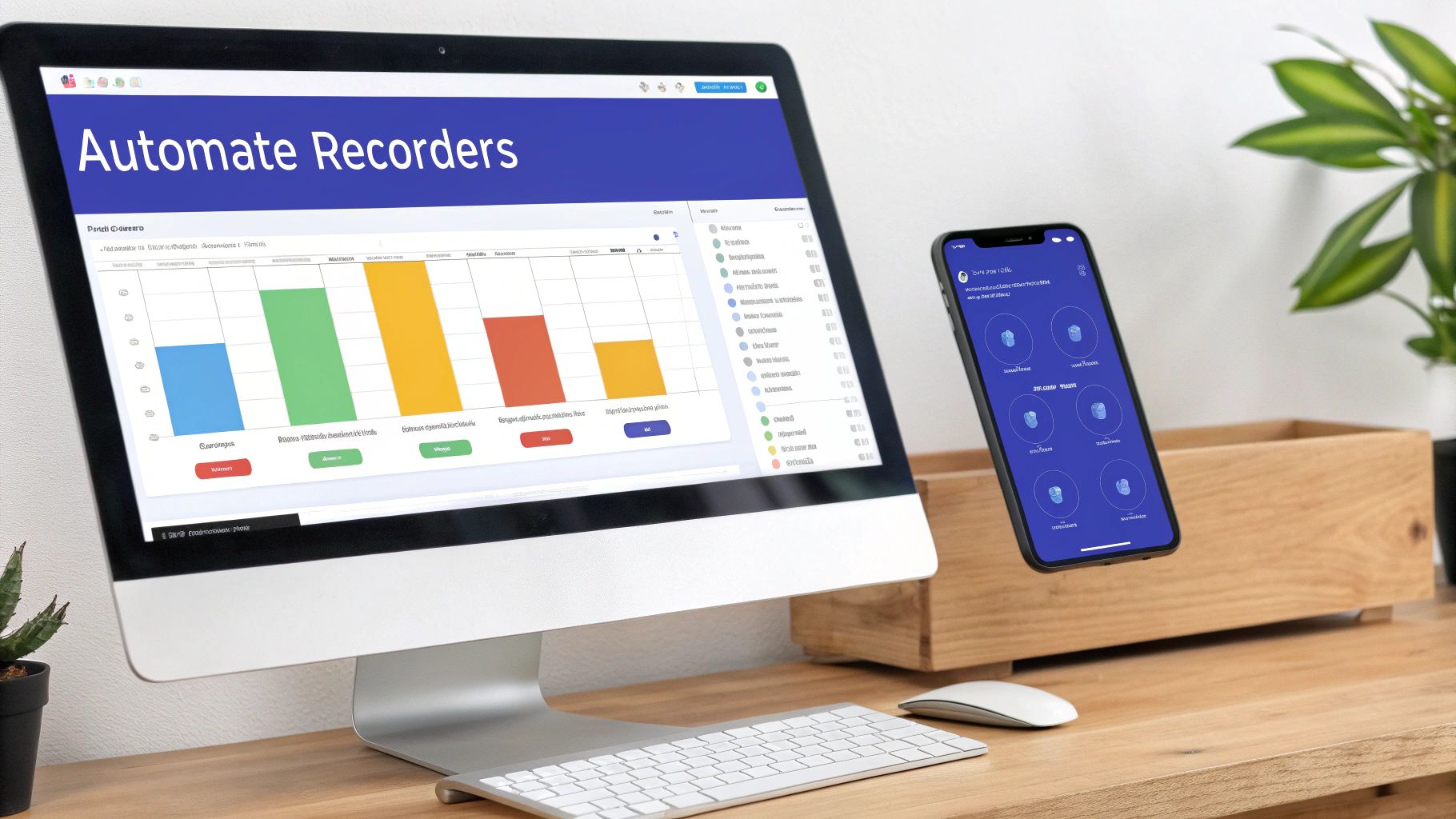
This is where you can put all those carefully calculated numbers to work inside a platform like OneCart. By connecting all your sales channels, the system creates a single source of truth for your inventory. Real-time synchronisation is the foundation for accuracy—without it, your safety stock numbers are just wishful thinking.
Once you’ve done the math and figured out the safety stock for a specific product, implementing it in OneCart is simple. The platform lets you set a “low stock alert” or “buffer stock” level for each individual SKU. This number is your calculated safety stock.
Instead of you manually checking inventory levels every day, OneCart acts as your 24/7 watchdog. When the available quantity for a product hits this predetermined threshold, the system automatically flags it for your attention.
Actionable Insight: Configure your OneCart dashboard to show all items that have hit their buffer level. This creates an instant, at-a-glance reordering to-do list for your team, eliminating the need to sift through hundreds of SKUs to find what needs your focus.
This simple setup moves you from a reactive “Oh no, we’re almost out of stock!” model to a proactive, system-driven process. The moment your real inventory dips into your safety buffer, you get an alert. This gives you plenty of breathing room to place a new purchase order with your supplier.
A common mistake sellers make is treating safety stock as a “set it and forget it” number. Customer demand shifts, and supplier lead times change. What worked last quarter might lead to a painful stockout next month. The real power of a centralised platform comes from its ability to help you refine these calculations over time.
OneCart captures rich sales data from all your connected channels, neatly organising it in one place. This makes it so much easier to spot trends and recalculate the inputs for your safety stock formulas.
Here’s how you can turn this data into a dynamic advantage:
By regularly using the live, centralised data from OneCart to feed back into your formulas, you create a powerful feedback loop. Your safety stock stops being a static guess based on old data and becomes a dynamic, intelligent part of your operations that adapts to the real world.
This approach transforms inventory management from a constant manual headache into a strategic, automated system. It frees up your time to focus on actually growing your business, confident that you have a reliable buffer protecting you from the unexpected.
Even with the right formulas in hand, putting safety stock into practice can feel a bit tricky. Many sellers run into the same practical questions when they start. Let’s walk through the most common ones.
My goal here is to clear up that last bit of confusion and give you the solid, actionable advice you need to make smarter inventory decisions.
This is easily the most frequent question. A common mistake is to treat safety stock as a “set it and forget it” number. That’s a quick way to get into trouble when the market inevitably shifts.
As a general rule, you should plan to recalculate your safety stock levels at least once a quarter, or every 90 days. This cadence is usually frequent enough to catch major trends without you getting bogged down in constant analysis. It gives you enough time to collect meaningful sales data, but not so long that your numbers become stale.
But this isn’t a hard and fast rule. For some of your products, you’ll want to be much more on the ball.
Actionable Tip: The most critical signal to recalculate isn’t the calendar—it’s change. If you see a major swing in customer demand, or your supplier’s reliability suddenly takes a nosedive, don’t wait for your scheduled review. Run the numbers again, right away.
Launching a new product comes with an inventory challenge: you can’t calculate averages or variances from zero sales. For a new launch, you have to start with an educated guess instead of a precise formula.
The best approach here is to use a proxy. Dig through your catalogue and find a similar, existing product. You’re looking for a “lookalike” item that shares key traits with your new SKU:
Use the historical sales data from this proxy product to run your initial safety stock calculations. Because this is still an estimate, I usually recommend adding a small extra buffer—maybe 10-15% on top—just to be safe.
Once the new product has been live for about 30-60 days, you’ll have real-world data to work with. That’s your cue to perform a fresh calculation based on its actual sales performance.
I see this question a lot: “Should I have one safety stock for Shopee, another for Lazada, and a third for my Shopify store?” It seems logical on the surface, but in practice, it creates unnecessary complexity and actually increases your risk of stocking out.
Think about it. Managing separate inventory pools is incredibly inefficient. You could easily sell out on Shopee while you have perfectly good stock sitting idle, reserved only for your Shopify store.
The best practice is to calculate one central safety stock level for each product. This single buffer protects your total inventory, which is then made available across all your sales channels.
This is where a multi-channel platform becomes essential. It creates a unified inventory system where your stock levels are synchronised in real-time. When an item sells on Lazada, the available quantity is instantly updated on Shopee, your website, and everywhere else. This ensures your stock availability is always accurate and lets your safety stock do its job efficiently—protecting your entire business, not just one slice of it.
Juggling these calculations while keeping all your channels in sync can be a huge operational drain. OneCart centralises your inventory and orders, letting you set a single safety stock buffer per product that protects you across every marketplace and webstore. You can finally stop overselling and streamline your operations. See how it works by visiting https://www.getonecart.com.
Automate & Scale Your Online Business with OneCart
Start a Free TrialUsed by hundreds of merchants in Singapore & Southeast Asia