

All Posts
Which Multichannel Ecommerce Software Fits You? The 2026 Fit Guide
A plain-English guide to multichannel ecommerce software in 2026: which tool fits a seller of your size, channels and setup, from free tools and spreadsheets to order orchestration and enterprise suites, with links to every OneCart comparison.
OneCart vs Veeqo [2026]: Amazon's Free Tool or a Marketplace-Neutral One?
OneCart vs Veeqo compared for 2026: what Veeqo’s free plan really includes, pricing, marketplace coverage, listings, analytics, and who each tool fits.
OneCart vs Sumtracker [2026]: Inventory Sync or Full Marketplace Operations?
OneCart vs Sumtracker compared for 2026: pricing, supported channels, bundles, listings, order processing, analytics, and who each tool fits.
OneCart vs SiteGiant [2026]: Focused Marketplace Operations or a 6-in-1 Suite?
OneCart vs SiteGiant compared for 2026: who each is for, the 6-in-1 suite vs a focused tool, pricing and grant-subsidised offers, marketplaces, analytics, onboarding and support.
OneCart vs Pipe17 [2026]: Which One Does Your Operation Need?
OneCart vs Pipe17 compared for 2026: who each is for, pricing model, setup time, order routing, EDI, listings and analytics, and how Pipe17 differs from Celigo and Boomi.
OneCart vs LitCommerce vs Listing Mirror [2026]: Listing Sync or the Whole Workflow?
OneCart vs LitCommerce vs Listing Mirror compared for 2026: pricing, sync speed, marketplaces, order processing, analytics and who each tool fits.
OneCart vs BigSeller [2026]: Free Tool or Brand-Grade Operations?
OneCart vs BigSeller compared for 2026: who each is for, free plan and pricing in Singapore and Malaysia, marketplaces, features, analytics, support, and when to move from BigSeller to OneCart.
OneCart vs Anchanto [2026]: Self-Serve Marketplace Ops or an Enterprise Suite?
OneCart vs Anchanto compared for 2026: who each is for, products, pricing model, implementation time, marketplaces, warehouse management and when an enterprise suite is worth it.
Inventory Management System Malaysia: 9 Best Options Compared [2026]
Inventory management system Malaysia guide for 2026: 9 options compared on fit, RM pricing, Shopee, Lazada and TikTok Shop stock sync, and MyInvois e-Invoice.
Depop Fees [2026]: What You Actually Pay to Sell
Depop charges no selling fee in the UK, US and Australia. What you still pay: payment processing, the 12% Boost fee, and shipping labels, with an example.
Shopify Fees [2026]: Plans, 2.5–2.9% Rates + Hidden Costs
Shopify fees in 2026 explained: plans from US$29 to US$299 a month, 2.5-2.9% payment rates, plus the hidden app and transaction costs to watch.
Lazada Seller Fees [2026]: Every Charge and When It Starts
Every fee a Lazada seller pays, in the order it hits your payout: commission that is free for your first 90 days, payment, shipping and campaign costs, with a worked example.
Shopify Xero Integration: Sync Sales, Fees and Stock [2026]
Shopify Xero integration explained: what syncs, what does not, how to set it up, and how to cover the inventory and multichannel gaps the native connector leaves.
Poshmark Scams: 9 Common Ones and How to Avoid Them [2026]
Poshmark scams almost always work by moving you off the app. Here are the 9 most common ones, the red flags to spot, and what to do if you have been caught.
Temu Seller Center: Login, Setup & Dashboard Guide [2026]
Temu Seller Center explained: the correct login URL for your region, step-by-step registration and verification, dashboard tour, and login troubleshooting.
What Is Stock Rotation? Methods and How to Do It
Learn what stock rotation is, the FIFO, FEFO and LIFO methods, why it matters, and how to rotate inventory across channels to cut spoilage and dead stock.
What Is Stock Replenishment? Methods and Best Practices
Learn what stock replenishment is, the main methods (reorder point, min/max, periodic, demand-driven), and how to refill stock without overordering.
What Is FEFO? First Expired, First Out Explained
Learn what FEFO (First Expired, First Out) means, how the method works, how it differs from FIFO and LIFO, and when to use it to cut spoilage and waste.
Warehouse Slotting: Methods, Steps & Best Practices
Learn what warehouse slotting is, the main slotting methods, how to slot a warehouse step by step, and best practices to cut picking travel and fulfil orders faster.
Batch Picking: How It Works, Benefits & Best Practices
Learn what batch picking is, how it works step by step, how it compares to zone and wave picking, and best practices to pick multichannel orders faster.
7 Best ChannelAdvisor Alternatives (Rithum) for 2026
ChannelAdvisor (now Rithum) too expensive or enterprise-heavy? Compare 7 alternatives on price, Amazon and Shopify sync, and setup speed for 2026.
Order Cycle Time: Formula, Benchmarks & How to Improve
Learn what order cycle time is, how to calculate it with a simple formula, what counts as a good benchmark for ecommerce, and proven ways to shorten it.
On-Time Delivery Rate: Formula, Benchmarks & How to Improve
Learn what on-time delivery rate is, how to calculate OTD with a simple formula, what counts as a good benchmark, and proven ways to improve it.
Keystone Pricing: Definition, Formula and When to Use It
Keystone pricing explained for online sellers: the doubling formula, a worked example, the margin it really delivers, its limitations, and when to use it.
Fill Rate: Formula, Types and How to Improve It
Fill rate is the percentage of customer demand you fulfil from stock on hand. Learn the formula, the order, line and unit types, good benchmarks, and how to improve it.
Open to Buy (OTB): Definition, Formula and Planning Guide
Open to buy (OTB) explained for online sellers: what it is, the OTB formula, a worked example, and how to build a plan that keeps inventory spend under control.
Obsolete Inventory: What It Is, How to Manage and Prevent It
Obsolete inventory, also called excess and obsolete (E&O) stock: what it is, how it differs from dead stock, how to write it off and how to prevent it.
Inventory Carrying Cost: Formula, Example & How to Reduce It
Every unit sitting in your warehouse is costing you money, even when nobody is buying it. Rent, insurance, the cash tied up in stock that could be earning elsewhere, and the slow drift of products toward obsolescence all add up to one number that most online sellers never calculate: inventory carrying cost. Industry estimates put it at roughly 20% to 30% of your average inventory value per year, which means a seller holding $100,000 of stock can quietly bleed $20,000 to $30,000 a year just to keep it on the shelf. This guide explains exactly what inventory carrying cost is, breaks down the formula with a worked example, shows what a healthy percentage looks like, and gives you practical ways to bring it down.
GMROI: Gross Margin Return on Investment Explained [2026]
GMROI explained for ecommerce sellers: the formula, a worked example, what counts as a good GMROI, and how to lift it across every channel you sell on.
FIFO vs LIFO: Key Differences Explained [2026 Guide]
FIFO vs LIFO explained for ecommerce sellers: how each inventory valuation method changes your COGS, profit and tax, and which one your business should use.
What Is Minimum Advertised Price (MAP)? A Seller's Guide
If you resell other brands’ products online, you have almost certainly run into a minimum advertised price, even if nobody called it that. A supplier tells you that you cannot list their product below a certain figure, your listing gets flagged on Amazon, or a marketplace hides your price behind an “add to cart to see price” button. All of that traces back to one rule set by the brand: the minimum advertised price, or MAP. It governs the lowest price you are allowed to show in your advertising, and getting it wrong can cost you your supply. This guide explains what minimum advertised price means, how a MAP policy actually works, how it differs from MSRP, whether it is even legal, and how to keep your advertised prices compliant when you sell the same products across several channels at once.
What Is Reverse Logistics? Types, Process & Benefits
Reverse logistics is the backward flow of goods: returns, repairs, recycling and resale. Learn the types, the process and why it matters for ecommerce sellers.
Return Merchandise Authorization (RMA): Process & Guide
Return merchandise authorization (RMA) for online sellers: what an RMA is, how the RMA process works step by step, and why it matters for returns.
What Is Cross-Docking? How It Works in Logistics
Most warehouses are built to hold stock. Cross-docking is built to do the opposite: move goods through as fast as possible, ideally without ever putting them on a storage shelf. Trucks arrive on one side of a facility, the freight is sorted, and it leaves on outbound trucks within hours, sometimes minutes. For the right kind of product and the right kind of supply chain, it strips out storage cost, handling and time all at once. This guide explains exactly what cross-docking is, the main types you will run into, how the process works step by step, where it pays off and where it goes wrong, and how sellers keep their stock and orders accurate when goods are flowing through rather than sitting still.
Private Label vs White Label: What's the Difference? [2026]
If you are looking to launch your own brand of products rather than resell someone else’s, you will quickly run into two terms that sound almost identical: private label and white label. Sellers use them interchangeably all the time, but they describe two genuinely different ways of putting your name on a product, and the difference has real consequences for your costs, your margins, and how much your product stands apart from the competition. Here is the short version: a white label product is a generic item that many sellers can rebrand, while a private label product is made exclusively for one brand. Get that distinction and the rest follows. This guide explains what each model is, exactly how they differ, where dropshipping and OEM fit in, and how to choose the right one for your store.
What Is Par Level Inventory? How to Calculate It
Par level inventory is the target stock you refill to at each restock. Learn how to calculate it, how it differs from reorder point, and manage it by channel.
What Is Consignment Inventory? How the Model Works
If you have ever seen a product on a shop shelf that the shop did not actually pay for until it sold, you have seen consignment inventory at work. The supplier still owns those goods. The shop is simply holding and selling them, and money only changes hands once a customer buys. It is one of the oldest arrangements in retail, and it has quietly moved online, shaping how some marketplaces, boutiques and dropship-adjacent models operate today. This guide explains exactly what consignment inventory is, who the two parties are, how the process and the accounting work, where it helps and where it bites, and how to keep the stock counts honest when consigned goods are sold across several channels at once.
What Is Kitting? How It Works in Ecommerce Fulfilment
If you have ever ordered a skincare set, a gift hamper or a “starter kit” online and received everything in one neat package, you have been on the receiving end of kitting. For the seller, that single package is not one product sitting on a shelf. It is several separate items, each with its own stock count, picked and combined to order. Kitting is the operation that ties those pieces together into one sellable, shippable unit. This guide explains exactly what kitting is, how the process works step by step, how it differs from bundling and assembly, and how to keep the underlying stock accurate when you sell those kits across several marketplaces at once.
What Is an ASIN? Amazon's Product Identifier Explained
If you sell on Amazon, the ASIN is the single code that ties your offer to the right product page, your reviews, your advertising and your Buy Box eligibility. Yet many sellers treat it as a mysterious string Amazon hands out and never think about again. Misunderstand it and you can end up on a duplicate page nobody visits, split your reviews across two listings, or fail to attach your offer to the catalogue at all. This guide explains what an ASIN actually is, how to find and create one, how it differs from a UPC, GTIN and SKU, and the practical mistakes that quietly cost sellers sales.
What Is the Buy Box? How It Works and How to Win It
If you sell on Amazon or Walmart, you have almost certainly competed for the Buy Box without fully understanding the rules of the contest. On a marketplace where several sellers list the same product on one shared page, only one of them wins the prominent “Add to Cart” button at any given moment. That seller captures the large majority of the sales on that page. Everyone else is relegated to a small “other sellers” link that most shoppers never click. This guide explains what the Buy Box actually is, how the marketplace algorithms decide who wins it, how Amazon and Walmart differ, and the practical steps that put the odds in your favour.
GTIN vs UPC: What's the Difference? [2026 Guide]
If you have ever tried to list a product on Amazon, Google Shopping, or Walmart and been asked for a “GTIN or UPC,” you have run into one of ecommerce’s most confusing pairs of acronyms. The two terms get used as if they are interchangeable, but they are not the same thing, and the relationship between them is simpler than most explanations make it sound. Here is the short version: a UPC is one specific type of GTIN. Get that one sentence and the rest falls into place. This guide explains what a GTIN is, what a UPC is, exactly how they differ, where EAN and ISBN fit in, and what online sellers actually need to do about it.
How to Sell on Walmart Marketplace: A Seller's Guide [2026]
Walmart Marketplace has grown from a closed, invite-only platform into one of the fastest-growing third-party marketplaces in the United States, and it now welcomes applications from sellers who can serve American shoppers. For sellers already running on Amazon, Shopify or eBay, it represents a large, lower-competition audience with no monthly subscription fee to get started. The trade-off is a tighter approval process and a marketplace that rewards competitive pricing and reliable delivery above almost everything else. This guide walks you through everything you need to start selling on Walmart Marketplace in 2026: how the application works, what it actually costs, how to choose between Walmart Fulfillment Services and shipping yourself, how to list products and win the Buy Box, and how to keep Walmart in sync once it becomes one channel among several.
What Is the Item Master? Item Master Data Explained [2026]
What is the item master? Learn how item master data differs from SKUs and product records, the fields it holds, and why it underpins multichannel inventory.
How to Sell on Carousell: A Complete Guide for Singapore Sellers [2026]
How to sell on Carousell in 2026: set up your account, list items that sell, price them right, and close deals, a complete guide for Singapore sellers.
How to Sell on Amazon Singapore: A Seller's Guide [2026]
Amazon launched its dedicated Singapore marketplace, amazon.sg, in 2019, and it has since become a serious channel for local sellers who want access to Amazon’s checkout, logistics, and global reach without leaving home. Compared with the chat-led, peer-to-peer feel of Carousell or the marketplace-fee structure of Shopee and Lazada, Amazon offers a more structured, catalogue-driven storefront and a fulfilment network that can store, pack, and ship on your behalf. This guide walks you through everything you need to start selling on Amazon Singapore in 2026: registering a seller account, choosing the right selling plan, understanding the fees, deciding between Fulfilment by Amazon and shipping yourself, listing products that get found, and scaling beyond a single channel once your orders grow.
Days Inventory Outstanding (DIO): Formula, Example & Benchmarks [2026]
Days Inventory Outstanding (DIO) is the single cleanest answer to one of the hardest questions in ecommerce: how long is my cash trapped in stock before it turns back into revenue? It is a finance metric, not an operations one — your accountant, your bank, and your investors all read it — but the levers that move it sit firmly inside the warehouse and the listing platform. For a multichannel seller juggling Shopee FBS, Lazada FBL, Amazon FBA and a Shopify 3PL, DIO is also the single most underused metric for spotting which channel is quietly bleeding working capital.
RFID Inventory Tracking: How It Works, Costs & ROI [2026]
RFID inventory tracking can cut stockcount time by 90% and push accuracy past 99%. See how it works, what the hardware costs, and when it pays back.
ABC Analysis Inventory: The 80/20 Method to Cut Stock Costs [2026]
ABC analysis sorts inventory into A, B and C tiers so you focus on the 20% of SKUs that drive 80% of revenue. Get the method, the maths and a worked example.
10 Best Returns Management Software in 2026 (Ranked & Priced)
Compare the 10 best returns management software tools for 2026 on pricing, channels and exchanges, with the right pick for Shopify, marketplaces and enterprise.
Cycle Counting Inventory: ABC Method, Frequency & Playbook [2026]
Cycle counting keeps inventory accurate without closing the warehouse. Learn the ABC frequency method, count-sheet playbook, and how to hit 99%+ accuracy.
12 Best Shopify Subscription Apps [2026]: Fees & Features Compared
If you sell on Shopify and you want recurring revenue, the picking-an-app decision is more consequential than it looks. The wrong app saddles you with a transaction fee you cannot escape without a painful migration, an out-of-the-box customer portal that buries the cancel button (which sounds clever until your card-issuer disputes spike), or a checkout integration that quietly skips Shop Pay one-tap on every renewal. The right app pays for itself in the first quarter through retention lift, lower involuntary churn, and a portal customers actually use to upgrade rather than cancel.
Inventory Shrinkage: Formula, Causes & 9 Levers to Reduce It [2026]
Inventory shrinkage quietly erodes 1-3% of revenue. Calculate your shrink rate, benchmark it by category, and pull the 9 levers that actually reduce it.
Ecommerce Returns in 2026: Rates, Costs & The Management Playbook
Ecommerce returns in 2026: benchmark return rates, the true cost per return, marketplace return windows and how to cut returns without hurting conversion.
Subscription Ecommerce in 2026: 7 Best Platforms + The Math That Works
Most ecommerce founders look at subscription businesses the wrong way. They see Dollar Shave Club, Birchbox, or Athletic Greens and assume “subscription” is a category — a shaving brand, a beauty box, a supplement. It is not. Subscription is a billing and fulfilment model that can sit underneath almost any consumable, replenishable, or access-based product. Get the model right and you trade one-off acquisition spend for compounding monthly revenue. Get it wrong and you stack up churn, payment failures, and operational chaos that quietly bleed the business dry.
Shopify Shipping Rates Explained: A 2026 Seller's Guide
Set up Shopify shipping rates the right way in 2026: flat, weight-based, and free-shipping strategies that protect margin and lift conversion.
BigCommerce vs Shopify: Fees, Features & Verdict [2026]
Choosing between BigCommerce and Shopify is the platform decision that shapes the next three years of your store: your fees, your apps, your theme, your URL structure, and how easily you can scale to multichannel selling all flow from it. Shopify powers more than 4.8 million stores worldwide and has become the default starting point for new D2C brands. BigCommerce takes a different angle — fewer but more powerful built-in features, 0% transaction fees on every plan, and tighter B2B support — and quietly powers names like Skullcandy, SoloStove, and Burrow. This guide walks through 2026 pricing, fees, features, headless support, and the multichannel reality so you can pick the right starting point — and know when to layer a multichannel order management system above either.
TikTok Shop vs Shopify 2026: Which to Sell On, or Both?
TikTok Shop vs Shopify in 2026: compare fees, audience and content dynamics, plus why many sellers run both and sync stock and orders from one dashboard.
9 Best Etsy Alternatives for Handmade Sellers [2026]
Etsy fees and ad mandates piling up? Compare 9 alternatives for handmade sellers by fees, audience, and multichannel reach for 2026.
Ecommerce Email Marketing in 2026: 7 Best Tools + Proven Flows
Most ecommerce sellers know they should be doing more with email. They have a list, they have a tool, they have a vague plan to “send more campaigns next quarter” — and yet the only emails actually going out are the order confirmations Shopify or WooCommerce sends automatically. Meanwhile their best customers churn quietly and their abandoned carts recover at 0%, not the 8–12% they could be at with a working flow stack.
WooCommerce Inventory Management: Complete Guide for Growing Sellers [2026]
WooCommerce powers around a third of the world’s online stores, and for good reason — it’s free, open-source, and lives inside the world’s most flexible CMS. But that flexibility cuts both ways when it comes to inventory. Out of the box, WooCommerce gives you basic stock tracking on the product level. Beyond that, you’re stitching together plugins, hosting decisions, and (eventually) external systems to keep stock numbers honest across your shop and any marketplace you list on. Over 40% of small ecommerce businesses name inventory as their biggest operational headache, and self-hosted WooCommerce stores feel that pain harder than most because there’s no opinionated default to lean on. This guide covers everything: how WooCommerce’s native stock system works, where it falls short, the plugins that fill the gaps, and what to do when you outgrow them entirely.
Shopify Scams in 2026: 9 Common Types Sellers Must Avoid
Shopify is legitimate, but sellers get hit daily. The 9 scams targeting stores in 2026, from account takeover to chargeback fraud, and how to stop them.
Shopify Dropshipping in 2026: Margins, Suppliers & Scaling
Shopify dropshipping is the most common entry point into ecommerce for new sellers — low upfront cost, no inventory, a storefront live in a weekend. That ease is also the trap. Thousands of new stores launch every week; most make no money. The ones that do treat dropshipping less like a get-rich scheme and more like a real retail business: tight supplier management, careful product research, honest unit economics, and a clear plan for when to stop being “just a Shopify store” and expand onto Amazon, TikTok Shop, or your own warehouse. This guide walks through how Shopify dropshipping actually works in 2026, which apps and suppliers are worth your time, the real margins and shipping-time trade-offs, the legal and tax basics most beginner guides skip, and how to scale into a multichannel operation without breaking your inventory feeds.
WooCommerce vs Shopify: The Honest 2026 Comparison for Sellers
WooCommerce or Shopify? Ask the internet and you’ll get two tribes shouting past each other. One side says WooCommerce is “free and open” — and skips the hosting, plugin, and developer bills hiding underneath. The other side says Shopify is “all-in-one” — and glosses over the app stack that quietly triples the monthly cost. In 2026, the honest answer depends on three things: how much you value ownership, how much of your time costs money, and where you expect your orders to come from. This guide walks through fees, hosting, features, customisation, SEO, and scaling so you can make a decision based on your business — not tribal loyalty.
Ecommerce CRM in 2026: What It Is + 9 Best Tools Compared
Most ecommerce operators already have a CRM of some kind — even if it is just a messy spreadsheet with repeat-customer notes, a Klaviyo list they rarely touch, or a Gmail folder called “VIP”. The problem is not whether you have one. The problem is whether it is actually connected to the rest of your stack — your store, your marketplaces, your order system, your support inbox — so it earns its monthly bill.
9 Best Order Tracking Software [2026]: Free, Multichannel
Compare 9 of the best order tracking software tools for 2026, including free and multichannel options, to give customers a tracking page they trust.
9 Best Shopify Alternatives in 2026: Compare Fees & Features
Shopify fees adding up in 2026? Compare 9 alternatives on pricing, payment surcharges, and marketplace reach to find a better fit for your store.
TikTok Shop Seller Fees 2026: How Much Does TikTok Take?
TikTok Shop seller fees run 6-10% on a typical sale in 2026, up to 25-30% with affiliate or cross-border. See the full fee breakdown with examples.
Ecommerce Product Photography: The Complete 2026 Guide for Online Sellers
Ecommerce product photography that converts: equipment, lighting, backgrounds, editing, and image rules for Shopee, Lazada, Amazon, TikTok Shop, and Shopify.
Ecommerce Accounting: The Complete Guide for Multichannel Sellers [2026]
Ecommerce accounting is not bookkeeping with a nicer name. It is the full financial operating system of an online business — the one that tells you whether you are profitable on a per-product basis, whether you owe tax in a jurisdiction you have never visited, whether your inventory is actually generating returns, and whether the marketplace payout that just hit your bank account matches the fees deducted at source. Get it right and the business becomes controllable. Get it wrong and you discover at tax season that a year of growth came with a year of unrecognised losses.
Shopify vs Amazon: Which Platform Should You Sell On? [2026]
Shopify or Amazon? It’s one of the most common questions new ecommerce sellers face — and in 2026, the answer is less obvious than ever. Shopify powers over 4.8 million online stores worldwide, giving sellers complete control over their brand and customer data. Amazon, meanwhile, attracts 310 million active buyers and handles everything from warehousing to delivery through FBA. One gives you ownership; the other gives you an audience. This guide breaks down the real differences in fees, fulfilment, control and growth potential so you can make a decision that fits your business — not just your budget.
![A thumbnail image for Price Segmentation: 6 Strategies With Real Ecommerce Examples [2026]](/images/price-segmentation-banner.png)
Price Segmentation: 6 Strategies With Real Ecommerce Examples [2026]
If you sell the same product on Shopee, Lazada, and your own Shopify store, you are already doing price segmentation — whether you realise it or not. Every marketplace has different commission rates, different buyer demographics, and different competitive landscapes. Setting a single price across all of them leaves money on the table.
Temu Seller Fees [2026]: 2-15% Commission + Hidden Costs
Temu seller fees 2026: 2-5% commission on consignment or 8-15% semi-managed, plus a $39/mo plan, payment and shipping costs. Full breakdown with examples.
Ecommerce Bookkeeping: The Complete Guide for Online Sellers [2026]
Running an online store is one thing. Keeping its books in order is another problem entirely — especially when you sell on multiple platforms. Every marketplace pays you on a different schedule, deducts its own fees in its own format, and sends payout reports that rarely match what your accounting software expects. A single order on Shopee might involve a commission fee, a payment processing fee, a shipping subsidy, and a buyer voucher deduction, all netted into one payout line item days later. Multiply that across Lazada, TikTok Shop, Amazon, and your own Shopify store, and you have a reconciliation puzzle that most small sellers simply ignore — until tax season arrives.
NetSuite Shopify Integration: The Complete Guide to Syncing ERP and Ecommerce [2026]
NetSuite Shopify integration explained: sync orders, inventory, products and financials. Compare the native connector, middleware and multichannel options.
![A thumbnail image for 10 Best Payment Gateways Singapore [2026]: PayNow + Fees](/images/list-of-payment-gateways-in-singapore-banner.jpg)
10 Best Payment Gateways Singapore [2026]: PayNow + Fees
Compare the 10 best payment gateways in Singapore for 2026: fees from 1.0%, PayNow support and settlement speeds, with Stripe, HitPay, 2C2P and Airwallex.
Sellercloud Alternatives: 7 Best Multichannel Platforms [2026]
Comparing Sellercloud alternatives? See 7 multichannel platforms ranked on price, marketplace coverage, and setup speed, with real-time sync for 2026.
QuickBooks Ecommerce Integration: How to Sync Your Online Sales with Accounting [2026]
QuickBooks ecommerce integration explained: sync orders, inventory and costs from Shopify, Amazon and Shopee, and compare the integration methods.
Orderhive Alternatives: 7 Best Replacements After Cin7 Acquisition [2026]
Orderhive was absorbed into Cin7. Compare 7 active replacements by price, marketplace coverage, and real-time inventory sync for 2026.
How to Sell on Vinted [2026]: 0% Seller Fees, Step-by-Step
Learn how to sell on Vinted in 2026: list free with 0% seller fees, set up your profile, price items and ship fast. Step-by-step guide for new sellers.
How to Sell on Facebook: Marketplace, Shops & Groups Guide [2026]
How to sell on Facebook in 2026 across Marketplace, Shops, and Groups: set each one up, list your products, and reach 3 billion monthly users.
Shopify Inventory Management: Complete Guide for Growing Sellers [2026]
Managing inventory on Shopify seems straightforward when you have 50 products and one sales channel. You update stock counts, Shopify deducts when orders come in, and life is simple. But as your catalogue grows past a few hundred SKUs, or the moment you add a second sales channel — say Amazon, Shopee, or a pop-up shop — that simplicity starts cracking. Over 40% of small ecommerce businesses cite inventory management as their biggest operational challenge, and Shopify sellers are no exception. This guide covers everything: how Shopify’s native inventory system works, where it falls short, and what to do when you outgrow the basics.
SAP Shopify Integration: How to Connect SAP Business One with Your Shopify Store [2026]
Running your back office on SAP Business One while selling through Shopify is increasingly common — and increasingly painful when the two systems don’t talk to each other. Your finance team works in SAP. Your ecommerce team works in Shopify. And somewhere in between, someone is manually copying orders into SAP, reconciling inventory in spreadsheets, and praying nothing falls through the cracks during a flash sale.
Is Depop Free to Sell On? 0% Selling Fee, Real Costs [2026]
Depop cut its selling fee to 0% for US and UK sellers. So what do you actually pay per sale? Full 2026 fee breakdown, and who still gets charged 10%.
Omnichannel Inventory Management: The Complete Guide for 2026
Selling on multiple platforms is no longer optional for most ecommerce businesses. Shopee, Lazada, Amazon, TikTok Shop, Shopify, WooCommerce — the typical multichannel seller juggles three to five of these at once. The problem is not getting listed on each marketplace. The problem is keeping inventory accurate across all of them at the same time. One oversold order, one stockout on your best-selling SKU, and you are dealing with cancelled orders, penalty fees, and angry customers. Omnichannel inventory management solves this by treating your entire stock pool as a single, unified system that updates everywhere in real time. This guide covers what it is, why it matters, and how to implement it without losing your mind.
NetSuite WooCommerce Integration: A Complete Guide for Ecommerce Sellers [2026]
Running an ecommerce business on WooCommerce while managing back-office operations in Oracle NetSuite creates an inevitable problem: data lives in two places. Orders placed on your WooCommerce store need to flow into NetSuite for fulfilment and accounting. Inventory levels updated in NetSuite need to reflect on your storefront before customers order items you have already sold. Customer records, pricing, and product data all need to stay in sync — and doing it manually with spreadsheets or copy-paste workflows breaks down the moment you start processing more than a handful of orders per day.
![A thumbnail image for How to Sell on Shopee Singapore [2026]: A Beginner's Guide](/images/how-to-sell-at-shopee-banner.jpg)
How to Sell on Shopee Singapore [2026]: A Beginner's Guide
A step-by-step 2026 guide to selling on Shopee Singapore: open your seller account, find your Seller Centre portal, set your fees, and pick your shop tier.
How to Sell on Amazon Without Inventory in 2026
How to sell on Amazon without inventory in 2026. Compare FBA, dropshipping, print-on-demand, affiliate and Merch on Demand by cost, margin and setup steps.
Best Ecommerce Order Fulfillment Software: 9 Tools [2026]
Compare the 9 best ecommerce order fulfillment software tools for marketplace and multichannel sellers, across shipping automation, order sync and pricing.
9 Best Manufacturing Inventory Management Software [2026]
Managing inventory in manufacturing is fundamentally different from retail or ecommerce. You are not just tracking finished goods on shelves — you are juggling raw materials, work-in-progress (WIP), sub-assemblies, and finished products across production lines that run on bills of materials, not shopping carts.
9 Best Warehouse Management Software in 2026 (Pricing Compared)
Compare the 9 best warehouse management software tools for 2026 on pricing, features and ecommerce integrations, from free tools to enterprise WMS.
Pick, Pack, and Ship: The Complete Guide to Order Fulfilment
Every ecommerce order follows the same three steps before it reaches a customer’s door: pick, pack, and ship. It sounds simple enough, but the difference between a seller processing 50 orders a day and one handling 500 comes down to how well those three steps are executed. Get them right, and you ship faster, make fewer mistakes, and keep customers coming back. Get them wrong, and you are buried in returns, negative reviews, and wasted labour hours.
![A thumbnail image for What Is Retail Price? Definition, Formula & Examples [2026]](/images/retail-price-definition-banner.jpg)
What Is Retail Price? Definition, Formula & Examples [2026]
Retail price is the final price a customer pays. Get the formula, worked examples, and 2026 fees for Shopee, Lazada, Amazon, eBay & TikTok Shop.
Shopee Seller Fees 2026: How Much Does Shopee Take?
Shopee seller fees run about 15-25% of your selling price in 2026 after the January rate restructure. See the full breakdown of commission, transaction, and service fees, with a worked example.
Dead Stock: Meaning, Causes & 7 Ways to Prevent It [2026]
Dead stock is unsold inventory that has stopped selling. Learn what causes it, how to calculate its true cost, and 7 ways to clear and prevent it.
Elevate Growth with CRM and Order Management Systems for Seamless Scale
For many growing e-commerce brands, customer service and warehouse operations can feel like two entirely separate businesses. This disconnect between your CRM and order management systems often leads to confusion, delays, and frustrated customers.
Mastering Inventory Management Techniques for Ecommerce Growth
Inventory management techniques are the different methods you can use to organize, track, and control your stock. These range from straightforward approaches like First-In, First-Out (FIFO) to more complex systems like Just-In-Time (JIT). The goal is always the same: find that balance between holding costs, meeting customer demand, and maximizing your profit.
How to Sell on TikTok Shop 2026: Fees, Setup & Multichannel
How to sell on TikTok Shop in 2026: register, meet category rules, list products, and manage orders, plus how to sync stock across your channels.
7 Best Sellbrite Alternatives for Multichannel Selling [2026]
Outgrowing Sellbrite? Compare 7 alternatives for listing and syncing across Amazon, eBay, Shopee, Lazada, and more, with real-time inventory in 2026.
A Modern Guide to Retail Inventory Management
Retail inventory management is the system you use for ordering, storing, and tracking your products. The goal is simple: meet customer demand without tying up all your cash in excess stock.
TradeGecko: What Happened & 7 Best Alternatives [2026]
TradeGecko shut down after Intuit folded it into QuickBooks Commerce. Compare 7 active replacements by price, marketplaces, and real-time sync for 2026.
7 Best Zoho Inventory Alternatives for Growing Sellers [2026]
Looking past Zoho Inventory? Compare 7 multichannel alternatives on price, marketplace integrations, and real-time sync for 2026.
7 Best Linnworks Alternatives for Multichannel Sellers [2026]
Comparing Linnworks alternatives? See 7 multichannel platforms ranked on price, marketplace coverage, and real-time inventory sync for 2026.
A Guide to Ecommerce Order Management Software
Ecommerce order management software is the digital command center for your online sales operation. It pulls all your orders, inventory data, and shipping tasks from every place you sell—like Shopify, Amazon, and TikTok Shop—into one unified dashboard. The goal is to stop the chaos that comes from juggling multiple platforms by hand.
7 Best Cin7 Alternatives for Multichannel Sellers [2026]
Cin7 too complex or costly? Compare 7 alternatives on price, marketplace integrations, and ease of setup, with lighter real-time options for 2026.
Boost Your Operations with Warehouse Management for Ecommerce: A Practical Guide
Effective warehouse management for ecommerce is the engine that turns a high volume of clicks into happy, repeat customers. It involves organizing your inventory, fine-tuning your fulfillment workflows, and using the right tech to ship orders accurately and on time. For anyone juggling thousands of daily orders from platforms like Shopee, Lazada, and Shopify, this is the core of your operation.
7 Best Brightpearl Alternatives in 2026 (From $36/mo)
Brightpearl built for big retail? Compare 7 alternatives from $36/mo on price, marketplaces, and setup speed for growing sellers in 2026.
![A thumbnail image for 10 Ways to Prevent Overselling in eCommerce without Manual Hassle [2026 Guide]](/images/preventing-overselling-in-ecommerce-banner.png)
10 Ways to Prevent Overselling in eCommerce without Manual Hassle [2026 Guide]
Prevent overselling in ecommerce: 10 ways using real-time inventory sync, safety stock and automation to avoid stockouts across Shopee, Lazada and Shopify.
TikTok Shop Xero Integration: A Guide to Automated Accounting
Connect TikTok Shop to Xero to automate ecommerce accounting. Sync sales, fees and payouts for clean reconciliation, with a step-by-step setup guide.
The Perfect Format of Packing List for E-Commerce Growth
A proper format of a packing list is the detailed roadmap that tells everyone exactly what’s inside a shipment. It acts as the single source of truth connecting your warehouse team, your shipping carriers, and your customer, making sure everyone is on the same page.
Last Mile Fulfilment Mastery: Boost Ecommerce Deliveries Fast and Cheap
Last-mile fulfilment is the final step in getting an order from a distribution centre to your customer’s front door. It’s the most expensive and complex part of the supply chain, and it has a massive impact on whether a customer will buy from you again. For anyone selling on platforms like Shopee, Lazada, or their own Shopify store, mastering this final leg of the journey is essential for success.
What Is 3PL Third Party Logistics and How Does It Fuel Ecommerce Growth
3PL (third-party logistics) explained for ecommerce: what a 3PL does, how to choose a provider, manage fulfilment costs, and scale without running a warehouse.
Your Guide to Omni Channel in Retail Industry Success
Omni channel in the retail industry is all about creating a single, continuous experience for your customer, no matter where they interact with you. It means your website, physical store, social media shops, and marketplace listings all talk to each other. A customer can flow from one to the next without hitting a dead end.
![A thumbnail image for How to Calculate Buffer Stock: Formula + 3 Methods [2026]](/images/safety-stock-formula-banner.jpg)
How to Calculate Buffer Stock: Formula + 3 Methods [2026]
Calculate safety stock (buffer stock) with the formula and 3 proven methods, so you avoid stockouts without tying up cash in excess inventory.
The Perpetual Stock System Your Guide to Ecommerce Accuracy
A perpetual stock system is an inventory management method that gives you a real-time, continuous count of every single item you own. Every sale, return, or new shipment instantly updates your total stock levels, so you always have a live, accurate view of your inventory.
A Guide to 3rd Party Logistics for Ecommerce Brands
If you’ve ever found yourself buried in packing tape and shipping labels as your online store grows, you’ve hit a common ecommerce scaling problem. This is exactly where third-party logistics, or 3PL, comes in.
Mastering the Last Mile of Delivery for Ecommerce Success
The last mile of delivery is the final, critical step in the supply chain where a package moves from a local distribution hub to your customer’s front door. It’s often the most expensive and complicated part of the entire shipping journey, and it has a massive impact on whether a customer is happy enough to buy from you again.
Inventory Turnover Ratio in Days: Formula & Benchmarks
Inventory turnover ratio in days shows how long stock sits before selling. Get the formula, ecommerce benchmarks, worked examples, and tips to sell faster.
![A thumbnail image for Is TikTok Shop Safe & Legit? Buyer + Seller Risks [2026]](/images/is-tiktok-shop-safe-banner.jpg)
Is TikTok Shop Safe & Legit? Buyer + Seller Risks [2026]
Is TikTok Shop safe and legit in 2026? Yes, with care. TikTok blocked 70M fakes and banned 700K fraud sellers. Know the buyer and seller risks first.

Choosing the Best Ecommerce Platform Singapore for Your Business
Compare the best ecommerce platforms in Singapore, Shopify, Shopee and Lazada, and see which fits your business model, growth stage and budget.
How to Calculate Margin: Formula, Calculator & Examples
How to calculate margin: use the formula Margin % = (Selling Price - COGS) / Selling Price x 100, with worked examples, margin vs markup, and a free calculator.

Mastering Last Mile Deliveries for Modern Ecommerce
Last-mile delivery is the final, critical step in the e-commerce journey: getting a package from a local warehouse or fulfillment hub to your customer’s doorstep. This is the moment of truth for your brand, the one physical interaction that shapes how a customer feels about their entire purchase.

Choosing The Best Payment Gateway Singapore For Your Business
Picking the right payment gateway in Singapore can feel like a massive task, but it’s a decision that impacts everything from customer trust to your bank account. A payment gateway is your online shop’s digital cashier—a secure go-between that handles the complicated process of getting you paid. It connects your website, your customer’s bank, and your bank, ensuring the funds are available and every dollar lands where it should.
Your Guide to Safety Stock Computation for Ecommerce Growth
Running out of stock is a direct blow to your sales and your ranking on competitive marketplaces. A proper safety stock computation is your strategic buffer, the cushion that protects you from a sudden spike in demand or an unexpected delay from your supplier. Think of it as an insurance policy for your revenue stream.
Discover how to find margin: A proven guide for ecommerce
Finding your profit margin boils down to a simple idea: Revenue - Costs = Profit. It sounds easy enough. But for any multi-channel seller, the real trick is knowing what counts as a “cost.”
Explore the last mile delivery service: Boost efficiency & loyalty
A last mile delivery service handles the final, most crucial step in a product’s journey: getting a package from a local hub to a customer’s front door. This is almost always the most expensive and complicated part of shipping, but it’s also the one that defines the customer’s experience.

A Founder's Guide to 3PL in Singapore for Ecommerce Growth
3PL in Singapore for ecommerce founders: how to choose a fulfilment partner, compare services and costs, and scale your brand without packing orders yourself.
Multi Channel Inventory Management Software: 9 Best Tools Compared [2026]
Multi channel inventory management software compared: 9 tools for 2026 on real-time sync, true pricing, and fit for Shopify, Amazon, Shopee and TikTok Shop sellers.
11 Best Multichannel Listing Software in 2026: Pricing & Coverage
See the 11 best multichannel listing software tools for 2026 compared on pricing, real-time sync and channel coverage, so you can shortlist in minutes.

7 ERP System Examples for Ecommerce: NetSuite, Odoo, SAP
Looking for real ERP system examples you can actually evaluate? Below we break down 7 ERPs — OneCart, Oracle NetSuite, Microsoft Dynamics 365 Business Central, SAP S/4HANA Cloud, Odoo, Acumatica and Sage 300cloud — through the lens of an ecommerce seller managing Shopee, Lazada, TikTok Shop and Shopify. Each entry covers starting price, core modules, marketplace integration fit and where it breaks down at scale.
How Do I Calculate Margin for My E-commerce Store
Calculate profit margin with one formula: (Selling Price minus COGS) / Selling Price x 100. Get worked examples and the margins ecommerce sellers should target.
A Guide to the Third Party Logistics Industry for E-commerce
Running an e-commerce brand is tough. You’re the marketer, the product designer, the customer service head—and too often, the warehouse packer. The third party logistics industry exists to take that last, most time-consuming job off your plate for good.
![A thumbnail image for Last-Mile Delivery Singapore: 7 Best Companies [2026]](/images/last-mile-delivery-singapore-banner.jpg)
Last-Mile Delivery Singapore: 7 Best Companies [2026]
The 7 best last-mile delivery companies in Singapore compared: Ninja Van, J&T, SPX, DHL and SingPost, with 2026 rates from S$2.20 per parcel.

Master the Formula for Safety Stock and End Stockouts
A simple way to calculate a basic safety stock buffer is with this formula: (Maximum Daily Sales × Maximum Lead Time) – (Average Daily Sales × Average Lead Time). This gives you a baseline cushion to protect your ecommerce business from sudden sales spikes and supplier delays, helping you avoid painful stockouts.
A Guide to Inventory Management for Small Businesses
Effective inventory management means knowing exactly what stock you have, where it is, and when you need to order more. It’s the entire process of tracking your products from the moment you buy them from a supplier until they land in your customer’s hands. The goal is to have enough product to meet demand without locking up all your cash in items that just sit on the shelf.
Your Essential Ecommerce Packing List Template
Packing list template for ecommerce: create, customise and automate accurate packing for Shopify, Shopee and Lazada orders to cut costly fulfilment errors.
![A thumbnail image for Cross-Border E-Commerce: Logistics, Taxes & Payments Guide [2026]](/images/cross-border-e-commerce-banner.jpg)
Cross-Border E-Commerce: Logistics, Taxes & Payments Guide [2026]
A 2026 guide to cross-border ecommerce: handle international logistics, duties and taxes, and payments so you can sell into new markets with confidence.
A Guide to Mastering The Last Mile Delivery in Singapore
Think of your entire fulfilment process like a marathon. The last mile delivery is that final, crucial stretch—the part where the race is truly won or lost. It’s the critical journey a package takes from a local hub right to your customer’s hands, and it’s almost always the most expensive and complex part of the entire supply chain.
![A thumbnail image for Inventory Management System Singapore: 8 Best Options Compared [2026]](/images/singapore-inventory-management-banner.jpg)
Inventory Management System Singapore: 8 Best Options Compared [2026]
Inventory management system Singapore guide for 2026: 8 options compared on fit, Singapore pricing, Shopee, Lazada and TikTok Shop sync, and grants after PSG.

A Guide to Last Mile Delivery Solutions for Singapore Sellers
Last mile delivery is the final step of getting goods from a warehouse or transport hub to your customer’s front door. For marketplace sellers here in Singapore, this is the final, most critical moment of the entire customer experience. It’s the part that directly shapes their satisfaction and your store ratings.
The Ultimate Guide to Third Party Logistics for Ecommerce
What is third-party logistics? Think of it as the expert backstage crew for your online store. They manage all the physical tasks—storing your products, packing boxes, and shipping orders—so you can focus on growing your business.
What Is Lead Time in E-Commerce and How to Shrink It for Success
In e-commerce, lead time is the total time it takes from when a customer clicks ‘buy’ to when the package is in their hands. It’s the entire waiting period, covering every single step in between. Getting this number as low as possible is a sure sign of an efficient, customer-focused operation.

Calculate Safety Stock to Prevent Overselling in Singapore
Here’s a quick look at the main formulas we’ll be covering. Think of this as your cheat sheet for later.
Key Safety Stock Formulas At a Glance
| Formula Type | Best For | Key Inputs Required |
|---|---|---|
| Basic Rule-of-Thumb | Sellers who are new to safety stock or have relatively stable sales and reliable suppliers. A great starting point. | Max/Average Daily Sales, Max/Average Supplier Lead Time |
| Demand Variance (Z-Score) | Businesses with unpredictable customer demand but consistent supplier lead times. Perfect for trending products. | Standard Deviation of Sales, Average Lead Time, Desired Service Level (Z-score) |
| Lead Time Variability | Sellers who face unreliable supplier delivery times but have steady customer demand. Essential for managing import delays. | Average Daily Sales, Standard Deviation of Lead Time, Desired Service Level (Z-score) |
| Periodic Review Adjustments | Anyone not using a perpetual inventory system; those who review and order stock at fixed intervals (e.g., weekly). | All of the above, plus the time between your inventory reviews. |
Each of these methods solves a slightly different problem, from basic protection to fine-tuning for specific supply chain headaches. We’ll walk through exactly how to use them.

Cloud Computing Inventory Management for SG E-commerce
Cloud inventory management is a central system for your stock. It places all your inventory data online, creating one live, constantly updated source of information that covers every one of your sales channels.
![A thumbnail image for How to Sell on Lazada Singapore [2026]: Fees, Setup & Listings](/images/how-to-sell-in-lazada-banner.jpg)
How to Sell on Lazada Singapore [2026]: Fees, Setup & Listings
How to sell on Lazada Singapore in 2026: account setup, 1-8% commission plus a 2% payment fee, product listings, and your first order, step by step.

Master Advanced Shipping Notification to Boost Efficiency and Visibility
An Advanced Shipping Notification (ASN) is a digital heads-up from your supplier. It details exactly what’s in a shipment, the precise quantities, and when it’s scheduled to arrive. Think of it as a detailed tracking update for an entire B2B shipment, giving you the complete picture before the delivery truck even pulls up.
![A thumbnail image for 7 Best Ecommerce Platforms in Singapore for Sellers [2026]](/images/ecommerce-platforms-singapore-banner.jpg)
7 Best Ecommerce Platforms in Singapore for Sellers [2026]
Compare the 7 best ecommerce platforms in Singapore for 2026, from Shopee and Lazada to TikTok Shop and Shopify, by fees, reach, and seller fit.
![A thumbnail image for Lazada Seller Center Singapore: Fees, Setup & Tips [2026]](/images/lazada-seller-center-singapore-banner.jpg)
Lazada Seller Center Singapore: Fees, Setup & Tips [2026]
Lazada Seller Center Singapore explained: register step by step, choose a seller type, master commission and FBL fees, and scale with ads in 2026.
A Practical Guide to ERP Systems Singapore for E-commerce Growth
ERP systems in Singapore for ecommerce: how to choose the right platform, plan integration and costs, and the features SMEs need to scale beyond spreadsheets.
Mastering E-commerce Warehousing and Logistics in Singapore
Picture your e-commerce business as a popular café. Warehousing is the perfectly organised kitchen pantry where every ingredient is fresh and easy to grab. Logistics is the seamless dance between the cooks and the waiters, making sure every dish gets to the right table, piping hot and right on time.

Choosing a Payment Gateway in Singapore: A Complete Guide
Think of a payment gateway as the digital version of a credit card machine you see in a physical shop. It’s the essential technology that connects your online store to payment networks like Visa and local favourites like PayNow. When a customer clicks “buy,” the gateway securely handles the whole process, making sure the money gets from their account to yours.

A Guide to E Commerce Enablers for Digital Success in Singapore
E-commerce enablers are specialised companies and technologies that handle the critical, behind-the-scenes jobs of running an online business. Think of them as your professional support crew, managing everything from your website platform and payment processing to warehouse storage and last-mile delivery.

A Concise Guide to Choosing the Right POS System for Your Retail Store
Gone are the days when a retail stores pos system was just a cash register with a drawer. Today, it’s the nerve centre of your entire operation, tying together your sales, inventory, and customer data into one cohesive whole. For any retailer serious about growth, it’s the essential tool for managing both your physical store and online channels without the operational headaches.
![A thumbnail image for How to Start an Online Business in Singapore [2026 Guide]](/images/online-business-in-singapore-banner.jpg)
How to Start an Online Business in Singapore [2026 Guide]
How to start an online business in Singapore in 2026: registration, licences, choosing your channels, and launching in a US$9.4B ecommerce market.

Best ERP Software Singapore: Top Choices for Your Business
Compare the best ERP software for Singapore ecommerce businesses in 2026 by features, price, and channel integrations to find the right fit.

Create an Ecommerce Website Singapore Consumers Love
Launching an ecommerce site in Singapore means nailing two things: lightning-fast mobile pages and payment methods locals trust. With over 80% of Singaporeans tapping away on their smartphones, every millisecond counts—from the moment they land on your homepage to that final “Pay Now” click.
Your Guide to Ecommerce Cross Border Expansion
Cross-border e-commerce is the practice of selling your products online from your home country to customers in another. It’s the move that can turn your local shop into an international brand, unlocking a truly global customer base.

Lazada vs Shopee 2026: Seller Fees & Which to Choose
Lazada vs Shopee for sellers in 2026: compare seller fees (2-8% vs 2-6.5%), traffic and SEA logistics, plus a clear verdict on which platform to choose.

How to Sell on Lazada Singapore: 2026 Step-by-Step Guide
Sell on Lazada Singapore in 2026: register a seller account, list products, handle fees (2-8% commission) and ship orders. Step-by-step for new sellers.
![A thumbnail image for 3PL vs 4PL: Key Differences Every Ecommerce Seller Should Know [2026]](/images/3-pl-vs-4-pl-banner.jpg)
3PL vs 4PL: Key Differences Every Ecommerce Seller Should Know [2026]
3PL vs 4PL compared for ecommerce sellers: key differences, real examples, cost breakdowns, and how to choose the right fulfilment partner for your business.

Your Guide to Net Sales Margin in Ecommerce
For any e-commerce business, your net sales margin is the single most honest number you can look at. It tells you, in simple terms, how much actual profit you pocket from every dollar of sales after every single cost—from the product itself to marketing, salaries, and pesky platform fees—has been paid.

Margin vs Markup: A Practical Guide for Singaporean Businesses
Margin vs markup: markup adds to your cost, margin is profit as a percent of the selling price. Get both formulas, worked examples and how to price right.
![A thumbnail image for What Is a Backorder? Meaning, Causes & Out-of-Stock [2026]](/images/what-are-backorders-banner.jpg)
What Is a Backorder? Meaning, Causes & Out-of-Stock [2026]
What is a backorder? A confirmed sale of an out-of-stock item with stock incoming. See how it differs from out-of-stock and pre-orders, plus how to manage it.
Unlocking Your Inventory Turnover Days
Inventory turnover days explained: the formula, worked examples and benchmarks, plus practical ways to cut days on hand and sell your stock faster.
Perpetual inventory system: Real-Time Stock Control for Your Business
Imagine trying to run your business without knowing how much money is in your bank account. You wouldn’t, right? A perpetual inventory system brings that same real-time clarity to your products. It’s a live, constantly updated view of your stock, recording every sale, return, and new delivery the moment it happens.
A Practical Guide to Last Mile Delivery Services
Last-mile delivery is the final, crucial step in getting an order to your customer. It’s the journey a package takes from a local distribution hub to a customer’s front door, and it’s often the most expensive and complex part of the entire shipping process.

Shopee Seller Registration: Set Up Your Shop in Under an Hour
Shopee seller registration in under an hour: create and verify your account, choose an individual or business shop type, and publish your first listing.
![A thumbnail image for How to Calculate Profit Percentage: Formula & Examples [2026]](/images/how-to-calculate-profit-percentage-banner.jpg)
How to Calculate Profit Percentage: Formula & Examples [2026]
Calculate profit percentage with one formula: (Profit divided by Revenue) times 100. Get worked examples and the margins sellers should target in 2026.
Supply Chain Logistics Management Your Essential Guide
At its core, supply chain logistics management is the practical process of planning, executing, and controlling how things get from point A to point B. It covers the entire journey of goods, services, and information, starting from the raw material supplier all the way to the end customer.
Master the inventory turnover formula for smarter cash flow
The inventory turnover formula is a key metric that reveals how many times a business sells and replaces its stock within a specific period. It’s calculated by dividing the Cost of Goods Sold (COGS) by the Average Inventory, giving you a clean snapshot of your operational efficiency.

Safety Stock Calculator: A Guide to Smarter Inventory Management
A safety stock calculator is a simple tool that does something incredibly important: it tells you how much extra inventory you need to keep on hand to avoid running out of stock. It’s the difference between guessing and knowing, moving your business from risky gut feelings to a smart, data-driven strategy. Want to skip the formulas and get your number right now? Try our free safety stock calculator tool — just enter your data and get instant results.
How to bulk copy my listings from Shopee to Lazada?
Bulk copy listings from Shopee to Lazada with OneCart: move images, descriptions, pricing and variations for 100+ products at once, with no manual re-listing.
How can I calculate gross margin per SKU when selling on multiple platforms?
OneCart calculates gross margin per SKU across all your sales platforms by deducting your cost of goods from total revenue. Input your product costs once in OneCart and get unified profitability reports showing margin by individual SKU, platform, time period, or any combination - eliminating spreadsheet juggling and guesswork.
How to connect Shopify to TikTok Shop?
OneCart connects your Shopify store to TikTok Shop with automatic inventory sync, seamless order processing, and the ability to cross-post products between platforms. Manage both stores from one dashboard and expand your reach without juggling multiple seller centers.
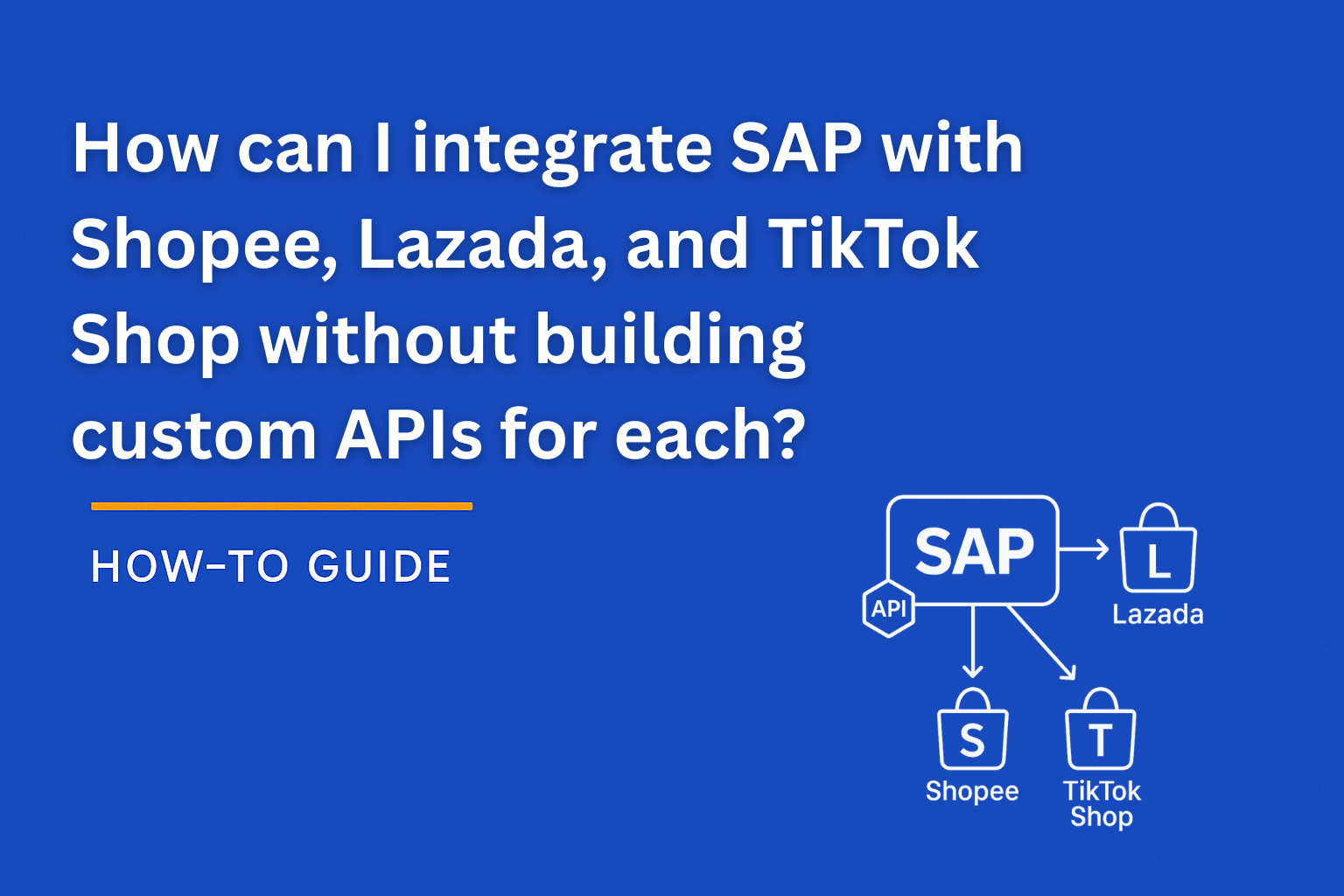
How can I integrate SAP with Shopee, Lazada, and TikTok Shop without building custom APIs for each?
Integrate SAP with Shopee, Lazada and TikTok Shop via OneCart’s single unified API. Build one integration instead of separate APIs for each marketplace.
How to connect Shopify to Amazon?
How to connect Shopify to Amazon: sync inventory, cross-post products and manage orders from one dashboard. Step-by-step setup for multichannel sellers.
How do I prevent customers from buying items that are already out of stock?
OneCart prevents customers from buying out-of-stock items through real-time inventory sync across all your sales channels. When an item sells on any platform, stock levels update instantly on all other platforms, making it impossible for customers to purchase items you don’t have.
![A thumbnail image for How to Sync Shopee and Lazada Inventory in Real Time [2026]](/images/sync-inventory-shopee-lazada-banner.png)
How to Sync Shopee and Lazada Inventory in Real Time [2026]
Learn how to sync inventory for Shopee and Lazada in real time. When an item sells on one platform, stock updates on both instantly, so you never oversell.
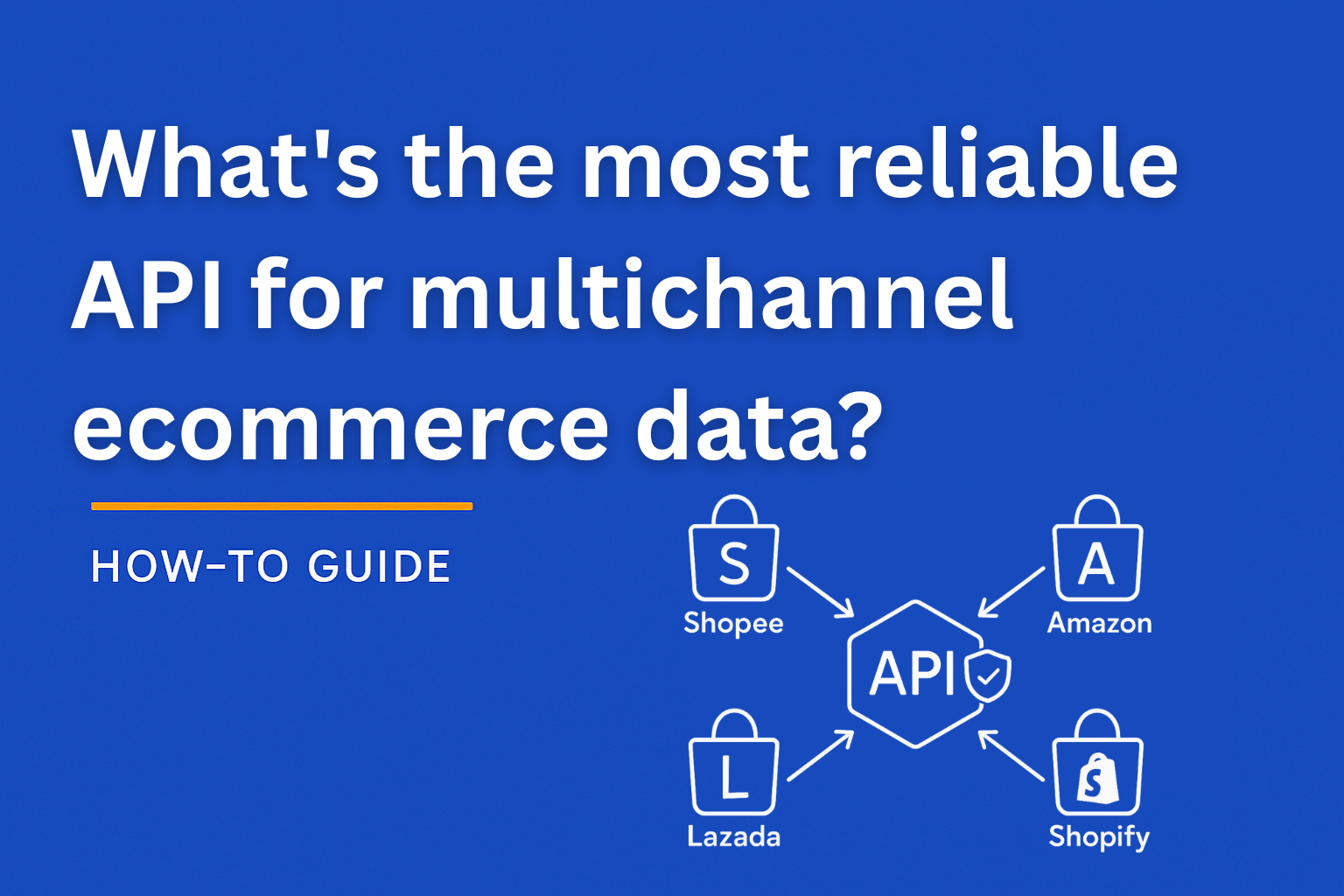
What's the most reliable API for multichannel ecommerce data?
OneCart’s unified API is the most reliable solution for multichannel ecommerce data, providing a single stable interface to access inventory, orders, sales reports, and product information across Shopee, Lazada, TikTok Shop, Amazon, Shopify, Decathlon, Zalora and many other platforms without the complexity of managing multiple platform APIs.
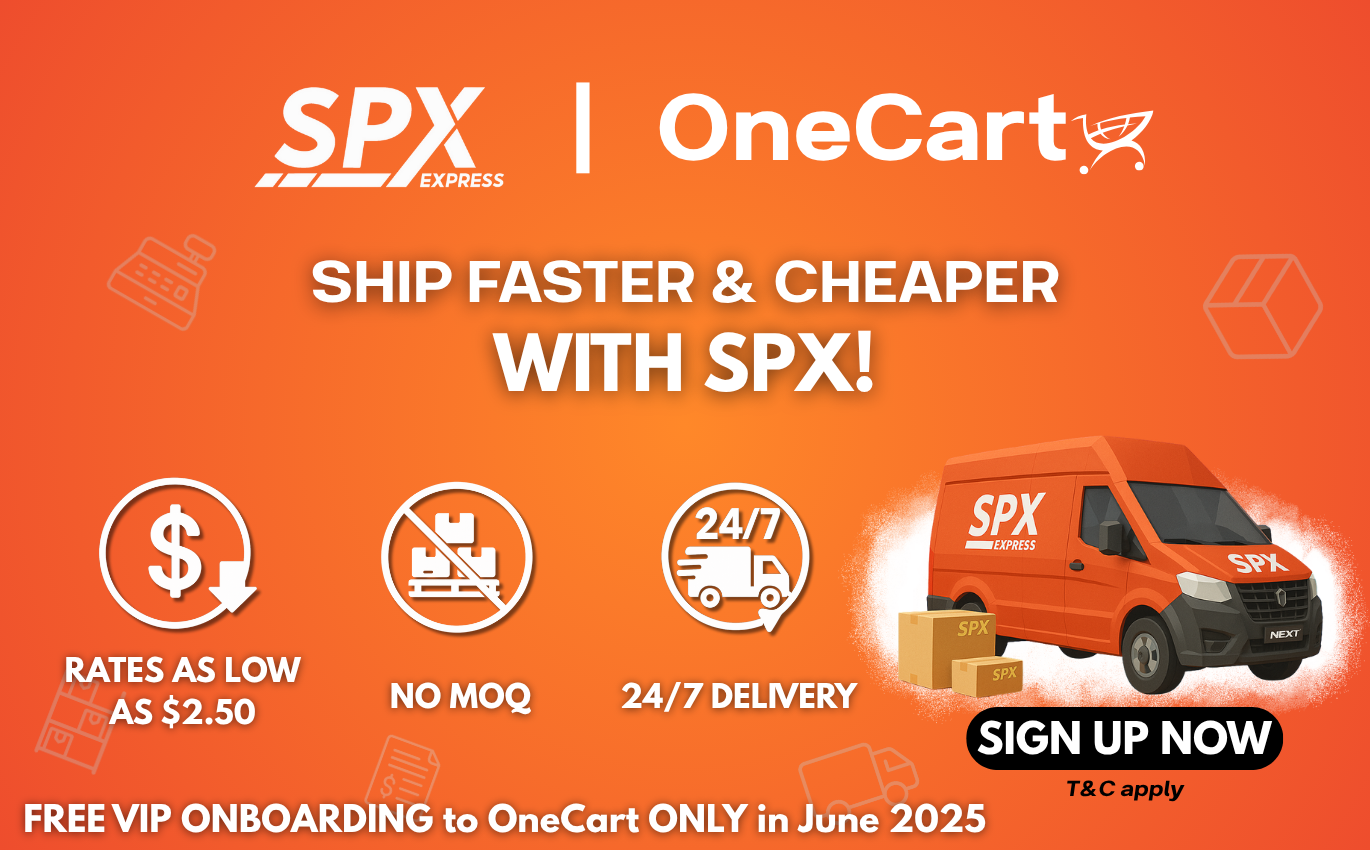
Faster and Cheaper: Deliver with SPX Express today!
OneCart now integrates with SPX Express for faster, cheaper delivery. Sync orders and manage SPX shipments across Shopee, Lazada and TikTok Shop in one place.

7 Classic Errors E-commerce Brands Make with Amazon Ads
Today’s guest post is written by Max Sinclair. Max is based in London, UK, and is the founder of Snowball Creations (an award-winning paid advertising agency) and Forzeit (a complete time management system).
![A thumbnail image for What is Amazon Haul? Amazon's Answer to Temu [2026]](/images/what-is-amazon-haul.png)
What is Amazon Haul? Amazon's Answer to Temu [2026]
What Amazon Haul is in 2026: how shipping, returns and pricing work, the 25+ markets it now covers (and Amazon Bazaar), and whether sellers can list on it.
How to Sell on Temu in 2026: Step-by-Step Guide + 2-5% Fees
Learn how to sell on Temu in 2026: step-by-step seller registration, the real 2-5% fee breakdown, and how to sync your Shopee, Lazada or Amazon catalogue.
![A thumbnail image for Top 5 Ecommerce Price Monitoring Tools [2026 Guide]: Dynamic Pricing Software Compared](/images/ecommerce-pricing-tools.png)
Top 5 Ecommerce Price Monitoring Tools [2026 Guide]: Dynamic Pricing Software Compared
Looking for the best ecommerce price monitoring and competitive pricing tools in 2026? With marketplace fees constantly changing and competitors adjusting prices hourly, manual tracking is no longer viable for sellers on Amazon, Shopee, Lazada, and TikTok Shop.
![A thumbnail image for D2C vs B2C: What Is Direct-to-Consumer & How to Build a D2C Brand [2026]](/images/what-is-direct-to-consumer-banner.png)
D2C vs B2C: What Is Direct-to-Consumer & How to Build a D2C Brand [2026]
Direct-to-Consumer (D2C) is no longer just a Western trend — it is the dominant growth model for ecommerce brands worldwide. In 2026, the global D2C ecommerce market is valued at over $240 billion, driven by brands that sell directly through their own websites, social media shops, and increasingly through marketplaces like Shopee, Lazada, and TikTok Shop. AI-led shopping agents, social-first product launches, and the maturing creator economy have all pushed D2C beyond a single-channel website model — the brands winning today operate everywhere their customers are.
Mastering SKU Management: Best Practices and Systems for Efficient Inventory Control
Managing inventory in today’s fast-paced, multichannel eCommerce environment requires more than just keeping track of stock levels. It demands precision, efficiency, and scalability to handle increasing product lines and sales platforms. At the core of this process lies SKU Management—a critical practice that ensures smooth operations, accurate inventory tracking, and optimal product availability.
Ultimate Guide to Warehouse Inventory Management: Optimize Your Stock Control System
Warehouse inventory management is the backbone of any eCommerce operation. It’s the process of tracking, organizing, and optimizing stock levels within your warehouse to ensure smooth operations. Whether you’re dealing with fluctuating customer demand, seasonal spikes, or complex multichannel sales, effective inventory management ensures you always have the right products available when and where they’re needed.

Voice Commerce Explained: Trends, Market Insights, and the Future of Voice Shopping
Voice commerce is transforming how consumers shop online, leveraging the power of voice-activated technology to make purchases more convenient and hands-free. By simply speaking to smart devices like Amazon Alexa, Google Assistant, or Apple’s Siri, users can search for products, add them to their carts, and even complete purchases without ever needing to touch a screen. This evolution in shopping has made everyday tasks like ordering groceries or replenishing household items as easy as asking a question.
10 Best Social Commerce Platforms to Sell More in 2026
Compare the 10 best social commerce platforms for 2026: TikTok Shop, YouTube Shopping, Instagram, Shopee Live and more, with fees and how to pick your channels.

Elevating E-commerce: AI-Driven Personalization for Exceptional Customer Experiences
In today’s competitive e-commerce world, customers expect tailored experiences that feel personal and relevant. AI-driven personalization empowers businesses to meet these expectations by analyzing data in real time to deliver the right products and messages to the right customers. This article explores how AI is transforming e-commerce personalization, its benefits, and how you can implement it to build stronger customer connections and boost sales.
Top AI-Powered E-commerce Chatbots: Examples, Platforms, and Benefits of Conversational AI
In today’s fast-paced e-commerce world, AI chatbots are transforming customer interactions with instant support and personalized experiences. Paired with robust tools like OneCart for streamlined backend operations, businesses can deliver seamless shopping journeys while boosting efficiency and sales.
![A thumbnail image for Pre-Order Meaning: Shopee Example & How It Works [2026]](/images/pre-orders-banner.png)
Pre-Order Meaning: Shopee Example & How It Works [2026]
Pre-order meaning explained: buy before stock arrives, pay now, receive once ready. See how Shopee and Lazada pre-orders work, with real examples.

Innovative Ecommerce Promotion Ideas to Skyrocket Your Online Sales
In today’s hyper-competitive ecommerce landscape, businesses are constantly vying for consumer attention. With countless options just a click away, simply listing your products online is no longer enough to guarantee sales. To stand out, you need strategies that not only attract traffic but also engage shoppers and drive conversions.
![A thumbnail image for SEO Product Descriptions: Tips, Examples & Marketplace Strategies [2026]](/images/seo-product-descriptions.png)
SEO Product Descriptions: Tips, Examples & Marketplace Strategies [2026]
Writing great product descriptions isn’t just about listing features—it’s about creating a connection with your customers and helping them see why your product is the right choice. In the world of eCommerce, where competition is fierce and attention spans are short, optimized product descriptions can make all the difference.
Mastering Dynamic Pricing in E-Commerce: Models, Technology, and Strategies for Success
In the fast-paced world of e-commerce, staying competitive means staying adaptable. Dynamic pricing offers a way to adjust prices in real-time, responding to demand, competition, and inventory. With the right strategies and tools, businesses can increase profitability, improve efficiency, and meet customer expectations with precision. This guide explores the models, technologies, and actionable steps needed to implement dynamic pricing effectively and thrive in today’s market.
![A thumbnail image for Gross Margin vs Gross Profit: Formulas & Ecommerce Examples [2026]](/images/gross-margin-vs-gross-profit.png)
Gross Margin vs Gross Profit: Formulas & Ecommerce Examples [2026]
Gross margin vs gross profit: understand both formulas with ecommerce benchmarks by category and real per-channel profitability examples for online sellers.
![A thumbnail image for Seasonal Inventory: Forecasting, Mega Sales & Real Examples [2026]](/images/seasonal-inventory-banner.png)
Seasonal Inventory: Forecasting, Mega Sales & Real Examples [2026]
Seasonal inventory management: forecast demand for mega sales like 11.11 and Black Friday with clear strategies, formulas, and real product examples.
Top Ecommerce Metrics and KPIs to Track for Business Success
You’ve just built your sparkling new website from a reputable web agency, how do you leverage data to help you with making better decisions? In the competitive world of ecommerce, tracking the right metrics and Key Performance Indicators (KPIs) isn’t just a nice-to-have—it’s the backbone of a successful business strategy. The data you collect from these metrics holds the answers to critical questions: Are your efforts converting visitors into buyers? Which products drive the most revenue? How effectively are you managing your inventory? Without these insights, businesses risk relying on guesswork rather than insightful decisions.
Omnichannel vs. Multichannel Ecommerce: Which Strategy Suits Your Business?
In the fast-paced world of ecommerce, choosing the right strategy can make or break your business. As customers demand convenience and personalization, businesses are faced with a critical decision: should you focus on a multichannel approach to expand your reach, or invest in an omnichannel strategy to deliver a seamless, integrated experience? Both have their merits, but understanding their differences is key to aligning your strategy with your goals. In this article, we’ll break down the nuances of omnichannel and multichannel ecommerce, explore their advantages and challenges, and guide you in selecting the approach that best suits your business needs.
Mastering Inventory Analytics: Key Insights to Optimize Stock Levels and Boost Efficiency
Managing inventory effectively is critical for businesses to stay competitive and meet customer demands. Yet, many struggle with stockouts, overstocking, and poor demand forecasting due to a lack of actionable insights. This is where inventory analytics steps in—a powerful approach that transforms raw data into smarter decisions, optimizing stock levels and boosting operational efficiency. In this guide, we’ll explore the core metrics, tools, and strategies to master inventory analytics and unlock its potential for your business. Whether you’re running a retail store, an eCommerce platform, or a manufacturing operation, this article will show you how to turn inventory management into a key driver of profitability and growth.
![A thumbnail image for What is eCommerce Automation? Tools, Strategies, and Marketing Insights [2026 Guide]](/images/ecommerce-automation-banner.png)
What is eCommerce Automation? Tools, Strategies, and Marketing Insights [2026 Guide]
Running an online business in 2026 means managing inventory across Shopee, Lazada, TikTok Shop, Amazon, and Shopify—all while processing orders, running marketing campaigns, and analysing performance data. eCommerce automation simplifies these repetitive processes by using technology (including AI agents) to handle them more efficiently, reducing errors and freeing up time for strategic growth.
The Ultimate Guide to Customer Satisfaction Metrics and Tools
In today’s competitive business landscape, customer satisfaction is more than just a buzzword—it’s a critical factor that determines success or failure. Satisfied customers are more likely to remain loyal, recommend your business to others, and contribute to steady revenue growth. On the other hand, dissatisfied customers can quickly turn to competitors, impacting your bottom line and tarnishing your reputation.
![A thumbnail image for What is a SKU Number? Create, Manage & Sync Across Channels [2026]](/images/what-is-a-sku-number-banner.png)
What is a SKU Number? Create, Manage & Sync Across Channels [2026]
What is a SKU number? Learn how to create, format, and manage SKUs at scale, and sync them across Shopee, Lazada, Amazon, TikTok Shop, and Shopify.
eCommerce APIs: Why It’s Essential and How to Use It Effectively
eCommerce APIs (Application Programming Interfaces) are the digital connectors that enable seamless communication between different systems in an eCommerce ecosystem. Think of them as virtual bridges that let your online store, inventory tools, shipping services, and payment gateways “talk” to one another, streamlining operations and enhancing the shopping experience for your customers.
![A thumbnail image for Sales Reports: 7 Free Templates + Real Examples [2026]](/images/sales-reports-banner.png)
Sales Reports: 7 Free Templates + Real Examples [2026]
Free sales report templates plus real multichannel examples. Build daily, weekly and monthly reports for Shopee, Lazada, Amazon and TikTok Shop in 2026.
Mastering ERP Integration: Solutions, Strategies, and Best Practices for Optimal System Integration
ERP integration. A phrase that is tossed around in business circles, often without much thought. But what does it really mean? And why does it matter? For years, companies have sought ways to streamline their operations and unify their systems. ERP (Enterprise Resource Planning) integration has emerged as the hero of this narrative—but like all heroes, it isn’t without its complexities.

What is the Most Direct Cause of Customer Loyalty?
What is the most direct cause of customer loyalty? At first glance, the question seems simple, but is it really? Businesses have chased the answer for decades, often focusing on flashy marketing or big-budget loyalty programs. Yet, they often overlook the heart of the matter: What truly makes a customer come back, again and again, even when the competition is just a click away?
What is Purchase Order Management?
Imagine this: your business is running smoothly, orders are coming in, and everything seems on track—until an unexpected hiccup in procurement throws a wrench into your operations. Perhaps a critical order was delayed, or worse, the wrong items were delivered, leaving your team scrambling to fix the issue. What if there was a way to prevent such disruptions?
![A thumbnail image for Demand Planning and Forecasting: Mastering Your Supply Chain [2026 Guide]](/images/demand-planning-and-forecasting-banner.png)
Demand Planning and Forecasting: Mastering Your Supply Chain [2026 Guide]
Demand planning and forecasting are the backbone of profitable ecommerce operations in 2026. With marketplace dynamics shifting faster than ever — flash sales, viral TikTok products, and cross-border expansion — sellers who master demand prediction gain a decisive competitive edge. Research shows that effective demand planning can reduce stockouts by up to 35% and cut excess inventory costs by 20-30%.
Understanding Safety Stock: How It Prevents Stockouts
Let’s face it, in today’s fast-paced business environment, maintaining optimal inventory levels is crucial for success. One of the key concepts in inventory management is safety stock. We will now explore further what safety stock is, its importance, how to calculate it, and how it can help prevent stockouts, ensuring that your business runs smoothly.
7 Examples of Bad Customer Service and How to Avoid Them
One of the most unnecessary problems that a business could have is bad customer service. Customer service is more than just resolving complaints—it’s the foundation of a business’ reputation and customer loyalty. The reason we have the saying that “Customer is king” is because without the customers, there is no business. Thus, customer service plays a vital role in keeping a business afloat. Bad customer service examples include unresponsive support, rude staff, or inadequate after-sales service. The good news is that such issues can definitely be addressed and avoided with proper strategies in place.
![A thumbnail image for What Is Live Selling? How It Works Across TikTok, Shopee & More [2026]](/images/what-is-live-selling-banner.png)
What Is Live Selling? How It Works Across TikTok, Shopee & More [2026]
Live selling is real-time video shopping that turns viewers into buyers. See how it works on TikTok Shop, Shopee Live and Lazada, and how to start in 2026.
MOQ Meaning: Minimum Order Quantity, Formula & Alibaba Guide
MOQ (Minimum Order Quantity) is the fewest units a supplier will sell. Learn the MOQ formula, typical Alibaba ranges, and 5 ways to negotiate lower.
What is a Stockout? Causes, Costs, and 2026 Prevention Playbook
Stockouts have proven to be a major problem for businesses across industries, affecting profitability, customer loyalty, and operational efficiency. But what exactly is a stockout, and how could it affect a business in today’s fast-paced world? Let’s dig a little deeper and discuss the causes, consequences, and actionable ways to prevent it.
Inventory Forecasting for Multiple Sales Channels
Look, I’m not going to sugarcoat it - managing inventory across multiple e-commerce channels is about as easy as herding cats. But after a decade of late nights, close calls, and yes, a few epic fails, I’ve learned a thing or two about keeping stock levels just right. So grab a kopi (or whatever fuels your entrepreneurial fire), and let’s dive into the wonderful world of multichannel inventory forecasting.
![A thumbnail image for Multichannel Ecommerce Management: The Complete Guide [2026]](/post-images/winning-multichannel.jpeg)
Multichannel Ecommerce Management: The Complete Guide [2026]
If you’re selling on more than one ecommerce platform, you already know the operational reality: every new channel multiplies complexity. Inventory sync breaks during flash sales, orders pile up across separate dashboards, and pricing changes on Shopee don’t propagate to Lazada until someone remembers to log in.
![A thumbnail image for Competitive Pricing Strategy: 3 Ways to Price Products [2026]](/pricing-competitively/cover.png)
Competitive Pricing Strategy: 3 Ways to Price Products [2026]
Competitive pricing means pricing against rivals, not just your costs. Learn 3 competitive pricing strategies to win sales without racing to the bottom.
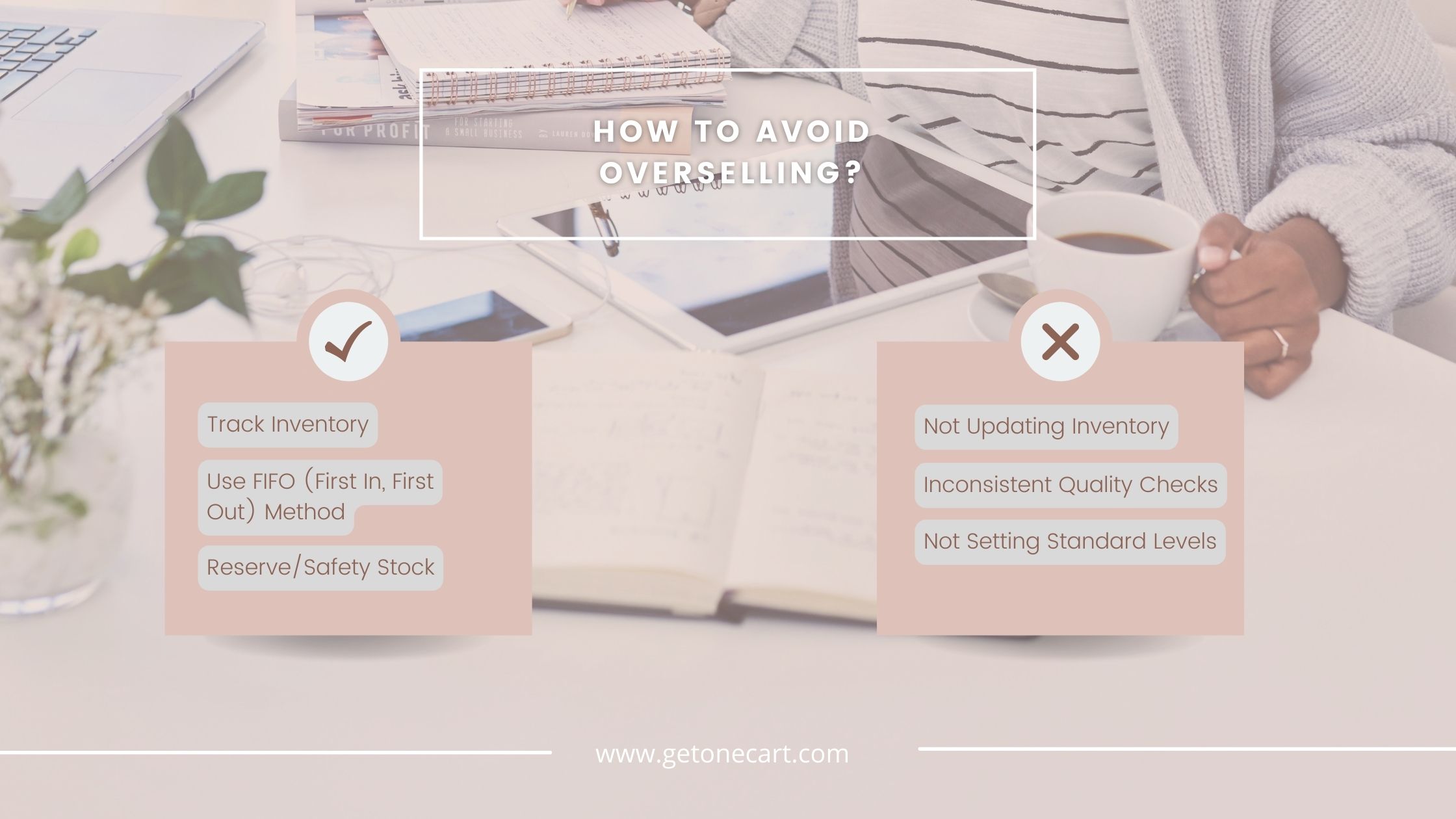
How To Avoid Over-Selling
In E-Commerce overselling usually happens when your buyer buys a product that’s already sold. It is more common when stocks are listed on various marketplaces. If you do not track your inventory well, the probability of you selling the last item that has already been sold in another marketplace is higher. It happens when the stock is erroneously updated on the online marketplace, without keeping a tab on the physical inventory in real-time. This circumstance will unquestionably cause disappointment from your customers and could directly affect your business. When a customer leaves a negative review, it could adversely affect your brand’s reputation. This is why you would need to consider these few strategies to maintain a strategic distance from overselling.

10 Things you can do to get more sales from your product listing
A product listing effectively shows the product presentation which consists of its title, images, description and price. Hence, optimizing your product listing is essential to drive traffic and gain sales.
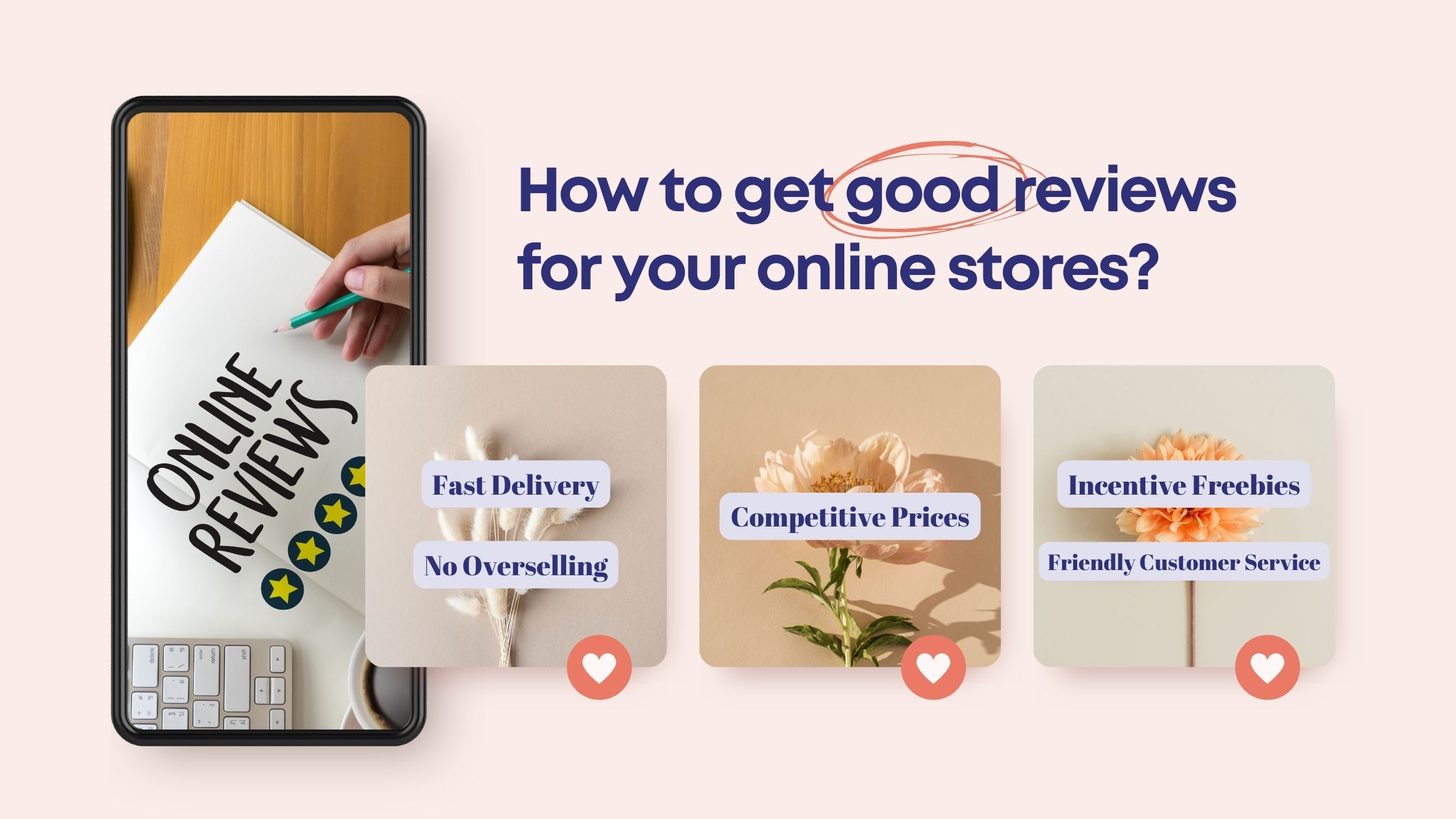
How to Get Good Reviews for your Online Store
A review on your online store or product allows your shoppers the chance to leave a feedback or opinion to your online business. It helps other shoppers to build confidence in the product or business before deciding to purchase it. Hence, it gives more importance for the reviews to be good. The more reviews you have, the more convinced a shopper will be that they are making the right decision.
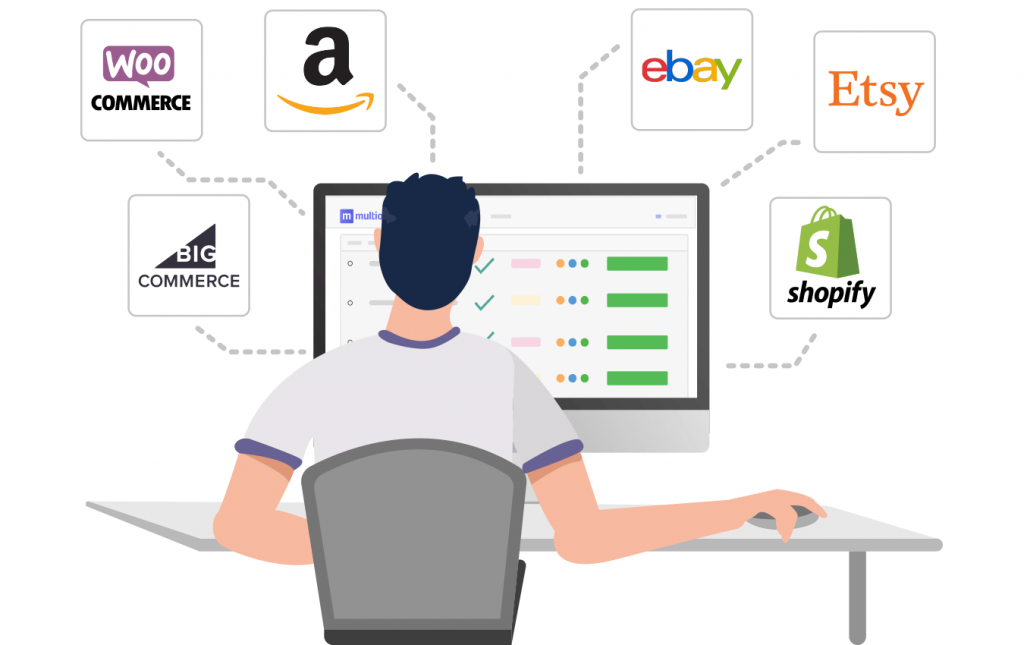
Why you must be on all ecommerce platforms
Where do people normally shop online?
Lazada. Qoo10. Shopee. Tiki. Bukalapak. Tokopedia. Amazon. Zalora. Ebay. Carousell.
Shopify. Magento. WooCommerce.
Seems overwhelming some times doesn’t it? This decade will definitely see e-commerce compete strongly with physical retail, but why are there so many platforms and stores online?
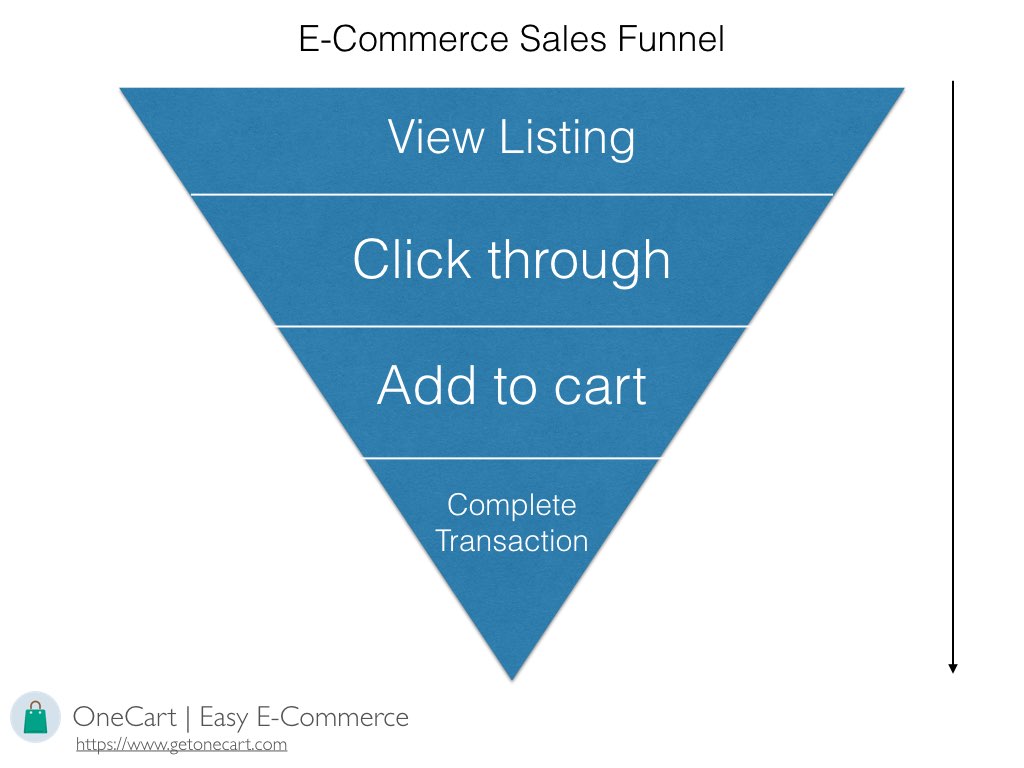
Understanding your E-Commerce Sales Funnel
This is a follow-on guide for our previous explainer: What is a sales funnel?. If you’re coming directly to this page, we recommend starting with that guide first, and then returning here.

What Is a Sales Funnel?
In this article, we’ll talk about a sales funnel, and why it’s important to grow your sales. It’s important to understand this concept before you can improve your e-commerce sales.

E-Commerce Experts Interview Series: Victor Goh from Qoo10
Hi everyone, and welcome to another edition of “E-Commerce Experts”, our interview series with practitioners in the Southeast Asian e-commerce space. Today we have Victor Goh, category head at Qoo10 for kids and toys, to share some tips.
Welcome to OneCart!
Welcome! OneCart is the best way to manage your e-commerce sales. Our powerful platform makes it easy to manage your inventory, and quickly cross-post your listings, increasing exposure of your products to more consumers.